Iran accuses US, Israel of ceasefire violations, will close Strait of Hormuz again

Iran accuses US, Israel of ceasefire violations, will close Strait of Hormuz again
Cybersecarmor.com – In a significant escalation of tensions in the Middle East, Iran has formally accused the United States and Israel of breaking the ceasefire agreement in Lebanon, vowing to take retaliatory measures that could include closing the strategically vital Strait of Hormuz once more. The announcement comes amid rising regional hostilities, with Iran emphasizing its determination to assert control over its territorial waters and challenge foreign military actions in the area.
Accusations of Breach in Ceasefire Talks
The Iranian military stated that the U.S. had been acting in “bad faith” during recent ceasefire negotiations, accusing Washington of undermining the agreement through covert support for Israeli operations. “The Americans have been inconsistent in their promises, failing to ensure Israel’s compliance with the terms of the truce,” said a spokesperson for Iran’s Revolutionary Guard, according to
“Our patience has reached its limit, and we will not hesitate to take decisive action against those who violate the agreement.”
This claim follows a series of Israeli airstrikes targeting Lebanese positions in the past week, which Iran has labeled as deliberate attacks on its allies in the region.
Israel, however, has denied the allegations, insisting that its actions were in line with the ceasefire terms and necessary to counter Hezbollah threats. “We have been transparent in our operations and remain committed to the truce,” said an Israeli defense official, as reported in
“Every strike has been coordinated with our Lebanese partners to prevent escalation.”
Despite these assurances, Iran argues that the U.S. has failed to mediate effectively, allowing Israel to continue its military campaign without restraint.
Strait of Hormuz as a Strategic Leverage
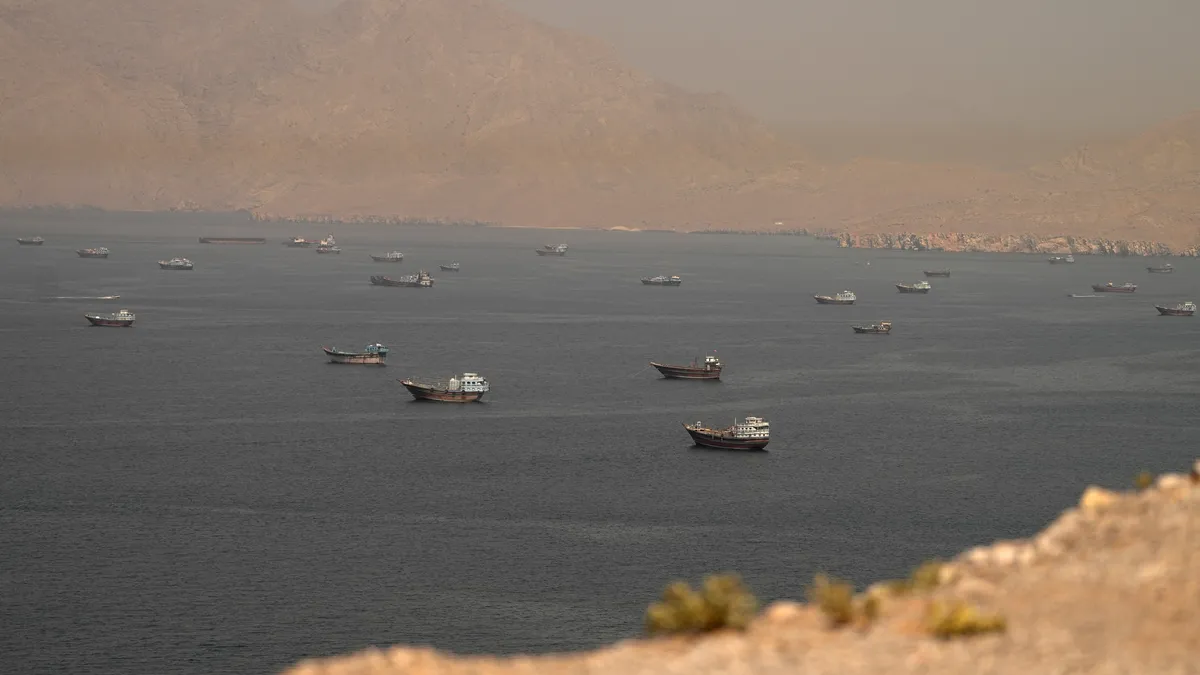
The threat to close the Strait of Hormuz, a critical maritime chokepoint for global oil shipments, underscores Iran’s growing assertiveness in using regional tensions to pressure its adversaries. The strait, which connects the Gulf of Oman to the Arabian Sea, sees over 20% of the world’s oil trade passing through daily, making it a linchpin of international energy security. If Iran follows through on its warning, the move could disrupt global markets and trigger fears of a major oil crisis.
Historically, Iran has used similar tactics to assert its influence. In 2023, the country temporarily blocked the strait after a drone attack on an oil tanker, prompting international condemnation and diplomatic efforts to de-escalate the situation. This time, however, the threat is framed as a direct response to perceived violations of the ceasefire, rather than a standalone act of aggression. “Closing the strait is a symbolic and practical statement of our resolve,” added an Iranian official, as cited in
“It is not just about retaliation; it is about redefining our role in regional stability.”
Regional and Global Reactions
Reactions to Iran’s announcement have been mixed. While some regional allies have expressed support for Iran’s stance, others have called for restraint to avoid further destabilization. “Iran’s actions could have far-reaching consequences, but we understand the urgency of their position,” said a European diplomat, as quoted in
“The world must recognize the gravity of the situation and work to prevent a broader conflict.”
Meanwhile, Gulf Cooperation Council (GCC) nations have urged both sides to maintain communication channels to avoid unintended consequences.
The U.S. has faced criticism for its handling of the ceasefire process, with analysts pointing to a lack of clear enforcement mechanisms as a key issue. “The agreement is fragile, and without consistent oversight, it’s easy for violations to accumulate,” noted a Middle East policy expert, as stated in
“This highlights the need for stronger international mediation to protect the interests of all parties.”
Israel, on the other hand, has framed its actions as necessary to safeguard national security, with Prime Minister Netanyahu recently declaring,
“We cannot allow Hezbollah to use the ceasefire as a pretext for continued attacks on Israeli civilians.”
Broader Implications for Middle East Stability
The potential closure of the Strait of Hormuz has raised concerns about the impact on global energy prices and supply chains. Experts warn that even a temporary blockade could lead to a surge in oil prices, affecting economies worldwide. “The strait’s closure would send shockwaves through the global market, especially with the ongoing conflict in the Red Sea and the U.S.-China trade tensions,” explained an economist at the International Energy Agency, as quoted in
“This is a moment of high risk for international trade.”
Additionally, the situation highlights the complex dynamics between Iran and its regional rivals. Lebanon’s involvement in the conflict has been pivotal, with the country serving as a key ally for Iran and a target for Israeli operations. “Lebanon’s position is a critical component of Iran’s strategy, and the ceasefire breaches threaten to reignite hostilities,” said a Lebanese analyst, as reported in
“The country is caught in the crossfire of larger geopolitical ambitions.”
This has sparked fears of a prolonged conflict that could draw in more actors and escalate beyond the region.
Call for Immediate Diplomatic Solutions
In response to the growing crisis, several international bodies have called for immediate diplomatic efforts to prevent further escalation. The United Nations Security Council has scheduled an emergency session to address the situation, with diplomats emphasizing the importance of maintaining dialogue between all parties. “We need to ensure that the ceasefire holds, as its collapse could lead to a full-scale war in the region,” said a UN representative, as cited in
“This is not just a bilateral issue; it affects global security and prosperity.”
Meanwhile, the Iranian government has reiterated its demands for accountability, stating that the U.S. and Israel must be held responsible for their actions. “We are not seeking war, but we will not tolerate injustice,” declared a senior Iranian official, as quoted in
“The closure of the strait is a proportional response to ongoing violations of the agreement.”
This statement aligns with Iran’s broader narrative of defending its sovereignty against foreign interference.
As the standoff continues, analysts are closely monitoring developments in the Strait of Hormuz and the surrounding region. The potential for military action or economic sanctions looms large, with the international community divided on how to respond. “The situation is on the brink of a tipping point, and we must act swiftly to prevent a deeper crisis,” concluded a geopolitical strategist, as noted in
“Every day without resolution increases the stakes for all involved.”
This latest development marks a critical moment in the evolving conflict, as Iran’s threats to close the strait combine with its accusations against the U.S. and Israel. The outcome could determine the future of regional stability and set a precedent for how such disputes are managed in the years to come.