President Trump rules out using nuclear weapons against Iran

Trump Dismisses Nuclear Option Against Iran as Conflict Enters Seventh Month

Cybersecarmor.com – Six months into a grinding military confrontation with Tehran, President Donald Trump flatly rejected the possibility of deploying nuclear weapons against Iran, calling the very notion of such a question absurd during an Oval Office appearance on August 31. The remark came at a moment when the administration was already preparing to resume conventional strikes after a month-long pause, underscoring that Washington’s strategic calculus remains anchored to airpower, missile defense, and economic coercion rather than to the ultimate weapon.

A Reporter’s Question Meets Sharp Rejection

The exchange unfolded when a journalist pressed the president on whether he could categorically rule out nuclear strikes on Iranian territory. Trump’s response was immediate, dismissive, and laced with irritation at what he perceived as an unnecessary question.

“I would never say that. But the answer’s yes. I rule out — there’s no reason for it. What a stupid question that is actually is. Here they are, they’re totally defeated militarily. So now, I defeat them and now I should use a nuclear weapon on top of them? What a stupid question.”

The tone of the reply was as telling as the substance. By framing the question as not merely unnecessary but foolish, Trump signaled that the administration views the military balance as already settled and that any escalation beyond conventional means would be gratuitous.

The Singular Precedent of Nuclear Warfare

The United States has employed atomic weapons in combat exactly once: against Japan in August 1945, bringing World War II to a close. The bombings of Hiroshima and Nagasaki killed an estimated 200,000 people and launched decades of international diplomacy aimed at preventing any recurrence of nuclear war. Since that moment, no nation has used a nuclear weapon in an active conflict. The global non-proliferation architecture — treaties, inspection regimes, and deterrence doctrines — was built in large part to ensure that the 1945 precedent would never be repeated. Any discussion of applying such a weapon against Iran would therefore represent not merely a tactical decision but a rupture in the postwar order that Washington has spent eighty years reinforcing.

Unsubstantiated Claims From Within the Party

The administration itself has offered no public signal that nuclear options are under consideration for the Iran campaign. However, former Georgia Congresswoman Marjorie Taylor Greene — once a close Trump ally who has since become a vocal critic — claimed this month that nuclear strikes on Iran had been discussed in internal strategy sessions. Greene provided no documentary evidence to support the allegation, and the White House publicly dismissed the assertion. The episode nonetheless illustrates how quickly speculation about nuclear use can take root in a polarized political environment, even when no official has placed such a measure on the table.

The Stated Objective: Denying Iran a Bomb

From the opening days of the conflict, Trump has framed the American military mission in straightforward terms: ensure that Iran never acquires a nuclear weapon. Speaking again on August 31, he tied the objective directly to regional security and to the survival of Israel.

“Iran cannot have a nuclear weapon. If Iran had a nuclear weapon, Israel would have been wiped out. And they’d be hitting our cities at some point because they’re sick people.”

The logic is circular in a way that has drawn criticism from arms-control analysts: the stated goal is to prevent Iran from building a bomb, yet the president simultaneously ruled out using one himself. That distinction, while technically sound, leaves little room for ambiguity in a conflict that has already produced six months of intermittent violence.

Retaliatory Strikes and the Promise of a Hard Response

Even as he dismissed nuclear warfare, Trump signaled that conventional force would resume within days. Earlier on August 31, he told Fox News that the United States would respond forcefully to Iranian retaliatory strikes carried out on August 30 against two American military installations in Jordan. Those Iranian attacks — which were intercepted before reaching their targets — came in response to U.S. forces striking two launchers on Larak Island. That engagement marked the first American attack on Iranian territory since July 30, ending a brief lull in direct hostilities.

“We’re going to hit them hard. There will be a response.”

The Jordan-based installations have served as forward staging points for American air operations throughout the conflict. Their targeting, even if intercepted, represented a calculated Iranian attempt to raise the cost of continued U.S. airpower and to test American air-defense commitments in the region.

The Sanctions Interlude and Its End

The brief resumption of kinetic operations follows roughly a month during which the Trump administration paused direct military strikes in favor of an economic-pressure strategy built on expanded sanctions. The pivot back to force suggests that the sanctions track has not yet produced the concessions Washington sought, and that the administration has concluded the economic lever alone is insufficient to compel Tehran’s compliance. The interplay between financial pressure and kinetic action now appears to be the operating rhythm of the campaign: strikes to create urgency, sanctions to sustain cost, and periodic pauses to allow diplomacy a narrow window.

“A Failed Nation” — Framing the Next Phase

When asked whether the renewed strikes represented a limited operation or a return to full-scale war, Trump characterized Iran in blunt terms, calling it “a failed nation” before adding:

“That doesn’t mean we won’t smack them. We’ll see what happens.”

The characterization underscores the administration’s view that the conflict’s outcome is already decided and that remaining operations are about enforcing terms rather than achieving surprise. By labeling the adversary a failed state, Trump frames continued strikes not as a contest of equals but as a matter of discipline imposed on a weakened opponent.

What Comes Next

The sixth month of this conflict has produced a recognizable pattern: brief surges of kinetic action followed by pauses in which economic tools are deployed. Trump’s categorical rejection of nuclear weapons narrows the strategic menu considerably. With conventional air and missile capabilities remaining the primary instruments, the question for observers shifts from “what will America do?” to “how hard, and for how long, will conventional force be applied before Tehran recalculates?” The answer, as the president himself put it, remains to be seen.

Frequently Asked Questions

What is President Trump rules out using nuclear?

President Trump rules out using nuclear is the main topic of this guide. The article explains the context, practical details, and next steps readers should understand.

Why does President Trump rules out using nuclear matter?

President Trump rules out using nuclear matters because readers are looking for a useful answer, not just a short summary. Good content should match search intent and help them decide what to do next.

COVID-19 cases are on the rise in these 48 states. See map

Summer’s Final Weeks Bring a Familiar Spike in COVID-19 Across Nearly Every State

Cybersecarmor.com – As the calendar turns toward autumn, a well-documented pattern is unfolding once again across American communities: a measurable uptick in SARS-CoV-2 infections that peaks in late summer before the colder months arrive. The Centers for Disease Control and Prevention’s most recent surveillance snapshot confirms that infections were climbing — or expected to climb — in 48 of the 50 states, a figure that underscores just how widespread the seasonal wave has become. Only Iowa failed to submit data for the reporting period, while Rhode Island and Washington, D.C. registered no week-over-week change in viral activity.

Despite the broad geographic spread, the CDC still classified overall national activity as “very low” as of August 28. That designation, however, masks the directional trend: case counts are edging upward in most jurisdictions even from a modest starting point. Public health officials have tracked this recurring late-summer escalation since roughly 2022, distinguishing it from the winter respiratory-illness season that dominates most other viral threats like influenza. SARS-CoV-2, unlike the flu, tends to produce a secondary surge as temperatures begin to cool and indoor time increases.

Why the Virus Surges Twice a Year

The dual-seasonality of COVID-19 remains an active area of epidemiological study. Researchers point to a convergence of behavioral, environmental, and immunological variables. As schools reopen and families retreat into air-conditioned interiors, transmission opportunities multiply. Simultaneously, population-level immunity — built through prior infection and vaccination — gradually wanes over months, leaving more susceptible individuals exposed. The virus’s own replication dynamics, optimized for cooler, drier air, also play a role. No single factor explains the pattern; rather, the interplay of several pushes infections past a threshold each late summer.

“COVID-19 is rising nationally but from a low baseline. The increase became apparent in parts of the South and West during July and more clearly nationwide by late July and early August.” — Dr. Syra Madad, infectious disease epidemiologist at Harvard’s Belfer Center and chief biopreparedness officer for New York City’s public hospitals

Madad’s observation highlights the geographic gradient of the surge. Southern and western states typically register the first measurable uptick in July, with the remainder of the country following within a few weeks. By late August, the signal becomes unmistakable in national aggregates even when individual state counts remain numerically small.

Wastewater Data Paints a Regional Picture

Beyond clinical case reporting, the CDC’s wastewater surveillance program offers an earlier, population-level window into viral circulation. For the week ending August 22, the data revealed a pronounced southern concentration of SARS-CoV-2 in community sewage. Texas stood alone in the “very high” activity tier, while Mississippi registered “high” levels. A scattered group of states spanning multiple regions — California, Nevada, Florida, Rhode Island, Louisiana, and Washington — fell into the “moderate” category. The majority of remaining states sat in the “low” or “very low” bands.

Wastewater tracking involves sampling municipal sewage systems to detect viral RNA and other pathogen markers before symptomatic patients seek clinical testing. Because infected individuals shed virus in feces for days before developing noticeable symptoms, this method can flag community-level spread one to two weeks ahead of hospitalization or outpatient data. Health departments use the signal to calibrate resource allocation, issue targeted advisories, and monitor whether interventions are slowing transmission.

What the Numbers Mean for Communities

The fact that 48 states show growth signals does not, by itself, indicate a public-health emergency. The absolute case counts remain far below the peaks recorded during prior waves. Yet the directional trend matters for planning: hospitals, school districts, and local health departments use early signals to adjust staffing, stockpile antivirals, and prepare communication campaigns before surges reach clinical thresholds.

For individuals, the practical implications are modest but worth noting. People with weakened immune systems, those over 65, and residents of densely populated indoor settings face somewhat elevated exposure risk during the surge window. Standard precautions — staying current with recommended vaccinations, improving ventilation in crowded indoor spaces, and monitoring symptoms after close contact with ill individuals — remain the most effective personal safeguards. No new mandates or restrictions have been proposed at the federal level, and the CDC’s “very low” national classification suggests the current wave is unlikely to strain healthcare capacity in most regions.

Looking Ahead to Fall

Historical data from the 2022, 2023, and 2024 cycles suggest that late-summer increases typically plateau or reverse within four to six weeks before the winter respiratory season takes over. The coming months will determine whether this year’s trajectory follows that familiar arc or whether a novel variant or waning immunity produces a sharper, more sustained climb. Continued wastewater monitoring and weekly CDC reporting will provide the earliest available indicators of which scenario is unfolding.

Frequently Asked Questions

What is COVID 19 cases are on the rise?

COVID 19 cases are on the rise is the main topic of this guide. The article explains the context, practical details, and next steps readers should understand.

Why does COVID 19 cases are on the rise matter?

COVID 19 cases are on the rise matters because readers are looking for a useful answer, not just a short summary. Good content should match search intent and help them decide what to do next.

Zooey Deschanel says a ‘New Girl’ reunion isn’t happening

Charm and Chaos: Why the “New Girl” Cast Is Reuniting for Charity — Not a Comeback

Cybersecarmor.com – The internet spent the better part of August convinced that Fox’s most beloved millennial sitcom was about to get a second life. Then Zooey Deschanel stepped in with a single, definitive correction: there is no reboot. What fans actually have on the calendar is a charity gala, and the distinction matters.

On October 10, the full original ensemble of New Girl — Deschanel, Max Greenfield, Jake Johnson, Lamorne Morris, Hannah Simone, and Damon Wayans Jr. — will gather at the Chrysalis Butterfly Ball in Los Angeles to accept the Rising Phoenix Award. That is the entire scope of the reunion. No writers’ room. No pilot. No streaming platform quietly greenlighting a revival while the cast plays coy.

How the Rumor Took Flight

The speculation ignited on July 31, when Greenfield, 46, appeared on NBC’s Today show and offered what sounded like a confirmation. Asked about a potential revival, he replied:

“As far as I know, it’s happening.”

He went further, claiming he had already “seen scripts” penned by Liz Meriwether, the show’s creator and executive producer. For a series that ended its run in May 2018 after seven seasons, those words landed like a grenade in a fan community that had spent years begging for more of Jessica Day’s chaotic apartment life.

Meriwether herself moved quickly to dampen the fire. Speaking to Variety on August 29, she was blunt:

“There are no scripts.”

Deschanel, 46, delivered the final word in a recent interview, characterizing the October event as “not a show” and describing the online chatter as having been “made bigger” than the reality warranted. She added that the cast had simply been “having fun teasing it out” — a playful bit of misdirection that social media algorithms then amplified into something resembling breaking news.

The Show That Defined a Generation’s Comedic Taste

For readers who may have missed the original run, New Girl premiered on Fox in September 2011 and followed Jessica Day, a perpetually bewildered elementary-school teacher played by Deschanel, as she crashed on the couch of her new neighbor Nick Miller (Johnson) and his two roommates, Schmidt (Greenfield) and Winston Bishop (Morris). The premise was simple; the execution was a masterclass in character-driven comedy, awkward romance, and the particular flavor of adulting that resonated with millennials navigating their twenties and early thirties.

Over its seven-season lifespan, the series collected five Golden Globe nominations and five Emmy nominations, cementing its place as one of Fox’s most critically respected comedies of the decade. Its cancellation in 2018 left a conspicuous gap in the network comedy landscape — a gap that Gen Z viewers, hungry for their own version of a “hangout sitcom” capturing the anxieties of modern adulthood, have been eager to fill.

Why the Distinction Between a Gala and a Revival Matters

The confusion between a charity appearance and an actual production is understandable in an era where streaming platforms routinely resurrect dormant IP with little fanfare. Nostalgia-driven sequels and reboots have become a reliable revenue stream, and audiences have grown accustomed to beloved properties resurfacing in unexpected formats. When a cast member mentions “scripts” on a morning show, the assumption of a full production is almost reflexive.

Yet the October event is something else entirely. The Chrysalis Butterfly Ball supports butterfly conservation and related charitable causes, and the Rising Phoenix Award recognizes individuals who have made meaningful contributions to those efforts. The cast’s participation is a goodwill gesture, not a greenlight. Deschanel made clear that while she will enjoy the evening — “see everybody all at once,” as she put it — the night will not produce a single frame of new television.

A Cast That Never Really Stopped Talking

One detail Deschanel offered that tempers the “reunion” framing: the group already communicates regularly. She texts the cast on an ongoing basis and spent time with Johnson just the week before the interview. For people who built their friendship over seven years of shared set life, the October gathering is less a dramatic reunion and more a scheduled catch-up that happens to come with a red carpet and an award ceremony.

Still, the emotional weight of the evening should not be dismissed. Six actors who spent nearly a decade in each other’s orbits, who built characters that became shorthand for an entire generation’s experience of friendship, romance, and self-discovery, will share a stage. The photos will circulate. The fan accounts will lose their minds. And somewhere in the comments section, someone will write:

“This better be a Winston prank.”

Another will reply:

“Classic Winston-Cece mess around.”

Both will be wrong about the event’s purpose. Neither will be wrong about the feeling.

What This Means for the Future of the Franchise

With Meriwether confirming no scripts exist and Deschanel explicitly ruling out a show, the door to a New Girl revival is closed — at least for now. That does not mean the characters are permanently locked away. Television rights cycles, streaming acquisitions, and the ever-shifting appetite for comfort content mean that any property with a devoted fanbase can resurface under the right commercial conditions. But as of today, the only thing resurfacing is a group of friends walking into a ballroom to accept an award and, presumably, trade stories about the seven years they spent making strangers laugh at their collective incompetence.

For the audience that grew up with Jessica Day’s wide-eyed confusion and Schmidt’s desperate, endearing attempts at normalcy, October 10 will be a small, warm reminder that the people behind those characters are still out there, still in contact, still capable of making a room full of adults feel like they’re sitting on a couch in a West Hollywood apartment, watching the world tilt sideways.

Frequently Asked Questions

What is Zooey Deschanel says a New Girl?

Zooey Deschanel says a New Girl is the main topic of this guide. The article explains the context, practical details, and next steps readers should understand.

Why does Zooey Deschanel says a New Girl matter?

Zooey Deschanel says a New Girl matters because readers are looking for a useful answer, not just a short summary. Good content should match search intent and help them decide what to do next.

Texas Tech’s Joey McGuire takes shot at USC crowd

Empty Seats in Los Angeles Spark Texas Tech Coach’s Unintended Viral Moment

Cybersecarmor.com – What began as a routine Monday press conference in Lubbock quickly became one of the most shared clips in college football social media. On Aug. 31, Texas Tech head coach Joey McGuire opened his postgame availability by paying compliments to Southern California head coach Lincoln Riley — then pivoted into a pointed observation about the near-empty stands at USC’s Los Angeles Memorial Stadium the previous Saturday. The remark, delivered with a self-aware “not to take any shots” disclaimer, nonetheless traveled far beyond the confines of the Red Raiders’ media room.

The Saturday That Left a Stadium Barely Occupied

The backdrop for McGuire’s comment was a game that should, on paper, have drawn a substantial crowd. The No. 14 Trojans hosted San Jose State on Saturday, Aug. 29, at the historic LA Coliseum and won decisively, 42-26. Yet the stands sat largely vacant. Two converging factors explain the thin turnout: an unusual spike in humidity across the Los Angeles basin made outdoor attendance uncomfortable, and the opponent — a Mountain West Conference squad — simply did not carry the draw of a marquee matchup. For a program with USC’s storied pedigree in the sport, the visual of a half-empty Coliseum became an immediate talking point across the college football landscape.

The optics stung because of what the Coliseum represents. For decades, the venue has been synonymous with packed, raucous home games and a fan culture that rivals any program in the country. Seeing those seats darkened for a Week 0 contest, even against a lower-tier opponent, raised questions about the Trojans’ current cultural footprint in Southern California and whether the program’s traditional fan base remains engaged at the same intensity it once was.

McGuire’s Lubbock Contrast

McGuire framed his remark as a comparison of environments rather than a dig at USC’s fan base. He emphasized his respect for Riley and the program before describing what Texas Tech supporters can expect when the Red Raiders host Abilene Christian on Sept. 5 at Jones AT&T Stadium in Lubbock.

“Not to take any shots, because I have a lot of respect for USC and Lincoln Riley, but it’s really awesome to be playing in Lubbock, Texas, knowing we’re going to be playing in front of 60,000 (fans),” McGuire said Monday. “It’s going to be warm. It’s going to be every bit as warm as it was Saturday.”

He continued by invoking the resilience of West Texas football culture:

“The great thing is we got some really tough people in West Texas that love their football and they’re going to show up, no matter what the weather’s like. There’s not going to be any excuse of why they’re not going to be here for us.”

The juxtaposition was clear: a coastal stadium emptied by humidity and a low-stakes opponent versus a desert town where 60,000 fans are expected regardless of temperature. McGuire’s point, however well-intentioned, landed as a contrast that social media audiences found difficult to ignore.

A Personal Connection Between the Two Coaches

The exchange carries an added layer of irony given the history between McGuire and Riley. Riley grew up in Muleshoe, Texas, a small West Texas community, and played quarterback for Texas Tech before returning to Lubbock as an assistant coach from 2003 to 2009 under then-head coach Mike Leach. In other words, the man McGuire praised by name spent formative years in the very football culture he was implicitly contrasting with USC’s Saturday attendance. Riley’s own journey from a West Texas small town to the head-coaching chair at one of the sport’s most historic programs makes the empty-stand image all the more conspicuous.

USC’s Response

The Trojans did not leave the matter unaddressed. In a statement issued to USA TODAY Sports, the school acknowledged the factors behind Saturday’s low turnout while projecting higher numbers ahead.

“We understand the factors that impacted Saturday’s attendance,” the school wrote. “We have high expectations and a premier home schedule this season, and we know the competitive advantage an electric Coliseum atmosphere can provide our program. We thank our fans who showed up Saturday and look forward to seeing increased attendance the rest of the season.”

The reference to a “premier home schedule” signals that USC expects later-season matchups to carry far more weight than a Week 0 contest against a non-Power-conference opponent. The Coliseum’s capacity and the program’s historical draw suggest that attendance figures are likely to climb as the calendar fills with higher-profile rivals.

Why the Moment Mattered

McGuire prefaced his remarks with a disclaimer — “not to take any shots” — yet the clip circulated widely within hours, often stripped of that context. The episode highlighted a recurring tension in modern college football: the gap between a program’s historical prestige and its present-day fan engagement, particularly in markets where competing entertainment options and geographic spread have diluted traditional stadium culture. For USC, the Saturday in question was an outlier shaped by weather and opponent profile. For the broader sport, it was a reminder that even the most storied brands must earn their crowd week by week, game by game, and that a single empty-stand image can outlast the final score in public memory.

As Texas Tech prepares for its own Sept. 5 contest in Lubbock, the question McGuire’s comments inadvertently raised will linger: what does it take to fill a stadium, and why do some communities do it effortlessly while others struggle to replicate the phenomenon?

Frequently Asked Questions

What is Texas Tech s Joey McGuire takes?

Texas Tech s Joey McGuire takes is the main topic of this guide. The article explains the context, practical details, and next steps readers should understand.

Why does Texas Tech s Joey McGuire takes matter?

Texas Tech s Joey McGuire takes matters because readers are looking for a useful answer, not just a short summary. Good content should match search intent and help them decide what to do next.

Maps show what caused the deadly Grand Canyon flash floods

Flash Floods in Grand Canyon Leave Two Dead and Dozens Missing as Search Continues

Cybersecarmor.com – Search-and-rescue teams remained active inside Grand Canyon National Park on Monday, Aug. 31, working to locate more than a dozen hikers and backpackers who had not been accounted for after a violent flash flood swept through the inner canyon over the weekend. At least two fatalities had been confirmed by the National Park Service, which described the event as a sudden, raging surge of water that overwhelmed sections of the Bright Angel Creek corridor.

The body of a 46-year-old man was pulled from the Colorado River near Crystal Rapids, according to a park service update issued at 6:30 p.m. on Aug. 30. The second fatality had been confirmed earlier in the weekend’s aftermath. More than 60 visitors were evacuated from the affected canyon areas in the hours following the flood, the agency stated.

What Triggered the Sudden Surge

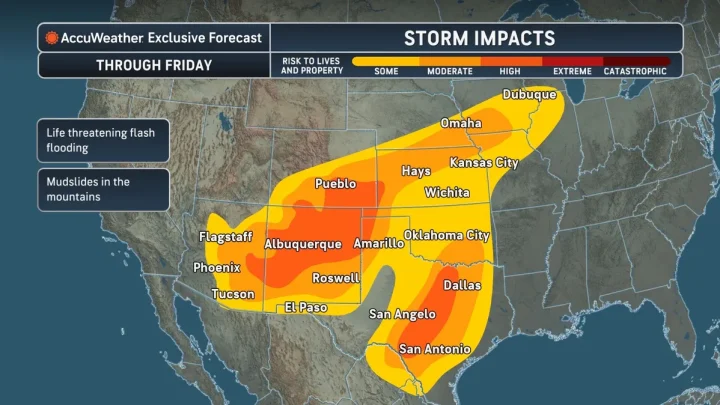
The immediate cause was a severe thunderstorm that struck portions of the park on Aug. 29, dumping more than two inches of rain in a short period. Water levels in both Bright Angel Creek and its tributary, Phantom Creek, spiked within minutes, washing out footbridges and rupturing segments of the park’s Transcanyon Waterline. The geological survey’s gauge stations recorded the rapid rise, though officials noted the data remained preliminary while crews verified readings and checked for equipment damage caused by the force of the water.

The Colorado River itself experienced a brief, sharp rise just upstream of the point where Bright Angel Creek empties into the main stem. That pulse, however, dissipated quickly. The river remains locked in a prolonged drought, and water levels at two major upstream reservoirs had recently hit record lows, meaning the system had very little capacity to absorb an unexpected influx of runoff.

Monsoon Season and the Four Corners Rain Belt

The timing of the storm placed it squarely in the middle of the summer monsoon period for the Four Corners region, where Arizona, New Mexico, Utah, and Colorado converge. Josh Weiss, a meteorologist at the National Weather Service Weather Prediction Center, explained that this stretch of late summer is when the area receives a substantial share of its annual rainfall.

“The monsoon season can be a particularly dangerous time in mountain canyons in Utah and the Southwest. Rain falling suddenly in slot canyons can make them very risky places to be.”

Weiss noted that the dry, arid slopes characteristic of the region absorb very little water before it runs off. Once rainfall intensity exceeds the soil’s infiltration capacity, large volumes of water channel rapidly into creeks and narrow drainage paths. Burn scars left by previous wildfires compound the problem, stripping vegetation and creating slick, impermeable surfaces that funnel water downslope in concentrated, high-velocity torrents.

A Broader Atmospheric Setup

The storm did not arrive in isolation. Weiss described a persistent high-pressure system positioned over the region through August, oriented in a way that drew substantial moisture from both the Pacific Ocean and Mexico. Layered on top of that, a trough over the eastern Pacific had been delivering above-normal rainfall for multiple consecutive days across the last two weeks of August, priming the landscape and saturating soils that would normally shed water more slowly.

Additional rain was forecast for Aug. 31 itself, raising the prospect of renewed flooding in already-compromised canyon corridors and complicating rescue operations.

Park Closures and Visitor Guidance

Damage to the Transcanyon Waterline forced immediate closures within the park, and several additional areas were shut down while crews assessed structural and hydrological damage. The park service posted updated closure information on its website and urged visitors to check conditions before traveling to the canyon. No estimated reopening dates were provided, and officials warned that further inner-canyon closures could become necessary as assessments continued.

Anyone aware of hikers or backpackers who had been traveling along the Bright Angel Creek corridor on Aug. 29, or who held a campground reservation in the affected zone, was asked to contact the park service directly at 888-653-0009 or by email. The agency emphasized that even brief delays in reporting could narrow the window for locating individuals still unaccounted for in the canyon’s narrow, water-scarred corridors.

Why Canyon Flash Floods Deserve Extra Caution

Grand Canyon’s inner corridors—Bright Angel, Phantom, and the smaller slot canyons that branch off them—offer little escape route once water begins to move. A storm that drops rain on slopes miles above a hiker’s position can send a wall of water and debris down a narrow drainage within minutes, often before the hiker hears or sees anything. The combination of monsoon-season intensity, wildfire-altered terrain, and a river system already stressed by drought made the Aug. 29 event a textbook example of how quickly a dry canyon landscape can transform into a lethal hydraulic environment.

Frequently Asked Questions

What is Maps show what caused the deadly?

Maps show what caused the deadly is the main topic of this guide. The article explains the context, practical details, and next steps readers should understand.

Why does Maps show what caused the deadly matter?

Maps show what caused the deadly matters because readers are looking for a useful answer, not just a short summary. Good content should match search intent and help them decide what to do next.

Lindsay Clancy trial: Jury sent home after third day of deliberations

Massachusetts Jury Returns Home Without Verdict in Lindsay Clancy Infanticide Trial

Cybersecarmor.com – The high-stakes murder trial of Lindsay Clancy entered a new phase on Monday, August 31, when jurors were dismissed for the evening after a third consecutive day of closed-door deliberations failed to produce a unanimous decision. The case, which has drawn national attention to the intersection of maternal mental illness and criminal accountability, now moves toward a fourth day of voting set to begin at 9 a.m. Eastern Time.

Clancy, 36, faces three counts of first-degree murder connected to the strangulation deaths of her three young children — Cora, age 5; Dawson, age 3; and Callan, who was just eight months old at the time. The killings took place in January 2023 in the family’s Massachusetts home. Clancy has publicly acknowledged that she killed the children, yet her legal team contends she was not criminally responsible for her actions at the moment they occurred.

Deliberation Timeline and Courtroom Dynamics

The jury received the case on August 27 and has spent roughly 17 hours in deliberation as of Monday’s adjournment. Over the course of the trial, jurors listened to weeks of testimony from more than 80 witnesses, a volume of evidence that legal scholars say makes an extended deliberation period both predictable and necessary.

As the jurors filed out of the courtroom, Judge William Sullivan addressed them directly.

“You know the instructions,” Sullivan told the panel. “Stay the course.”

The judge’s brief remark underscored the gravity of the task ahead: jurors must weigh competing narratives about intent, planning, and mental capacity before rendering a verdict that will determine whether Clancy spends the rest of her life in prison or is committed to a psychiatric facility.

Courthouse Scene Shifts From Outpouring to Quiet

Throughout the trial, hundreds of Clancy supporters — predominantly women dressed in pink — gathered outside the Plymouth County courthouse, creating a scene reminiscent of the massive public demonstrations that surrounded the 2023 Karen Read case. By the third day of deliberations, however, the atmosphere outside had grown markedly quieter. Local reporting noted a subdued crowd rather than the earlier throngs.

“I expected more of a ‘Karen Read’ kind of chaos,” Mary Drysdale, a retiree standing outside the courthouse on August 31, told the Boston Globe. “It’s kinda chill.”

The shift in public energy reflects both the exhaustion of a prolonged trial and the growing uncertainty surrounding what verdict the jury will ultimately reach.

Expert Commentary on Extended Deliberation

Heather Cucolo, a professor of mental disability law and criminal procedure at New York Law School, told reporters that a lengthy deliberation in a case combining infanticide with contested psychiatric diagnoses should be expected — and welcomed.

“I would be disturbed if it didn’t take this amount of time because there is so much for the jury to consider,” Cucolo said. “There’s no doubt there’s going to be contention and disagreement in that jury room when we’re dealing with these very emotionally charged elements.”

Cucolo pushed back on a common assumption that a drawn-out vote signals a leaning toward acquittal. In her view, the extended timeline more likely reflects the sheer density of material — complex medical records, expert testimony on psychiatric conditions, and layered forensic evidence — that jurors must parse before reaching consensus.

“We’re looking at very complex evidence, at complex mental health diagnoses and analysis,” she said. “That’s absolutely going to contribute to a jury that really needs to take their time.”

The Prosecution’s Case: Planning and Control

Prosecutors built their theory of the case around premeditation. They alleged that Clancy sent her husband out to retrieve takeout food and prescription medications, then, while he was away, strangled each child using exercise bands. After the killings, she cut her wrists and neck and jumped from a second-story window, an act that left her paralyzed.

Plymouth County Assistant District Attorney Shanan Buckingham characterized Clancy during opening statements as a “controlling, meticulous and manipulative” mother who committed the murders because she could no longer manage “every little detail” of her family’s daily life. The prosecution’s narrative frames the killings as an act of calculated dominance rather than a breakdown of mental faculties.

The Defense: Postpartum Psychosis and Insanity

Clancy’s defense team, led by attorney Reddington, advanced an insanity defense rooted in postpartum depression and psychosis. Reddington’s opening statement traced a trajectory from postpartum depression through escalating anxiety to full psychosis, alleging that overmedication culminated in Clancy hearing a male voice instructing her to kill the children.

On August 28, Reddington told reporters that the jury had asked Judge Sullivan to examine physical evidence in the upstairs bedroom — specifically, empty pill bottles and a knife found on the nightstand. The request highlighted how jurors were actively scrutinizing the material basis of the defense’s medical narrative.

What Comes Next

Day four of deliberations begins Tuesday morning. If the jury cannot reach unanimity after additional rounds of voting, Judge Sullivan may issue an Allen charge — a final instruction urging jurors to reach a verdict — or, in extreme circumstances, declare a mistrial. For Clancy’s family, her supporters, and a public still processing the deaths of three small children, the next hours will determine whether the legal system treats this case as a crime of intent or a tragedy of untreated illness.

This article discusses suicide and suicidal ideation. If you or someone you know is struggling or in crisis, help is available. Call or text 988 or chat at 988lifeline.org.

Frequently Asked Questions

What is Lindsay Clancy trial?

Lindsay Clancy trial is the main topic of this guide. The article explains the context, practical details, and next steps readers should understand.

Why does Lindsay Clancy trial matter?

Lindsay Clancy trial matters because readers are looking for a useful answer, not just a short summary. Good content should match search intent and help them decide what to do next.

1 dead, 1 injured in Times Square stabbing; suspect fatally shot by police

Times Square Stabbing Leaves One Dead as Suspect Fatally Shot by NYPD Officers

Cybersecarmor.com – A quiet evening in the heart of Manhattan’s most iconic tourist corridor turned deadly on Monday, August 31, when a woman wielding multiple knives attacked two pedestrians near West 41st Street and Seventh Avenue. One victim, a 32-year-old woman, was killed. Another, a 68-year-old man, survived and was transported to Bellevue Hospital in stable condition. The assailant, identified as 49-year-old Pamela Cisneros of Queens, was shot and killed by New York City police officers after a tense standoff lasting roughly four minutes.

The Attack Unfolds

Multiple 911 calls reached dispatch at approximately 4:24 p.m. local time, alerting officers to a woman armed with two knives moving through the crowd. NYPD Commissioner Jessica Tisch confirmed the calls and described the preliminary findings of the investigation. The scene was situated just steps from the subway entrances that funnel thousands of commuters into the commercial district every hour of the day.

A witness later told investigators that Cisneros pulled two knives from a red Target shopping bag before closing the distance to her first victim. That victim, a man who had just stepped out of a subway station and was standing beside his wife waiting to cross the street, was struck in the right side of his abdomen. He was rushed to Bellevue Hospital and listed in stable condition.

Within roughly 20 seconds, the suspect turned her attention to a second pedestrian — a 32-year-old woman — and stabbed her in the abdomen. The woman was carried to a hospital, where doctors pronounced her dead. Authorities have withheld both victims’ names until families have been formally notified.

Commissioner Tisch characterized the two attacks as “random and unprovoked,” emphasizing that no prior connection between the suspect and either victim had been established in the early stages of the inquiry.

Four Minutes of Standoff

After the stabbings, Cisneros walked northbound along Seventh Avenue. Witnesses flagged down nearby patrol officers, who located the woman between West 42nd and West 43rd streets. Officials stated she was still carrying both knives at the time of contact.

Officers spent approximately four minutes attempting verbal de-escalation, repeatedly instructing the woman to drop the weapons. Tisch said the suspect refused and made a direct threat to the responding officers:

“I’m not dropping anything. I would rather kill both of you.”

Per the commissioner’s account, multiple officers deployed tasers, but the devices proved ineffective. The suspect continued advancing toward the officers while still holding the knives. Officers then discharged their firearms, striking Cisneros. She was transported to a hospital and later pronounced dead.

The entire encounter was recorded on officers’ body-worn cameras. City officials confirmed the footage will be made publicly available following standard release procedures. An internal investigation into the use of force has also been opened.

Official Responses and Context

Mayor Zohran Mamdani addressed the public during an evening news conference, offering condolences to the families of both victims.

“We know that those families’ lives have been shattered by what took place today, and we will continue to hold them close as the hours and days and weeks continue from this moment.”

Tisch, speaking at the same briefing, addressed questions about motive and background. She stated that Cisneros had no prior arrest record with the NYPD but did have a documented mental health history, including incidents in 2018 and 2019. Authorities declined to elaborate on those earlier episodes or explain what brought the suspect to Times Square on the day of the attack, citing the ongoing investigation.

“At this point in the investigation, we have no reason to believe this incident was an act of terrorism. This was an extraordinarily dangerous situation unfolding in the heart of Times Square, the crossroads of the world.”

Why the Location Matters

Times Square draws an estimated 50 million visitors annually and serves as a transit hub where subway lines converge above ground. The area between West 41st and West 43rd streets is one of the densest pedestrian corridors in the city, packed with tourists, commuters, and workers at any hour. A multi-knife attack in that environment, occurring within seconds of one another and followed by a prolonged armed standoff on a major avenue, underscores the challenges of policing open, high-traffic public spaces where officers must balance rapid intervention with de-escalation protocols.

The incident also reignites public scrutiny of NYPD use-of-force policy, particularly in situations involving subjects with documented mental health histories. The four-minute window between initial contact and the fatal shooting, combined with the reported ineffectiveness of tasers, is expected to feature prominently in the internal review. Body-camera footage, once released, will provide the public with a frame-by-frame account of the sequence.

As of the latest available information, no charges beyond the fatal shooting investigation have been filed, and the NYPD has not indicated whether additional suspects are connected to the event. Families of both victims were urged to await official notifications through established channels.

Frequently Asked Questions

What is 1 dead 1 injured in Times?

1 dead 1 injured in Times is the main topic of this guide. The article explains the context, practical details, and next steps readers should understand.

Why does 1 dead 1 injured in Times matter?

1 dead 1 injured in Times matters because readers are looking for a useful answer, not just a short summary. Good content should match search intent and help them decide what to do next.

Divided Supreme Court lets Trump’s White House ballroom construction continue

Divided Supreme Court Lets Trump Ballroom Go

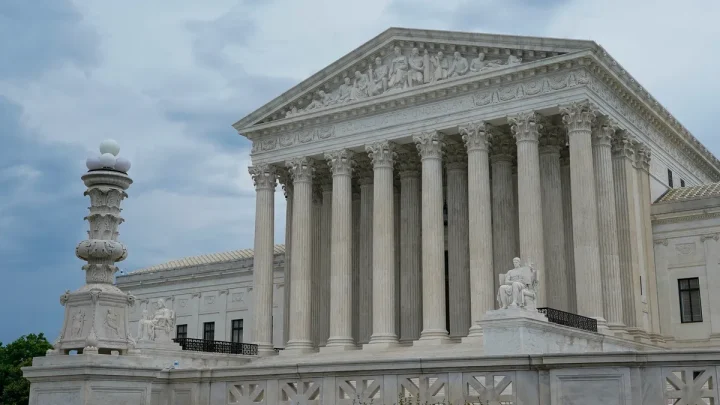
Cybersecarmor.com – On August 31, a divided Supreme Court lets Trump proceed with a $400 million ballroom and subterranean security annex attached to the White House. The 5-4 ruling, issued in an unsigned opinion, avoided the core constitutional question of whether Congress must approve such a project and instead resolved the case on standing. By finding that the challengers had not shown a concrete injury, the majority cleared the administration to finish a structure its critics say will permanently reshape one of America’s most recognizable civic buildings.

How a Standing Ruling Sidestepped the Merits

The dispute arrived at the justices through an emergency appeal filed by the Justice Department. Earlier that spring, a federal district judge had limited construction to underground bomb-shelter work absent congressional authorization. A split appeals court affirmed that restriction in early August but stayed its immediate force, opening a brief window for the administration to seek review. On August 21, Chief Justice John Roberts personally extended the stay, granting the full bench time to consider the appeal.

When the court finally acted, the majority held that the National Trust for Historic Preservation — the organization contesting the ballroom — had not demonstrated the kind of particularized injury required to sue. The trust’s claim rested largely on one member’s objection to how the White House façade would appear after renovation. The majority deemed that disagreement too attenuated to confer standing.

“This Court has not found standing in circumstances like these before,” the unsigned opinion read. “Perhaps nearly any government action or project offends someone’s sensibilities.”

The practical effect was to remove the project from judicial review at this juncture without opining on whether the construction itself was lawful. The majority stressed it was not reaching the congressional-approval question.

Roberts’ Dissent and the Project’s Scope

Chief Justice Roberts, joined by the court’s three liberal justices, dissented sharply. He argued the majority ignored precedent recognizing that “mere esthetic interests” can constitute a cognizable injury. By dismissing the trust member’s objection, he wrote, the court was enabling an executive project that likely intrudes on Congress’s constitutional authority over federal spending and property regulation. He called the construction “likely unlawful” and warned that harms to the building’s historic character, once the structure was complete, would be effectively irreversible.

“The White House is an iconic American building whose symbolism and history are wrapped up in its architecture,” Roberts wrote. “Today’s decision is no victory for the separation of powers.”

The ballroom effort began last October when Trump ordered demolition of the East Wing, a section that had housed offices and ceremonial spaces for decades. In its place, contractors are erecting a 90,000-square-foot ballroom funded entirely by private donors, alongside an extensive underground complex designed as a hardened security and command facility. Director of National Intelligence Jay Clayton told the court the project was essential to ensuring the White House could serve as a secure venue for presidential events. The Justice Department’s filings noted construction was already 65 percent complete and had “passed the point where major changes” to the design were feasible. Because specified materials are engineered to withstand nuclear blasts, the department argued any court-ordered demolition at the conclusion of litigation would be practically impossible.

Trump celebrated the ruling on social media, dismissing the lawsuit as “baseless.” “I am pleased to report that the United States Supreme Court has just ruled in favor of the Ballroom/Military Complex being built without any further contingency, doubt, or threat,” he posted. Brent Leggs, president of the National Trust for Historic Preservation, urged the court to revisit the case through full written and oral briefing once the justices return from their summer recess.

Frequently Asked Questions

What exactly did the Supreme Court decide? The court ruled on standing alone, finding the challengers had not shown a concrete, particularized injury. It did not rule on whether Congress must authorize the ballroom project.

Can the construction be stopped now? Under the majority’s reasoning, no court can enjoin the work at this stage because no party has been found to have standing. The merits question remains open for a future case with a properly established injury.

Who funded the ballroom? The administration states the 90,000-square-foot structure is funded entirely by private donors, not by congressional appropriations.

What is the dissent’s main concern? Chief Justice Roberts, joined by three colleagues, argued the majority’s standing ruling effectively shieldsed an executive project that likely violates the separation of powers and irreversibly alters a historic federal building.

Some Gen Z men are ‘pheromone-maxxing.’ What does that mean?

Gen Z Men Are Skipping Showers to Chase a Dating Trend Called “Pheromone-Maxxing.” Here’s What Science Actually Says

Cybersecarmor.com – A growing cohort of young men on short-form video platforms has begun treating their own body odor as a competitive advantage in the dating world. The strategy, which they label “pheromone-maxxing,” involves deliberately reducing or eliminating routine hygiene habits — no shampoo, no deodorant, sometimes no shower at all — in the belief that their unfiltered biological scent will make them more attractive to potential partners.

The logic, as articulated by participants in the trend, is straightforward. One TikTok user posted: “Stopped washing my hair at all and now I unironically get more compliments on how it smells and looks (from women). Pheromone maxxing is key.” Another contributor went further, claiming that wearing cologne or deodorant actively sabotages romantic success: “The reason you can’t pull baddies is because you wear cologne and deodorant.” A third user joked about receiving praise for what he described as a “disgusting onion smell” after abandoning fragrance products entirely.

Where the Trend Came From

The vocabulary and ethos of pheromone-maxxing trace back to the broader “looksmaxxing” subculture, a community of creators who advocate aggressive, sometimes extreme interventions to optimize physical appearance. Within that ecosystem, proponents have pushed ideas ranging from pharmaceutical manipulation of body-fat percentage (dubbed “leanmaxx”) to self-administered facial filler injections. One particularly controversial recommendation — “bonesmashing,” the deliberate fracturing of bones in the hope they will regenerate with a more angular structure — has been thoroughly debunked by orthopedic specialists, yet it persisted in community discourse for years. Pheromone-maxxing sits at the gentler end of that spectrum, but it shares the same underlying assumption: that small behavioral tweaks can unlock a hidden layer of attractiveness.

What Pheromones Actually Are

To evaluate the trend, it helps to understand the biology. Pheromones are chemical signals released by one individual of a species and detected by another, triggering specific behavioral or physiological responses. In many animal species, these molecules play a well-documented role in mating, territorial marking, and social hierarchy.

Pamela Dalton, a psychologist and olfactory scientist at the Monell Chemical Senses Center, explains that human body odor can carry information about emotional state, health status, age, and genetic diversity. In principle, the chemicals in sweat and sebum could encode that data. However, she is explicit about the limits of the science: no robust link between human pheromones and romantic attraction has been established. “Human chemical communication does not really influence behavior in the same way that pheromones in other species do,” Dalton states.

Being drawn to a partner’s scent is a genuine phenomenon, but the mechanism is likely associative rather than pheromonal. Over time, a person’s unique olfactory signature becomes intertwined with their identity in your memory, and familiarity breeds fondness. That is a different process from the hardwired, species-level signaling that pheromones represent in, say, moths or mice.

The Dermatologist’s Verdict

Dr. Shereen Teymour, a board-certified dermatologist based in New York, frames the trend as a distortion of a legitimate scientific observation. “Pheromone-maxxing takes a kernel of legitimate science — the fact that humans produce individual chemical odors and that smell can influence how we perceive other people — and stretches it into a conclusion the science doesn’t support,” she says.

Her practical objection is blunt: “Not showering isn’t pheromone-maxxing. For the most part, it’s bacteria-maxxing.” When sweat, dead skin cells, and microbial metabolites accumulate on the skin, the resulting odor profile shifts away from any subtle individual chemical signature and toward the broad, pungent signatures of bacterial decomposition. In other words, the trend likely produces the opposite of its intended effect.

Practical Hygiene Guidance

Teymour offers straightforward recommendations for anyone who wants to maintain healthy skin without over-cleansing:

Use a gentle cleanser, paying particular attention to areas where sweat, bacteria, and odor concentrate — underarms, groin, and feet. Avoid excessively hot water and harsh antibacterial soaps if they leave skin dry or irritated. Understand the distinct roles of antiperspirant (which reduces sweat production at the gland level) and deodorant (which masks or neutralizes odor after it forms). For most people, showering regularly and after exercise or heavy sweating is a reasonable baseline.

“Ultimately, good hygiene doesn’t mean eliminating every trace of your natural scent or disrupting your skin microbiome. It means keeping the skin clean, comfortable and healthy,” Teymour concludes.

Why the Trend Persists Anyway

The appeal of pheromone-maxxing is less about dermatology and more about narrative. In a dating landscape saturated with curated images and algorithmic comparison, the idea that your unedited biology is secretly more compelling than any product you could buy offers a seductive shortcut. It reframes a hygiene habit as a strategic choice, and a shower as a competitive disadvantage. Social media amplifies the effect: advertisements for “pheromone perfumes” promising to supercharge these chemical signals rack up millions of views, reinforcing the notion that scent is a dial you can turn up.

Dalton notes that while certain strong odors — those associated with physical exertion or sexual activity — can be perceived as attractive in the context of an established intimate relationship, it is rare for that response to generalize to a stranger. The chemistry of attraction, in other words, operates within a relational frame that a stranger on a dating app simply does not share.

For now, the scientific consensus remains clear: your natural scent is interesting, but it is not a secret weapon. And the most reliable way to keep it subtle and pleasant is still the one your grandmother recommended — a regular shower, a mild soap, and a little common sense.

Frequently Asked Questions

What is Some Gen Z men are pheromone?

Some Gen Z men are pheromone is the main topic of this guide. The article explains the context, practical details, and next steps readers should understand.

Why does Some Gen Z men are pheromone matter?

Some Gen Z men are pheromone matters because readers are looking for a useful answer, not just a short summary. Good content should match search intent and help them decide what to do next.

Lionel Richie hospitalized after Missouri tour stop: Report

Lionel Richie Admitted to St. Louis Hospital After Concert, Awaiting Discharge

Cybersecarmor.com – The veteran pop and R&B icon Lionel Richie, now 77, was admitted to a hospital in St. Louis, Missouri, following his Saturday, Aug. 29, concert at the St. Louis Municipal Opera Theatre. The singer, who has been sharing the stage with the legendary funk ensemble Earth, Wind & Fire on the Sing a Song All Night Long Tour, reportedly suffered from dehydration and was expected to leave the facility by Tuesday, Sept. 1. News of the hospitalization surfaced publicly on Monday, Aug. 31, drawing immediate concern from fans tracking the tour’s already turbulent schedule.

A Night of Warnings on Stage

Those who attended the St. Louis performance recalled visible signs that Richie’s body was struggling. During the closing number, the 1983 smash “All Night Long (All Night),” he took a seat at center stage rather than continuing to move through the audience-facing choreography. Throughout the remainder of the set, he was seen sipping electrolyte replacement drinks, a practice that touring musicians adopt when fluid balance becomes a concern. He wore a red leather jacket layered over an all-black ensemble for the evening, a look that contrasted sharply with the vulnerability of his seated position.

Richie addressed the audience directly about his condition, offering a candid explanation mid-set:

“Some things have been happening on this tour that kind of shook me up a little bit, because I couldn’t figure out what the hell was going on. I went back to the doctor, and he said, ‘You are suffering from dehydration.'”

For a performer of his age and stature, dehydration on tour is not merely an inconvenience. Sustained vocal exertion, warm stage lighting, limited hydration windows between songs, and the cumulative fatigue of consecutive nights in different time zones all compound the risk. At 77, the body’s capacity to regulate fluid and electrolyte balance diminishes, making what might be a manageable issue for a younger artist potentially dangerous for a senior performer. Medical teams attached to major tours typically monitor vital signs between sets, but the margin for error narrows considerably with age.

A Tour Already Plagued by Health Setbacks

The St. Louis date was originally intended to serve as the final stop of the Sing a Song All Night Long Tour. However, three additional dates were appended to the itinerary in September and October after earlier shows were postponed due to health problems among the performers. The most recent disruption involved John Paris, the drummer for Earth, Wind & Fire, who suffered what was described as a “medical emergency” prompting a rescheduling of an Aug. 6 show. Paris was placed into two medically induced comas but has since regained consciousness, a development that offered relief to fans of the group’s decades-long run.

Richie’s own next scheduled appearance is set for Sept. 26 in San Francisco. Further dates follow on Sept. 30 in Chicago and Oct. 2 in Columbus, Ohio. Those latter two concerts had originally been slated for June but were pushed back so the former Commodores frontman could “rest and return to full health.” The postponement came after his St. Paul, Minnesota, show on June 24 was cut short when he appeared to experience dizziness onstage and remained seated while delivering several songs. He returned to the stage for the June 30 performance in Pittsburgh, signaling his determination to complete the run despite the physical toll.

Earth, Wind & Fire: A Legacy on the Line

The pairing of Richie with Earth, Wind & Fire carries enormous cultural weight. The Oakland-born group, formed in 1969, built a catalog spanning funk, soul, and pop that includes chart-toppers like “September” and “Boogie Wonderland.” Their collaboration with Richie, who rose to fame as lead singer of the Commodores before launching a solo career with hits such as “Hello” and “All Night Long,” represents a convergence of two pillars of American popular music. For audiences who have followed both acts since the 1980s, the tour is less a concert than a reunion with a shared era of their lives. Any further cancellations or delays therefore carry emotional stakes beyond the commercial.

What Comes Next: American Idol and Beyond

Separate from the touring question, Richie’s future role as a judge on the television series “American Idol” remains uncertain. He is set to enter his tenth season in that capacity, and the show has announced that its milestone Season 25 will air in 2027. Whether his current health trajectory permits him to fulfill that commitment will likely become clear in the coming weeks. His presence on the panel has been a consistent fixture since the show’s revival, lending gravitas to a program that has shaped the careers of countless aspiring vocalists.

Richie’s representative had not issued a formal statement as of the latest reporting. Fans and industry observers will be watching closely to confirm whether the Sept. 26 San Francisco date proceeds as planned or whether further adjustments to the tour schedule become necessary. For now, the singer’s stated goal is a swift recovery and a return to the stage he has occupied, in one form or another, for more than five decades.

Frequently Asked Questions

What is Lionel Richie hospitalized after Missouri tour?

Lionel Richie hospitalized after Missouri tour is the main topic of this guide. The article explains the context, practical details, and next steps readers should understand.

Why does Lionel Richie hospitalized after Missouri tour matter?

Lionel Richie hospitalized after Missouri tour matters because readers are looking for a useful answer, not just a short summary. Good content should match search intent and help them decide what to do next.