FBI seizes Swalwell’s phone, search his home in federal investigation


Daftar Isi
Federal Agents Raid Former Congressman’s Devices and Home in Widening Probe
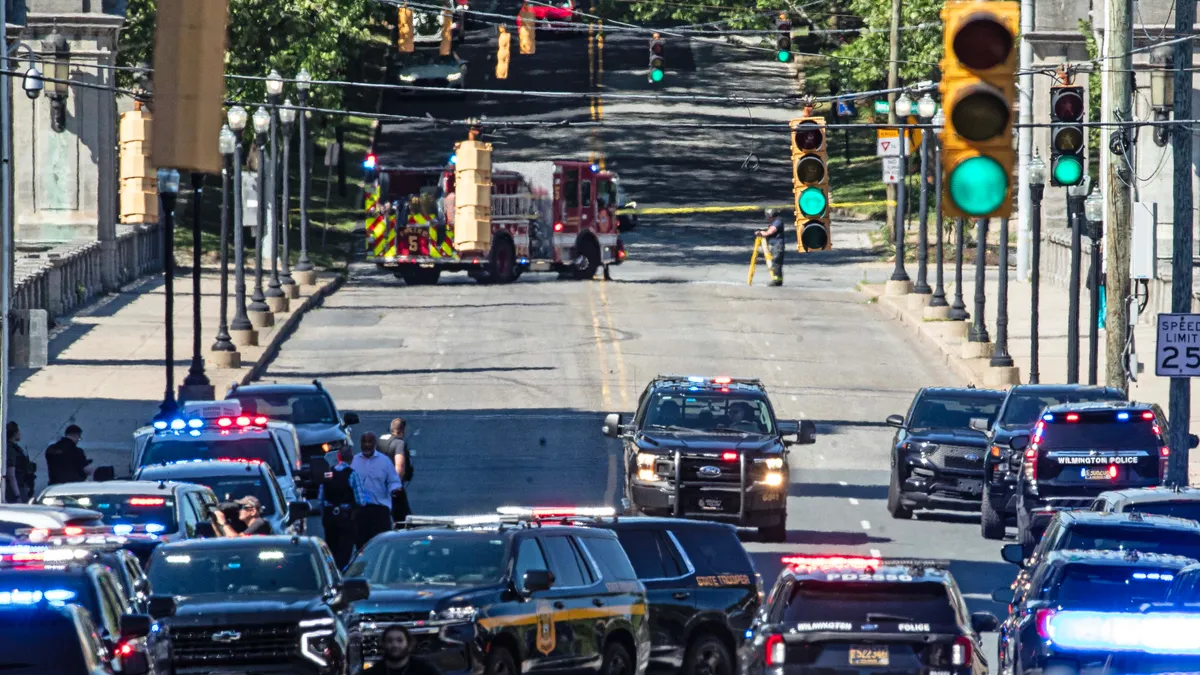
Cybersecarmor.com – Former California Representative Eric Swalwell found himself at the center of a federal law-enforcement operation this past weekend when agents carrying multiple search warrants swept through his personal electronics and his Washington, D.C., residence. The coordinated seizures, carried out under the authority of a federal investigation into allegations of sexual misconduct, marked a sharp escalation in a case that had already drawn national attention after Swalwell abruptly withdrew his campaign for California governor and stepped down from Congress in April.
What Agents Took and When
Court filings reveal that the first warrant was executed on the evening of August 15 at 8:25 p.m. Agents removed the former congressman’s iPhone, a MacBook Pro laptop, a charging cable, and a wall adapter. While the warrant itself does not specify the location where it was served, multiple outlets confirmed that Swalwell was confronted with the order shortly after he landed at San Francisco International Airport.
A second warrant followed the next day, August 16, directed at his home in the nation’s capital. There, agents collected additional items of evidence, broadening the scope of materials now in federal hands. The FBI declined to provide any public comment on the investigation.
The Statute at the Heart of the Case
The government’s investigation proceeds under federal statute 18 U.S.C. § 242, a provision that carries extraordinary weight in American criminal law. As the Justice Department describes it, the code section:
“makes it a crime for a person acting under color of any law to willfully deprive a person of a right or privilege protected by the Constitution or laws of the United States.”
That language, paired with references to other unspecified offenses in the court records, means the potential exposure for Swalwell is severe. Under the Justice Department’s own accounting, a conviction on this charge could carry a sentence ranging from life imprisonment to the death penalty. No formal charges have been filed against Swalwell in connection with the investigation as of now.
The choice of § 242 is notable. The statute is most commonly invoked in cases involving police officers or other government actors who abuse their official positions to strip citizens of constitutional protections. Its application to a former member of Congress — a figure who himself wielded legislative power — underscores how the government frames the alleged conduct: not merely as private misconduct, but as an abuse of public office.
A Decade-Old Thread Pulled Open
The current seizures do not exist in a vacuum. They follow months of reported pressure from FBI Director Kash Patel to reopen files from a closed investigation dating back roughly a decade. That earlier probe examined the relationship between Swalwell and Christine Fang, a woman described as a suspected Chinese intelligence operative.
On August 17, the White House made public declassified records from that older inquiry. Among the released materials were details from two FBI interviews in which Swalwell acknowledged that he had a physical relationship with Fang on several occasions during 2015.
According to the records, Fang had helped Swalwell raise funds for his 2014 reelection campaign and had placed an intern in his congressional office. When federal agents raised concerns about her presence and activities, Swalwell reportedly severed ties with Fang in 2015 and cooperated with the agency’s follow-up work. In 2023, the Republican-led House Ethics Committee concluded its own inquiry into the congressman and closed the matter without recommending action.
Why This Matters Now
Swalwell’s political exit came in April, when he ended his run for California governor and resigned his House seat after several women came forward alleging he committed sexual assault and misconduct. The timing of the federal operation — weeks after his departure from public office — raises questions about how long the government had been assembling its case before moving to seize evidence.
The intersection of two distinct threads — the sexual-misconduct allegations and the older question of foreign-intelligence proximity — gives the investigation a layered complexity. A § 242 charge, if ultimately pursued, would require the government to demonstrate that Swalwell acted under the color of federal law and willfully deprived someone of a constitutionally protected right. How prosecutors intend to map the alleged conduct onto that statutory framework remains to be seen.
For now, the former congressman faces no indictment. What he faces instead is a federal investigation in full swing, with his personal devices and home already searched, and with the Justice Department holding the evidentiary materials needed to decide whether the case moves from inquiry to prosecution.
Related Reading
Frequently Asked Questions
What is FBI seizes Swalwell s phone search?
FBI seizes Swalwell s phone search is the main topic of this guide. The article explains the context, practical details, and next steps readers should understand.
Why does FBI seizes Swalwell s phone search matter?
FBI seizes Swalwell s phone search matters because readers are looking for a useful answer, not just a short summary. Good content should match search intent and help them decide what to do next.