Why federal agents boarded two cruise ships in Boston

Daftar Isi
Eleven Cruise Crew Members Removed from U.S. After Boston Shipboard Searches
Cybersecarmor.com – Federal immigration authorities processed eleven crew members for departure from the United States after boarding two large passenger vessels in Boston’s port between August 14 and 16. The individuals, employed by Holland America Line and Norwegian Cruise Line, faced allegations that they received and shared photographs depicting child sexual abuse. The action marked the latest chapter in a coordinated federal campaign targeting exploitation material aboard commercial cruise ships.
The Boarding and Removal Process
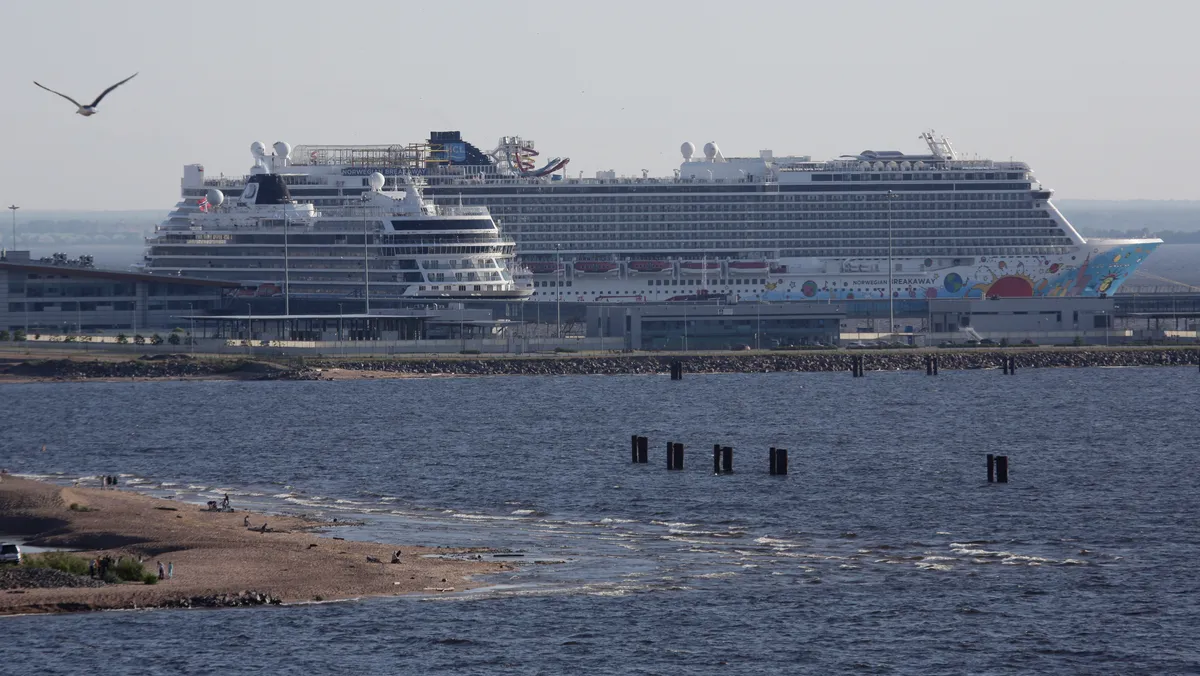
Officers from U.S. Customs and Border Protection, working alongside agents from Homeland Security Investigations, conducted thorough inspections of the living quarters and electronic devices belonging to the affected crew members on Holland America’s Volendam and Norwegian Breakaway. After completing those searches and consulting with the U.S. Attorney’s Office, all eleven individuals were processed for removal under Section 212(a)(2)(A)(i)(I) of the Immigration and Nationality Act, a provision covering offenses classified as crimes involving moral turpitude.
“Following a comprehensive search of the subjects’ living quarters and electronic devices, and consultation with the U.S. Attorney’s Office, all 11 individuals were processed for removal under Section 212(a)(2)(A)(i)(I) of the Immigration and Nationality Act for crimes involving moral turpitude,” CBP said in an Aug. 20 news release. “The individuals were processed with the assistance of the shipping agent and are scheduled to depart the United States.”
Nine of the eleven held Philippine passports. One was an Indonesian national and one a Nicaraguan. Officials did not release the individuals’ names publicly.
Company Responses
Holland America Line responded swiftly to the news. In a written statement, the company characterized the allegations as deeply troubling and affirmed its cooperation with investigators.
“These allegations are deeply disturbing, and we have zero tolerance for criminal behavior,” Holland America Line said. “We are fully cooperating with law enforcement and immediately terminated the individuals involved.”
Norwegian Cruise Line issued its own statement acknowledging the situation and emphasizing its commitment to passenger safety across its fleet.
“The safety, security, and well-being of our guests are of paramount importance, and we remain committed to maintaining a safe and secure environment across our fleet,” the cruise line said.
The Norwegian statement also noted that the company was “cooperating with the appropriate authorities.”
Operation Tidal Wave: A Multi-Phase Federal Effort
The Boston action was not an isolated incident. It formed part of Operation Tidal Wave, a multi-agency initiative specifically designed to identify and address the production, procurement, possession, use, and distribution of child sexual abuse and exploitation material among cruise-ship crew members. CBP confirmed the operation’s scope in its public release.
The campaign has already produced results in earlier phases. In San Diego, on April 27, crew members from six different vessels faced administrative enforcement actions and were processed for removal and returned to their home countries. A subsequent phase in San Juan, Puerto Rico, spanning June and July, led to administrative enforcement actions against fourteen crew members from three ships, along with the acceptance of federal prosecution for one individual.
Julio Caravia, Acting Director of Field Operations for CBP’s Boston Field Office, framed the operation in terms of public-safety protection.
“Protecting children from exploitation is among our highest priorities, and this operation demonstrates the critical role CBP officers play in identifying and stopping individuals who pose a threat to public safety,” Caravia said in the release.
Broader Context: Why Cruise Ships Are in Focus
The cruise industry employs tens of thousands of workers from developing nations, many of whom hold temporary visas tied to their ship assignments. When those workers are found to have committed offenses involving moral turpitude, immigration law provides a direct mechanism for removal without requiring a full criminal trial. This makes the cruise sector a particularly visible arena for immigration enforcement, even though the underlying conduct—possession or distribution of child exploitation imagery—is not unique to maritime employment.
Anthony Salisbury, who served as special agent in charge at Homeland Security Investigations Miami, told a travel publication in 2024 that child exploitation cases had risen broadly across sectors, not confined to any single industry.
“If it’s up across the board, you’re going to see it up across the cruise ships,” he said at the time.
That observation underscores a point worth noting for travelers: the federal government’s attention to crew conduct aboard passenger vessels reflects a wider national trend in how child-exploitation material is detected, tracked, and prosecuted. Cruise lines, which operate under both U.S. and international maritime regulations, have increasingly been expected to demonstrate active oversight of crew behavior, particularly where minors are among the passengers.
What Passengers Can Understand
For families traveling with children, the Boston action highlights that cruise lines and federal agencies treat crew conduct as a passenger-safety issue, not merely an employment matter. The immigration-removal pathway used here means the individuals were processed for departure rather than held in local detention pending trial, a distinction that affects timelines and public visibility. Families aboard future sailings need not alter their travel plans, but they may reasonably expect that crew vetting and onboard monitoring protocols will continue to tighten as Operation Tidal Wave moves through additional ports and phases.
The next steps for the eleven individuals involve departure from U.S. territory under the supervision of shipping agents, after which their home-country employers and immigration authorities will determine whether they may resume work elsewhere. No further criminal charges beyond the immigration-removal processing were publicly confirmed as of the August 20 release.
Related Reading
Frequently Asked Questions
What is Why federal agents boarded two cruise?
Why federal agents boarded two cruise is the main topic of this guide. The article explains the context, practical details, and next steps readers should understand.
Why does Why federal agents boarded two cruise matter?
Why federal agents boarded two cruise matters because readers are looking for a useful answer, not just a short summary. Good content should match search intent and help them decide what to do next.