President Trump blames vandals amid Reflecting Pool algae bloom

President Trump Blames Vandals Amid Reflecting Pool Algae Bloom
Cybersecarmor.com – Despite recent efforts to improve the aesthetic appeal of Washington, D.C., President Donald Trump has turned to blaming vandals for the algae bloom that has emerged in the Lincoln Memorial’s Reflecting Pool. The pool, which underwent a $16 million renovation, has become a focal point of criticism after the algae problem resurfaced, prompting the president to defend his administration’s work while pointing fingers at those he claims are responsible.
Algae Bloom Emerges After Renovation
On June 19, Trump posted a message on Truth Social, asserting that his team had “cleaned, renovated, and beautified” over 45 monuments and memorials, along with 28 statues and 22 fountains, in the nation’s capital. He claimed that the Reflecting Pool, situated between the Washington Monument and Lincoln Memorial, was “beautiful” and had “things looking really good” after the overhaul. However, he quickly shifted to blame vandals for the current algae issue, which has sparked controversy among visitors and officials.
“However, we’ve had some real problems with Vandalism at the beautiful Reflecting Pool,” the post added. “They destroyed the grass outside of the Pool three days ago and have also done everything possible to hurt the inside surface that was just installed.”
Trump suggested that the algae growth was a direct result of deliberate sabotage, comparing it to the chemicals used on the National Mall to “destroy and demean our beautiful work.” His post stated that the algae was “75% gone” and that the situation would soon be “completely remedied.” He also claimed that the area vandalized was “just a small area of damage” and would be “fixed early next week.” Law enforcement agencies are currently investigating the matter, Trump confirmed in his statement.
Historical Context of Algae Issues
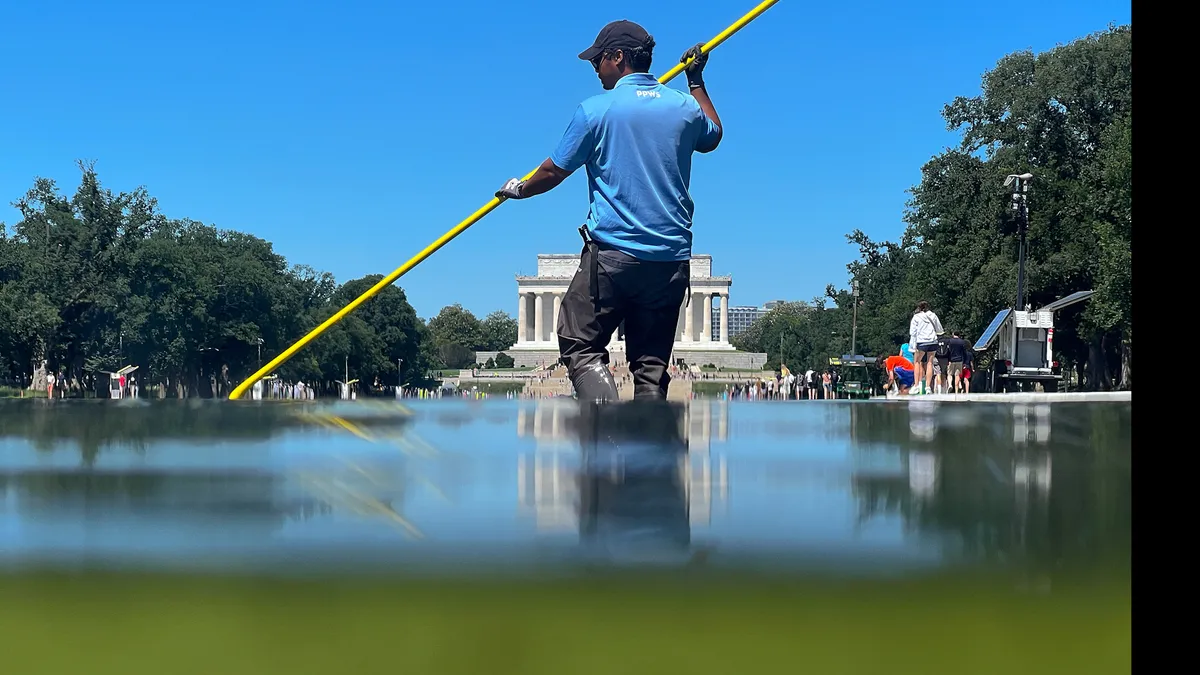
While Trump framed the algae bloom as a new problem caused by vandals, historical records indicate that the issue is far from novel. According to a statement from the Department of the Interior, algae has “plagued every pool reopening since 1922,” suggesting that the phenomenon is a recurring challenge for the Reflecting Pool. This pattern was evident after a $34 million renovation in 2012, when the pool’s water turned into an “icky sea of algae” just days after being filled, as USA TODAY reported. Workers were observed skimming the surface near the World War II Memorial in the aftermath.
Environmental factors also appear to play a role in the current algae bloom. The Centers for Disease Control and Prevention (CDC) notes that warm water and sunlight can “rapidly multiply” algae, which aligns with the timing of the bloom. The algae in the Lincoln Memorial pool became noticeable by June 11, just a few days after the summer heat intensified. By June 12, temperatures in the DC area had reached 100 degrees, a significant spike that likely contributed to the algae’s growth.
Additionally, rainfall in the region may have exacerbated the issue. On June 10 and June 12, nearly a tenth of an inch of rain fell, according to National Weather Service records. These downpours could have introduced nutrients into the pool, which are known to fuel algae blooms. The CDC explains that such nutrients are often carried into water bodies by “particles that run off paved surfaces” during rain, creating an environment conducive to rapid algae growth.
Public Reaction and Environmental Factors
While Trump’s response focuses on human interference, some experts argue that natural conditions are a more plausible explanation for the algae bloom. The National Park Service, which maintains the Reflecting Pool, has been working to address the issue, but the president’s portrayal of the problem as a result of vandalism has drawn mixed reactions. Critics note that algae growth is a common occurrence in water features during the warmer months, especially when combined with high temperatures and precipitation.
Environmental scientists emphasize that the algae bloom is not unique to the Lincoln Memorial. Similar issues have been reported in other public pools and ponds across the country, particularly in areas experiencing prolonged periods of heat and rain. The conditions in Washington, D.C. this summer have created a perfect environment for algae to thrive, with temperatures hitting 92 degrees on June 10 and then surging to 100 degrees just days later. These extreme weather patterns have not only affected the Reflecting Pool but also raised concerns about the impact on other water features in the city.
Experts suggest that the algae problem is a symptom of broader environmental challenges, such as nutrient runoff from urban areas and increased water temperatures due to climate change. “Algae blooms are a natural response to excess nutrients and warm water,” one researcher noted. “They can occur in any well-maintained water feature, especially in the summer months.” This perspective highlights that while vandals may have contributed to the issue, the primary cause is likely tied to the region’s weather and the pool’s maintenance practices.
Author Bio
Dinah Voyles Pulver, a national correspondent for USA TODAY, specializes in covering climate change, weather, the environment, and other related news. Her work often explores the intersection of environmental science and public policy, providing insights into how natural phenomena impact communities and infrastructure. To reach Dinah Voyles Pulver, contact her at dpulver@usatoday.com or follow her on Bluesky, X, or Signal under the handle @dinahvp or dinahvp.77, respectively.
The algae bloom in the Reflecting Pool serves as a case study of how environmental conditions and human activity can interact to create challenges for public spaces. While Trump’s administration has invested significant resources in beautification projects, the algae issue underscores the complexities of maintaining such features in a dynamic climate. Whether the problem is a result of vandalism or natural factors, the pool’s condition remains a topic of discussion, reflecting broader debates about the role of government in environmental stewardship and public maintenance.