Lindsay Clancy trial prosecutors, defense give closing arguments

Daftar Isi
Closing Arguments Conclude Lindsay Clancy Murder Trial as Jurors Prepare to Deliberate
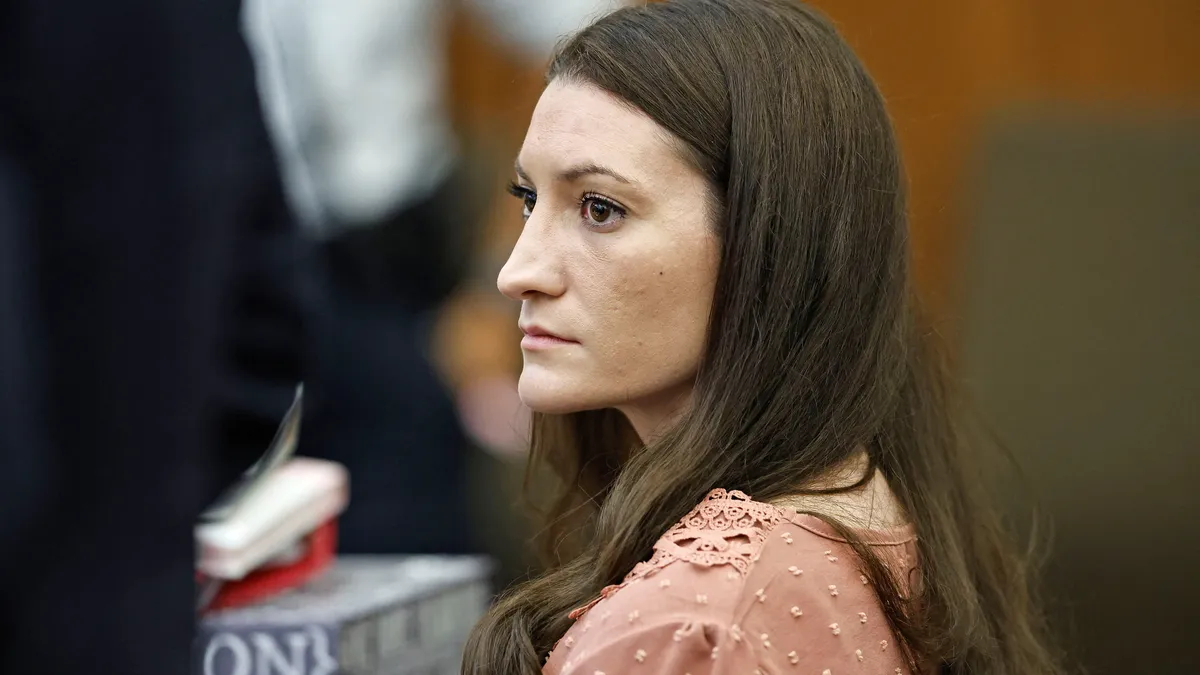
Cybersecarmor.com – After nearly two months of testimony, expert analysis, and legal maneuvering, the trial of Lindsay Clancy reached its final courtroom phase on August 27, when both sides delivered one-hour closing statements to the jury. The Massachusetts mother, now 36, stands accused of strangling her three young children in their Duxbury home in January 2023. Prosecutors and defense counsel framed the case in starkly opposing narratives: one side urged jurors to find a calculated killer, while the other asked them to recognize a woman overwhelmed by postpartum psychosis.
The Charges and the Night in Question
Clancy faces three counts of murder connected to the deaths of Cora, then 5; Dawson, then 3; and Callan, who was just 8 months old. All three children were found dead at the family’s Duxbury residence on the night of January 24, 2023. Clancy has maintained her innocence throughout the proceedings, pleading not guilty to every count.
The prosecution’s theory of the case centers on premeditation. According to Plymouth County Assistant District Attorneys Shanan Buckingham and Jennifer Sprague, Clancy dispatched her husband to retrieve takeout food and prescription medications, creating a window of solitude. While he was away, the state alleges, she strangled each child individually using exercise bands, moving them to the basement and separating them into different rooms. Afterward, Clancy cut her wrists and neck and leapt from a second-story window, an act that left her paralyzed.
Prosecution’s Closing: Methodical Intent
Assistant District Attorney Jennifer Sprague opened the state’s closing argument by acknowledging Clancy’s documented mental-health struggles while insisting those struggles do not erase what happened that night.
“This case is not about our mental health system and how it treats women. … What’s on trial here, what the issue is here, is what Lindsay Clancy did the night of January 24, 2023, and what her mental state was at the time,” Sprague said.
Sprague walked the jury through the prosecution’s timeline, emphasizing the sequential, room-by-room nature of the killings as evidence of planning rather than impulse. She argued that Clancy understood the distinction between right and wrong at the moment of the act and made a deliberate choice to take her children’s lives alongside her own.
“She was depressed. She was exhausted. She was done. She didn’t want to try anymore. She felt damaged. But those kids, those kids were her protective factor. Those kids were keeping her from ending her misery. And so she had to remove the protective factor,” Sprague said.
“She could have killed herself and left her kids alive. But it was a choice to take them with her.”
The prosecutor also challenged Clancy’s account of her medical care, arguing that the mother did not always provide truthful information to her providers and failed to take prescribed medications as directed. Sprague noted that Clancy, a registered nurse by profession, understood the importance of following medical instructions. The state further contended that Clancy fabricated an auditory hallucination she claimed to have heard, pointing to inconsistencies in her story and the absence of any subsequent voice experiences.
Over the course of 14 days of testimony, the prosecution called more than 70 witnesses before resting its case on August 17.
Defense’s Position: Postpartum Psychosis and Lack of Criminal Responsibility
Clancy’s attorney, Kevin Reddington, built his defense around the insanity argument — formally, a claim that Clancy lacked criminal responsibility because she was experiencing postpartum depression and psychosis at the time of the killings. Reddington rested the defense case on August 21 after presenting 10 witnesses. The prosecution subsequently called three rebuttal witnesses to counter specific points raised during the defense presentation.
The defense narrative positions Clancy not as a scheming killer but as a new mother whose mental state had deteriorated to the point where she could not form the intent required for a murder conviction. Postpartum psychosis, a rare but severe condition affecting roughly one to two women per thousand births, can produce hallucinations, delusions, and a profound disconnection from reality. The defense argued that Clancy’s actions that night were products of that condition rather than of rational planning.
Procedural Path Forward
Following the August 27 closings, Judge William Sullivan delivered final instructions to the jury, outlining the legal standards they must apply in reaching a verdict. The jurors are now tasked with weighing the evidence, evaluating expert testimony on mental state, and determining whether the prosecution has proven each element of murder beyond a reasonable doubt — or whether the insanity defense negates the requisite intent.
The trial has drawn sustained attention to questions about postpartum mental-health screening, the adequacy of follow-up care for new mothers, and the legal boundaries between psychiatric illness and criminal culpability. Whatever verdict the jury returns, the case will likely shape conversations in Massachusetts about how the state identifies and supports mothers in the vulnerable weeks following childbirth.
This article discusses suicide and suicidal ideation. If you or someone you know is struggling or in crisis, help is available. Call or text 988 or chat at 988lifeline.org.
Related Reading
Frequently Asked Questions
What is Lindsay Clancy trial prosecutors defense give?
Lindsay Clancy trial prosecutors defense give is the main topic of this guide. The article explains the context, practical details, and next steps readers should understand.
Why does Lindsay Clancy trial prosecutors defense give matter?
Lindsay Clancy trial prosecutors defense give matters because readers are looking for a useful answer, not just a short summary. Good content should match search intent and help them decide what to do next.