Brett Kavanaugh was at the White House on 9/11. It changed his life

Daftar Isi
For Brett Kavanaugh, Sept. 11 Remains a Defining Day
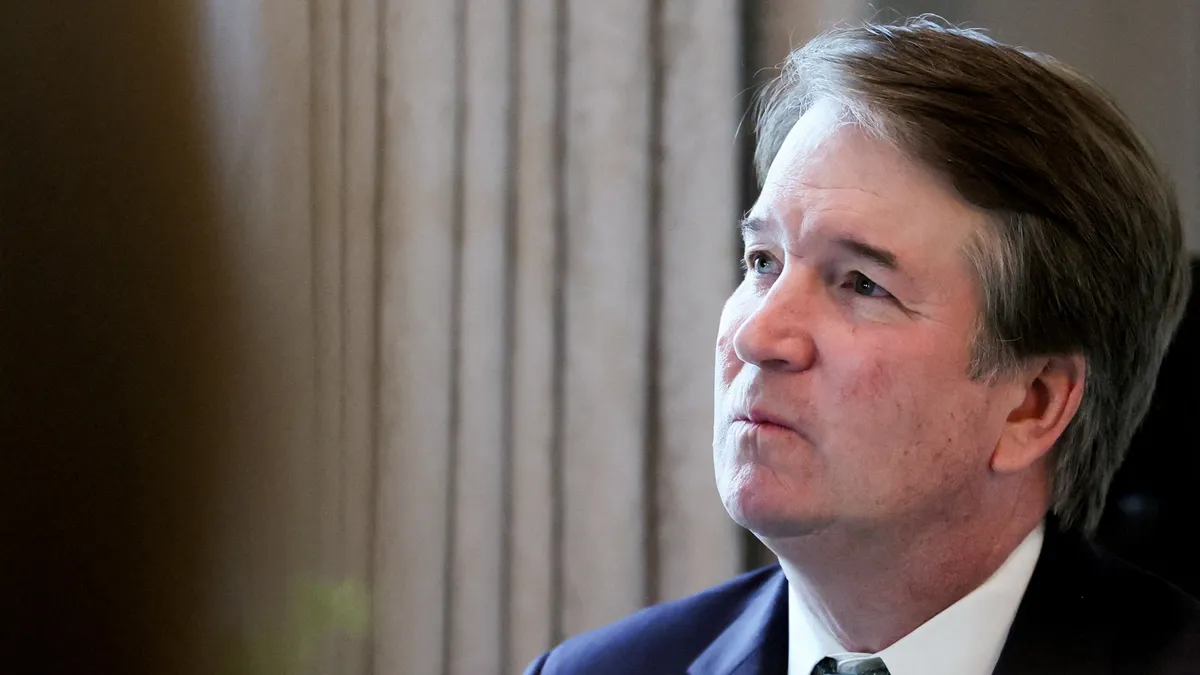
Cybersecarmor.com – Supreme Court Justice Brett Kavanaugh was working as a 36-year-old attorney in the George W. Bush White House when the attacks of Sept. 11, 2001, reshaped the country and his own path in public service.
As hijacked aircraft struck the World Trade Center, White House personnel soon learned that another plane was moving toward Washington. Kavanaugh and other aides who were outside the complex were told to leave immediately. The urgency of the evacuation has stayed with him for a quarter-century.
“The agents were screaming at us to run out the gate,” he said.
He particularly recalls Secret Service personnel telling women on the staff to remove high-heeled shoes so they could run faster. The scene, unfolding amid uncertainty about further attacks, became one of the most lasting memories of his life.
Emergency work after the attacks
Later that day, Kavanaugh and colleagues from the White House counsel’s office gathered at a nearby building while fighter jets flew overhead. He was assigned to examine the emergency authorities available to President Bush as the administration confronted an unprecedented national-security crisis.
In the following weeks, Kavanaugh worked on legislation intended to keep the airline industry afloat and establish a federal terrorism-insurance program. That program was later credited with helping commercial construction resume in New York City and in other parts of the country after insurers became reluctant to cover terrorism-related losses.
The experience gave Kavanaugh an early, direct view of the pressures facing a president during a national emergency. It also placed him close to legal and policy decisions that would influence the country’s response to terrorism for years.
For Kavanaugh, the attacks were not simply a historic event observed from inside government. They became the central personal marker by which he measures the gravity of that era.
“It’s the day of my life that I consider the most memorable, searing, important day in my life for the country and for me,” Kavanaugh said.
Faith, memory and public leadership
Kavanaugh has said the scale of the loss reinforced his religious beliefs. Faced with the deaths and destruction of that day, he found that faith offered the only framework through which he could begin to understand the tragedy.
“The only way to make sense of all this tragedy and death was to go back to your faith,” Kavanaugh said.
Each September, he revisits major moments from the period, including Bush’s address at Washington National Cathedral on Sept. 14, 2001, and the president’s later appearance at Ground Zero. In his chambers, Kavanaugh keeps a signed photograph of Bush delivering the ceremonial first pitch at Yankee Stadium shortly after the attacks.
He views that appearance as a public expression of resolve: an effort to show that terrorism would not change daily American life. While watching the president prepare to throw the ball, Kavanaugh remembers a simple worry running through his mind.
“Please God, let him throw a strike this time,” Kavanaugh recalled.
He also keeps the report of the 9/11 Commission nearby, reflecting the enduring place the attacks hold in his professional and personal memory. On Sept. 11, he is scheduled to discuss his experience during a University of Notre Dame panel marking the 25th anniversary of the attacks.
From White House lawyer to terrorism cases
The legal questions raised after 9/11 followed Kavanaugh into his judicial career. On the U.S. Court of Appeals for the District of Columbia Circuit, he considered several cases tied to the government’s response to terrorism and to detainees held at Guantanamo Bay, Cuba.
His record did not point in only one direction. In 2012, he wrote an opinion overturning the conviction of Salim Hamdan, who had served as a driver and bodyguard for Osama bin Laden. Kavanaugh concluded that Hamdan could not be tried for material support for terrorism because the conduct was not recognized as a war crime under international law when it occurred. He also determined that the military commission could not use a 2006 congressional law retroactively.
In other Guantanamo-related cases, Kavanaugh sided with prosecutors. After joining the Supreme Court, he was part of a 7-2 majority in 2022 that ruled against a detainee who had been tortured by the CIA overseas and sought information concerning his treatment.
The court may soon decide whether to take up issues in the long-running capital case involving Khalid Sheikh Mohammed, who is accused of planning the Sept. 11 attacks, and one alleged coconspirator. The case illustrates how legal questions set in motion after 2001 still reach the nation’s highest court.
Kavanaugh has said his background gives him familiarity with al-Qaida’s operations, while emphasizing that national-security cases remain subject to constitutional and legal limits. His approach reflects both the perspective of someone who worked in the White House during the crisis and the responsibility of a justice reviewing executive action.
Understanding presidential decisions
His years in government also shaped his view of the presidency itself. Kavanaugh has said judges should recognize that presidents often confront choices with no fully satisfactory outcome, regardless of party or administration.
“There are a lot of no-win decisions that presidents make,” he said.
He has applied that understanding to the administrations of Barack Obama, Donald Trump and Joe Biden, while maintaining that the difficulty of presidential decision-making does not remove the obligation to follow the law. The balance between executive authority, national security and constitutional restraint remains one of the lasting legal legacies of the Sept. 11 attacks.
Related Reading
Frequently Asked Questions
What is Brett Kavanaugh was at the White?
Brett Kavanaugh was at the White is the main topic of this guide. The article explains the context, practical details, and next steps readers should understand.
Why does Brett Kavanaugh was at the White matter?
Brett Kavanaugh was at the White matters because readers are looking for a useful answer, not just a short summary. Good content should match search intent and help them decide what to do next.