
At least five killed in Israeli strikes on Gaza including a nine-year-old boy
At Least Five Killed in Israeli Strikes on Gaza Including a Nine-Year-Old Boy
At least five killed in Israeli – A recent incident has reported the loss of five lives in Israeli airstrikes targeting the Gaza Strip. Among the casualties was Adel al-Najjar, a nine-year-old boy, who was tragically killed while gathering firewood in the eastern section of Khan Younis city. Hospital officials at Nasser Medical Center confirmed the boy’s death, noting that the location of the strike was approximately 400 meters west of the so-called Yellow Line. This boundary marks the division between areas under Israeli control and the remaining parts of the Gaza territory. The Israeli military has not issued an immediate statement regarding the incident, leaving questions about the circumstances and motivations behind the attack.
Impact on Civilian Life
The attack on Adel al-Najjar highlights the ongoing challenges faced by civilians in the region. His relative, Sabreen al-Najjar, voiced frustration and sorrow, stating in a poignant statement, “Every day they target children. What is the guilt of those children? Tell me, what is the guilt of these children? Do they carry weapons or tanks? They go to collect cardboard boxes (and firewood) for their mothers so they can cook and eat, just to eat and drink.” Her words underscore the vulnerability of children in the conflict and the daily risks they endure. The emotional toll on families is evident, as simple acts of survival are transformed into moments of peril.
Other Casualties in Gaza City
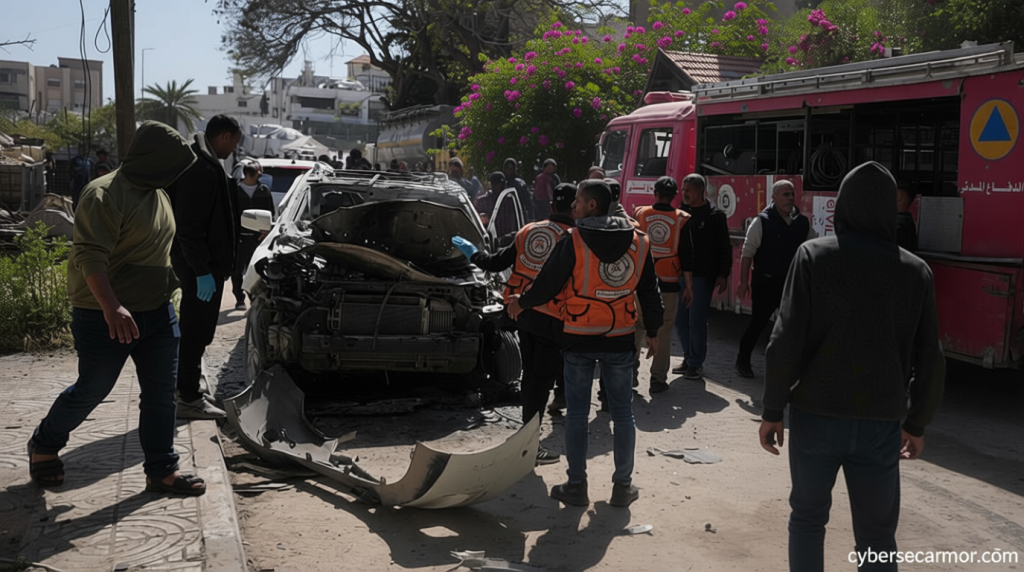
Compounding the tragedy, four men were killed in a separate Israeli strike that hit a vehicle in Gaza City. Shifa Hospital, located in the capital, reported the incident, though details about the vehicle’s occupants or the reason for the attack remain unclear. The Israeli army described the victim as “a terrorist,” but provided no additional information. This lack of transparency has sparked concern among local residents and international observers, who question the proportionality of such strikes in densely populated areas.
Gaza Health officials have documented a grim toll from the conflict since the October ceasefire agreement between Israel and Hamas. As of now, Israeli forces are reported to have killed at least 818 Palestinians, with a significant number of the victims being children and women. This statistic reflects the broader humanitarian crisis, where military operations have disrupted daily life and left families grappling with loss and uncertainty.
Evacuation Efforts to Jordan
In a bid to provide medical care, eighty-one children who were injured or ill were evacuated from Gaza to Jordan on Monday. These young patients, accompanied by their families, traveled via the King Hussein Bridge to various hospitals in the capital city of Amman. The evacuation was organized in collaboration with the World Health Organisation, underscoring the need for international support in addressing the crisis. However, the journey was not without its challenges, as families had to navigate logistical hurdles to secure treatment for their loved ones.
One family’s experience sheds light on the personal impact of these evacuations. Saleh Zeidan, the father of an injured girl, shared, “My daughter was injured; there are shrapnel fragments inside her body. My daughter Duaa’s hand was amputated, and two platinum rods were inserted into her fingers. After that, we received assistance from the Hashemite Kingdom of Jordan, who agreed to provide Duaa with a prosthetic hand and a bone graft for her finger.” His account illustrates the determination of families to seek help for their children, even in the face of ongoing conflict.
Medical Evacuations and Humanitarian Aid
The evacuation of more than 450 children requiring treatment has been part of a larger initiative by Jordan to support 2,000 children in the Gaza Strip. This effort, which began on 4 March 2025, aims to provide urgent medical care to those affected by the prolonged hostilities. Patients are expected to return to Gaza once their treatments are completed, though the duration and conditions of their stay remain under discussion. Jordan’s involvement has been crucial in alleviating some of the strain on Gaza’s healthcare system, which has been overwhelmed by the number of casualties.
The recent strikes in Khan Younis and Gaza City are emblematic of the broader pattern of violence that has characterized the conflict. While the Israeli military maintains that its actions are necessary to neutralize threats, the civilian casualties continue to raise concerns about the effectiveness of targeted operations. The loss of Adel al-Najjar, along with the other victims, serves as a reminder of the human cost of the ongoing tensions. Families are left to mourn their loved ones, while the community faces the daunting task of rebuilding lives amid the destruction.
As the situation in Gaza evolves, the interplay between military actions and humanitarian efforts becomes increasingly complex. The evacuation of children to Jordan represents a critical step in ensuring access to medical treatment, but it also highlights the precariousness of life in the region. For many families, the act of evacuating their children is both a relief and a source of anxiety, as they hope for recovery but fear the uncertainty of their return. The conflict continues to test the resilience of the people, with each strike adding to the collective trauma.
Broader Implications
The statistics from Gaza Health officials—818 Palestinians killed, including 226 children and 179 women—paint a picture of the disproportionate impact on vulnerable groups. This has led to growing calls for accountability and a reevaluation of the tactics used in the conflict. Meanwhile, the Jordanian initiative to evacuate children for medical treatment stands as a symbol of regional solidarity, even as the situation remains fraught with challenges. The treatment of these children is not just a medical issue but a reflection of the broader humanitarian efforts to mitigate the effects of war on civilians.
The continued strikes and evacuations have created a cycle of displacement and suffering for the people of Gaza. Adel al-Najjar’s death, Sabreen al-Najjar’s anguish, and Saleh Zeidan’s hope for his daughter’s recovery all contribute to a narrative of resilience and tragedy. As the conflict persists, the need for a balanced approach that minimizes civilian harm and ensures access to medical care becomes more urgent. The international community is closely watching these developments, with the potential for further escalation or de-escalation shaping the future of the region.

