
Europe revives renewables and nuclear to address the energy crisis
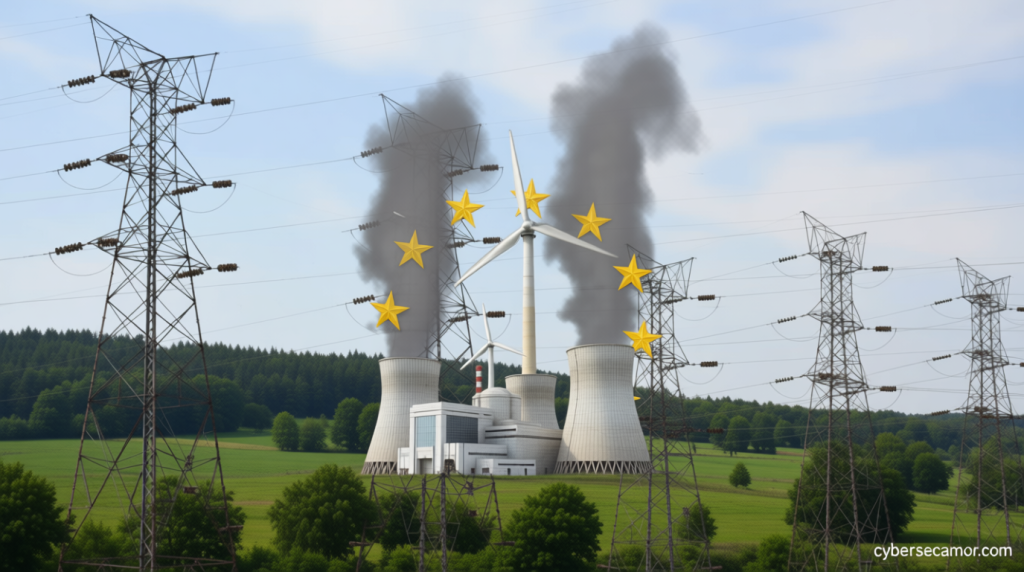
Europe’s Energy Crisis and Strategic Shift
Europe revives renewables and nuclear to address – The recent blockage of the Strait of Hormuz has sent shockwaves through Europe’s energy markets, causing prices to climb sharply. This vital maritime passage, which accounts for roughly 20% of the world’s oil supply, has become a flashpoint for global energy tensions. The disruption has highlighted Europe’s vulnerability to geopolitical shifts, prompting a renewed focus on diversifying its energy sources. Brussels has emphasized that the key to long-term stability lies in expediting the move toward cleaner, more sustainable energy systems.
“The financial burden of this crisis has been immense,” stated European Commission President Ursula von der Leyen on April 13. “In just 44 days since the US-Iran conflict escalated, we’ve incurred an extra €22 billion in fossil fuel import costs, with no corresponding increase in energy availability.”
Von der Leyen’s remarks underscore the urgency of Europe’s energy strategy. While the region has long been a leader in renewable energy, the current situation has exposed gaps in infrastructure and capacity. The Commission argues that the transition from fossil fuels must be not only accelerated but also solidified, with renewables and nuclear power forming the backbone of Europe’s future energy mix.
Expanding Renewable and Nuclear Capacity
Renewable energy sources, including wind, solar, and hydroelectric power, already supply more than 70% of Europe’s electricity. This figure has grown steadily over the past decade, driven by technological advancements and policy commitments. However, the recent energy crisis has forced a reevaluation of how these resources are harnessed and integrated into the grid. Nuclear power, once seen as a transitional option, is now being positioned as a critical pillar of the energy transition, particularly in light of its reliability and low carbon emissions.
The European Nuclear Alliance, a coalition of 15 member states, has emerged as a key player in this effort. By pooling resources and expertise, the alliance seeks to streamline the development of new nuclear projects and modernize existing ones. This initiative reflects a broader recognition that nuclear energy can provide consistent baseload power, complementing the intermittent nature of renewables. Meanwhile, Small Modular Reactors (SMRs) are gaining traction as a potential game-changer for the early 2030s. These compact, scalable reactors promise faster deployment and lower costs, making them an attractive option for countries aiming to boost nuclear capacity without relying on large-scale infrastructure projects.
Challenges in the Transition
Despite the progress made in renewable energy, the Commission has identified several hurdles that could slow down the transition. One of the most pressing issues is the limited storage capacity for excess energy. While solar and wind farms generate significant output, their intermittent nature requires robust energy storage solutions to ensure a steady supply during periods of low production. Current storage technologies, such as lithium-ion batteries and pumped hydro systems, are insufficient to meet the growing demand, particularly in times of high consumption or supply disruptions.
Another challenge is the aging infrastructure of Europe’s power grid. Many national networks were designed decades ago and are now struggling to handle the increased complexity of integrating diverse energy sources. The outdated systems have also contributed to inefficiencies, with some clean energy generated being lost due to transmission losses or inadequate distribution. Von der Leyen highlighted that these weaknesses have been exacerbated by the crisis, forcing the Commission to prioritize grid modernization as a cornerstone of its response.
Brussels’ Grid Modernization Push
To address these grid limitations, the European Commission has launched a rapid modernization initiative, targeting implementation by the summer of 2026. This package includes investments in smart grid technologies, digitalization of energy networks, and the expansion of cross-border connections to enhance resilience. The goal is to create a more flexible and responsive energy system that can adapt to fluctuations in supply and demand while reducing reliance on fossil fuel imports.
Key components of the plan involve upgrading transmission lines, deploying advanced energy storage solutions, and integrating renewable sources more effectively. By modernizing the grid, Brussels aims to reduce the risk of blackouts and improve the efficiency of energy distribution. This initiative is part of a broader strategy to ensure that Europe’s energy infrastructure keeps pace with the region’s decarbonization goals and its increasing energy needs.
Emergency Measures to Stabilize the Market
In response to the immediate crisis, the Commission unveiled an emergency package on April 22. This suite of measures includes coordinated efforts to bolster EU gas storage, strategic releases of joint oil reserves, and targeted support for households struggling with rising energy bills. Additionally, the package introduces expedited rules for flexible state aid, allowing member states to respond quickly to energy shortages without bureaucratic delays.
The coordinated gas storage initiative is designed to ensure that reserves are filled to capacity, providing a buffer against future supply shocks. Joint oil reserve releases will help stabilize prices by increasing the available supply in the short term. Household income support aims to alleviate the financial strain on families and businesses, while the flexible state aid rules enable governments to allocate resources efficiently to address regional disparities in energy access.
A Second Crisis in Three Years
This is Europe’s second major energy crisis within a three-year span, following the upheaval caused by Russia’s invasion of Ukraine in 2022. The 2022 crisis demonstrated the region’s dependence on Russian gas, prompting a rapid shift toward domestic renewables and imports from other regions. However, the current

