USS Abraham Lincoln headed for port in Thailand after 250 days at sea

Daftar Isi
After 250 Days Without a Port Stop, USS Abraham Lincoln Turns Homeward With a Thailand Layover
Cybersecarmor.com – The longest uninterrupted sea deployment ever recorded for a U.S. aircraft carrier is drawing to a close. The USS Abraham Lincoln, which has spent more than 250 consecutive days steaming through Middle Eastern waters since departing San Diego in late November 2025, now has a scheduled port call in Thailand set for early September. Text messages exchanged between crew members and their families confirm the planned stop, offering the first concrete sign that the ship’s extraordinary nine-month mission is winding down.
A Brief Respite Before the Final Leg
The Thailand visit will give sailors a short window to step off deck, stretch their legs on solid ground, and access basic shore facilities before the carrier completes its transit back to the U.S. mainland. In one text exchange dated August 18, a sailor aboard the Lincoln asked a relative to look up a couple of hotels in Thailand that seemed appealing. In another recent message, a family member told the sailor she was thrilled for him, noting he had spoken fondly of visiting Thailand for years.
Navy spokespeople declined to confirm specific routing or timing, citing operational security — a standard practice whenever a warship’s movements are in transit. What is publicly known is that the ship’s journey home was triggered when U.S. Central Command announced the arrival of the USS George Washington in the Arabian Sea, effectively handing off the carrier’s Middle East mission to its sister ship.
Conditions That Sparked a Congressional Firestorm
The Lincoln’s deployment did not pass quietly. Beginning in early months of the mission, family members and Democratic members of Congress began sounding alarms about life aboard the carrier. Their complaints ranged from mental-health strain among sailors to reports of a crew member who jumped overboard. Relatives described cold showers, persistently clogged toilets, and food supplies that fell short of expectations. A photograph shared with journalists in April showed a plate containing a small handful of boiled carrots, a dry meat patty, and a slab of gray processed meat — a snapshot that captured the frustration of families watching their loved ones endure months without adequate resupply.
The situation drew sharp political attention. Sen. Jack Reed of Rhode Island, the senior Democrat on the Senate Armed Services Committee, posted that the ship was expected back at its home port “within weeks after a record-setting uninterrupted time at sea,” adding that “the ship is scheduled to return to its homeport in coming weeks.”
Family members told journalists they were particularly incensed by remarks made by President Donald Trump on August 14, when he suggested that families were not genuinely worried about conditions aboard and that, in his assessment, the deployment had not lasted nearly long enough. Relatives said the comments deepened their sense that the administration was minimizing what they experienced as a prolonged, poorly supported mission.
Breaking the Record: What Made This Deployment Unprecedented
The Lincoln departed San Diego on November 21, 2025, with the crew expecting a conventional six-month rotation. That timeline stretched into nine months as the ship became central to U.S. military operations in the Middle East amid the ongoing war with Iran. During the entire deployment, the carrier made exactly one port stop — a brief visit to Guam in mid-December. Every day since has been spent at sea, pushing the total well past the previous record for a carrier operating without a port call.
A review of prior port-stop announcements and historical deployment records confirms the Lincoln’s stint as a first. The USS Tripoli, another warship deployed to the same theater, faced parallel scrutiny over its own conditions during the period.
What Comes Next: Kitsap and the Carrier’s New Home
Once the Thailand layover concludes, the Lincoln will continue its transit westward across the Pacific. An analysis of the ship’s speed, remaining distance, and comparable transits suggests arrival at the U.S. mainland within four to five weeks, barring any operational changes. The military has not disclosed specific route details or arrival dates.
Upon reaching San Diego, the carrier will likely relocate permanently to Naval Base Kitsap in Bremerton, Washington. The move would mark a significant shift in the ship’s homeport and would bring a Nimitz-class carrier closer to the Pacific Northwest’s shipbuilding and maintenance infrastructure.
The George Washington Takes Over the Watch
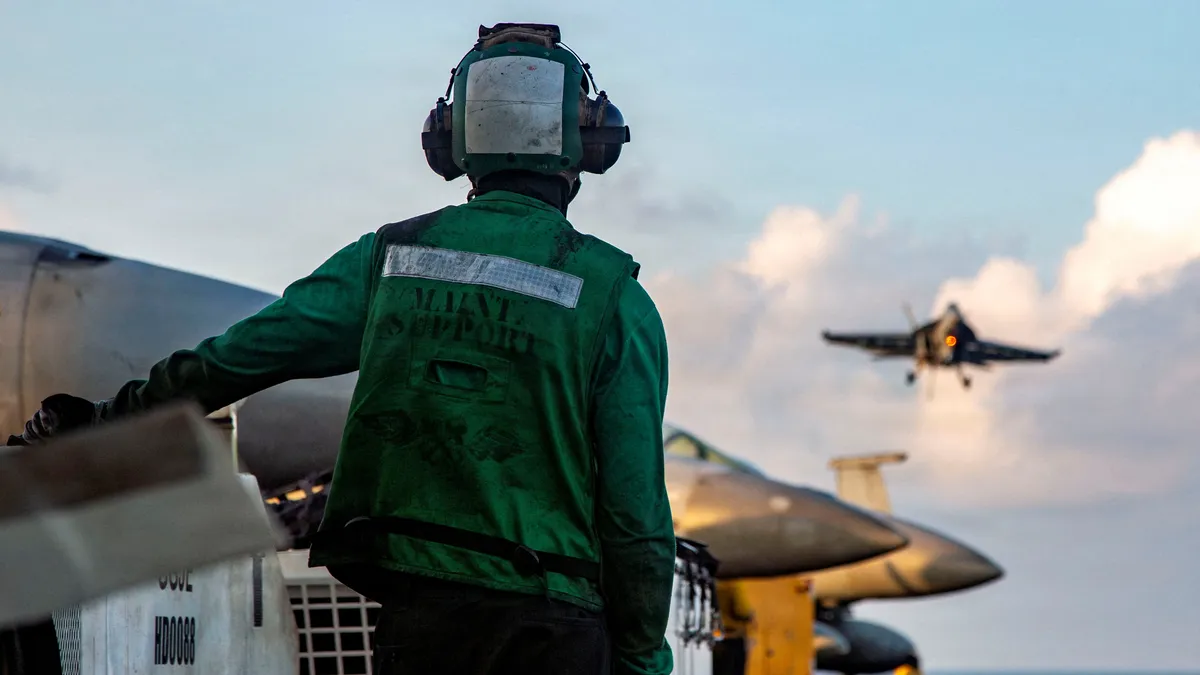
The USS George Washington, a Japan-based Nimitz-class carrier of the same class as the Lincoln, arrived in the Arabian Sea to assume the operational tempo. The ship’s own public-facing materials note that it carries roughly 5,000 sailors and, in the week before its Arabian Sea arrival, celebrated its 200,000th arrest landing across 34 years of service. An arrest landing is the standard carrier maneuver in which a returning aircraft is caught by angled deck wires, slowing it to a stop within a few hundred feet.
The George Washington departed a Vietnamese port earlier in August before transiting into the theater. Its arrival effectively freed the Lincoln to begin its long voyage home, ending what had become the most sustained single-carrier presence in the region in decades.
“The largest warships in the world, Nimitz-class aircraft carriers support and operate aircraft that engage in attacks on airborne, afloat, and ashore targets that threaten free use of the sea and engage in sustained power projection operations in support of U.S. and coalition forces.”
That description, drawn from the Navy’s own profile of the carrier class, underscores the strategic weight of what the Lincoln and its crew endured: nearly a full year of continuous operations, minimal shore support, and a mission extended well beyond its original scope by the demands of an active war. The Thailand port call, while brief, represents the first tangible acknowledgment that the ship’s crew is coming home.
Related Reading
Frequently Asked Questions
What is USS Abraham Lincoln headed for port?
USS Abraham Lincoln headed for port is the main topic of this guide. The article explains the context, practical details, and next steps readers should understand.
Why does USS Abraham Lincoln headed for port matter?
USS Abraham Lincoln headed for port matters because readers are looking for a useful answer, not just a short summary. Good content should match search intent and help them decide what to do next.