The art of the bluff? A look at Trump as negotiator in chief, from Iran to China

Daftar Isi
Trump’s Negotiation Playbook: From Maximum Pressure to Strategic Retreat
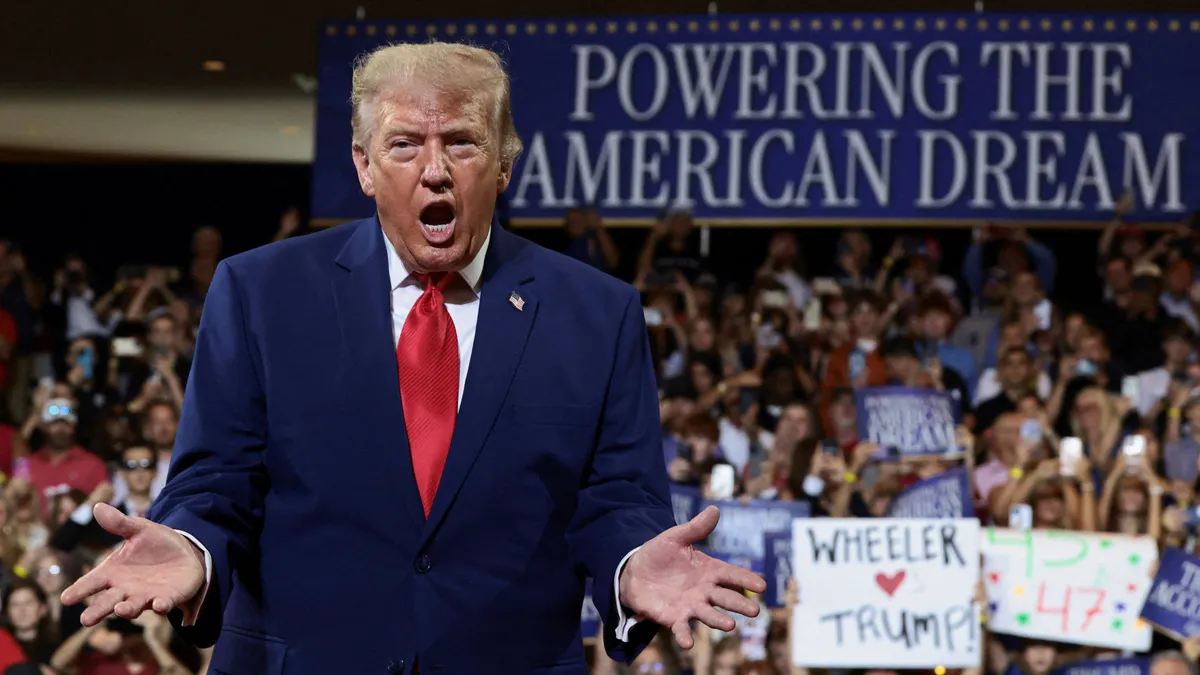
Cybersecarmor.com – When Donald Trump launches into a new policy initiative or seeks to pressure a rival nation, he often begins with his most ambitious demands. Yet history shows that his final agreements frequently emerge after he moderates his initial position. This pattern of starting high and settling lower has defined his approach to international diplomacy and domestic disputes alike.
The president has characterized Iranian officials as “very smart people, very good negotiators” following the establishment of a peace framework that ultimately unraveled. He similarly praised a trade arrangement as “fantastic” after convening with what he called the “great leader,” China’s President Xi Jinping. In legal matters, Trump has accepted settlements representing mere fractions of his original demands—or simply accepted assurances that tax audits would be avoided.
Roots in Real Estate: The Art of Asking for Everything
This negotiation methodology traces back to Trump’s formative years in New York’s competitive real estate market. In his 1987 publication “Trump: The Art of the Deal,” he explained his approach: “I went in and asked for the world – for an unprecedented tax abatement – on the assumption that even if I got cut back, the break might still be sufficient.” He compared the process to “a high stakes poker game in which neither side has very strong cards so both are forced to bluff.”
As president, Trump has applied this same principle across multiple fronts, from military engagements to economic policy.
The Iran Campaign: From Threats to Framework
Trump’s rhetoric regarding Iran has oscillated dramatically between aggressive posturing and diplomatic praise. On March 6, he issued a demand for “UNCONDITIONAL SURRENDER!” via social media. Two weeks later, on April 1, he declared that “we are blasting Iran into oblivion or, as they say, back to the Stone Ages!!!” By April 7, he warned that “A whole civilization will die tonight.”
Despite this bellicose language, U.S. and Iranian representatives reached a framework agreement on June 17. The arrangement called for an end to aerial bombardment, a cessation of the American blockade targeting Iranian ports, and the reopening of the Strait of Hormuz for commercial vessels. In return, Tehran pledged to refrain from pursuing nuclear weapons development.
They’re very smart people, very good negotiators.
However, when Iran subsequently resumed attacks on commercial shipping within the strait, Trump reverted to harsher terminology. Speaking at a NATO summit, he labeled Iranian leaders as “scum” and “sick people.” On July 21, addressing reporters in the Oval Office, he added: “Honestly, they haven’t seen anything yet. We’ve been nice.”
Trade Tensions with China: Tariffs and Thaw
During the trade dispute between the United States and China, Trump implemented tariffs on Chinese imports that threatened to climb as high as 157% against what he described as an “extraordinarily aggressive” and “extremely hostile” stance. “I don’t think that’s sustainable for them,” he remarked at the time.
Nevertheless, Trump repeatedly delayed or removed these tariffs while negotiating a trade agreement in October with America’s third-largest trading partner. “I think it was a very friendly meeting,” Trump stated upon reaching the accord with Xi. “It was a good meeting for two very large, powerful countries. That’s the way we should get along with a large powerful country.”
Despite the public posturing, tariff revenues have increased substantially. According to the Tax Policy Center, the average tariff rate on all imports now stands at approximately 9%. This represents a significant jump from the 2.5% average recorded in 2024, the year preceding Trump’s second term, as noted by the Tax Foundation.
Dave Townsend, a partner at Dorsey & Whitney representing foreign clients in trade litigation, told USA TODAY: “I think the president has viewed tariffs as an opening salvo.”
Scott Lincicome, vice president of general economics at the libertarian Cato Institute, observed that even after settling for lower rates, tariffs remained nearly four times higher than when Trump returned to office. “In the trade space, Trump’s strategy is always maximalist at first, very public, very much trying to get everyone to overreact and then settling for what he actually wanted and having the temperature actually go down because everyone expected the worst,” Lincicome explained to USA TODAY. “There is some measure of relief when the worst doesn’t happen, even if you’re worse off.”
Election Interference Allegations
Another confrontation emerged on July 16, when Trump published declassified intelligence documents accusing China of attempting to disrupt the 2020 presidential election. Within days, however, he minimized the concern and acknowledged that both nations engage in mutual interference.
During a primetime televised address, Trump claimed that China had appropriated 220 million voter files from states throughout the country, calling it “the largest compromise of election data in history.” Election specialists countered that states routinely sell this information. Trump also asserted that China sought to persuade American business executives to “turn against” the president.
Related Reading
Frequently Asked Questions
What is The art of the bluff A look?
The art of the bluff A look is the main topic of this guide. The article explains the context, practical details, and next steps readers should understand.
Why does The art of the bluff A look matter?
The art of the bluff A look matters because readers are looking for a useful answer, not just a short summary. Good content should match search intent and help them decide what to do next.