Trump names Bill Pulte director of national intelligence to replace Gabbard

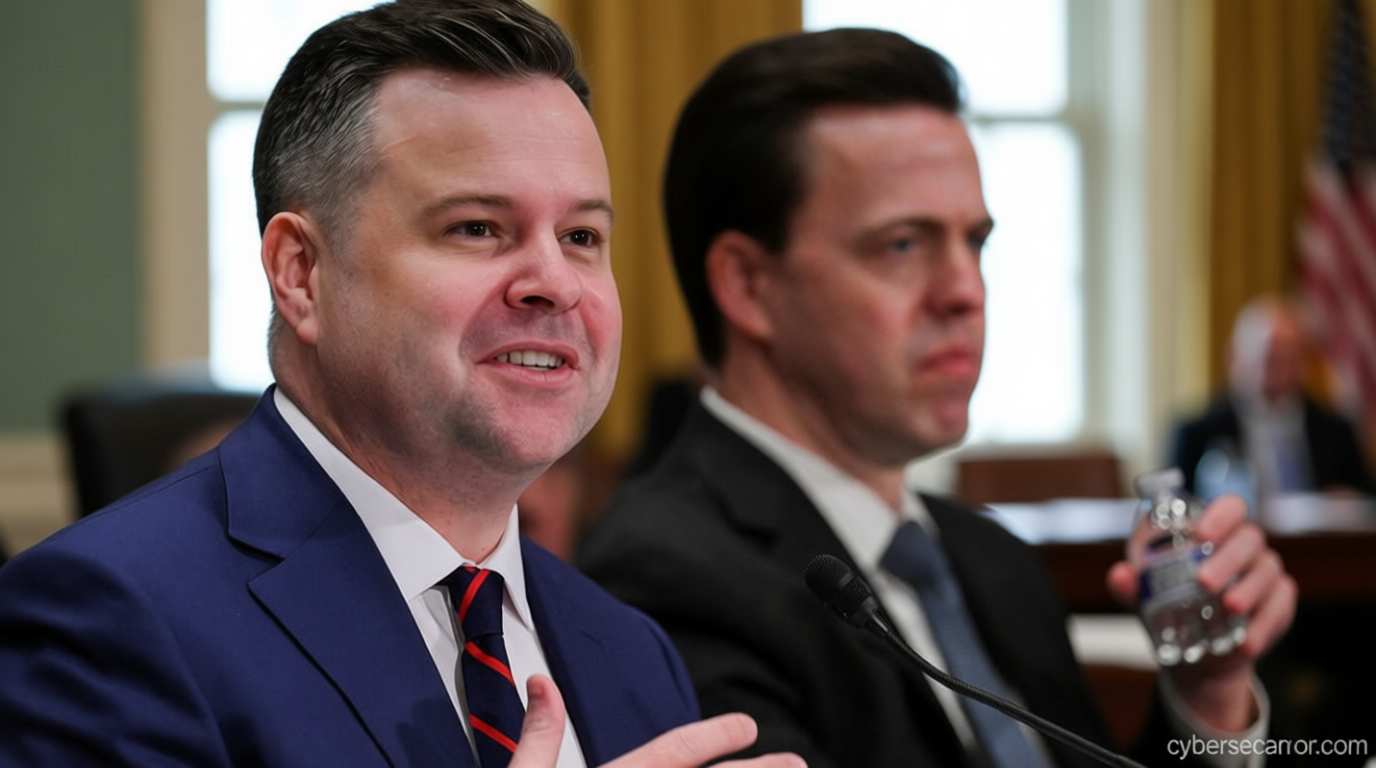
Trump Appoints Bill Pulte as Acting Director of National Intelligence
Cybersecarmor.com – In a surprise move, President Donald Trump has selected Bill Pulte, currently leading the Federal Housing Finance Agency, to serve as the acting director of national intelligence. This decision replaces Tulsi Gabbard, who stepped down after a year in the role, citing her husband’s battle with a rare form of bone cancer. Pulte, a 38-year-old executive with no prior background in intelligence, is expected to assume the position immediately, bypassing the need for Senate confirmation.
A Rapid Transition from Housing to Intelligence
Trump’s announcement, made via a post on Truth Social on June 2, highlighted Pulte’s experience in managing the nation’s mortgage infrastructure. As head of the Federal Housing Finance Agency, Pulte oversaw Fannie Mae and Freddie Mac, the government’s key entities for supporting home loans. The president emphasized that Pulte’s leadership in this role had “deep experience managing the most sensitive matters in America, including the safety and soundness of financial markets,” a statement that underscores the perceived alignment between housing oversight and intelligence responsibilities.
Despite his limited exposure to intelligence operations, Pulte’s career has been marked by a strategic focus on economic stability. His tenure at the Federal Housing Finance Agency has seen the expansion of the agencies’ reach by over 10 trillion dollars in the past year. Critics argue that this financial expertise, while valuable, may not fully prepare him for the complexities of intelligence leadership, particularly in a role that demands a nuanced understanding of global threats and national security priorities.
Political Allegiances and Controversies
The appointment has drawn sharp criticism from Democrats, who view it as an attempt to install a political loyalist in a critical position. Senator Mark Warner, D-Va., and vice chairman of the Senate Intelligence Committee, pointed out that the director of national intelligence was established post-9/11 to ensure unity among the 18 federal agencies tasked with safeguarding national interests. “Americans have already seen Mr. Pulte use the powers of his office at the Federal Housing Finance Agency to pursue the president’s grievances and lend credibility to dubious prosecutions of President Trump’s perceived political opponents,” Warner said in a statement.
“Elevating him to oversee the Intelligence Community makes clear that this president is not looking for an intelligence leader who will follow the facts or speak truth to power, but rather someone who will be willing to shape intelligence around the president’s wishes, regardless of the cost to the American people.”
Ned Price, a former CIA analyst and White House official under Obama and Biden, echoed these concerns. He criticized the appointment, noting that Pulte’s previous actions—such as accusing Federal Reserve Governor Lisa Cook of mortgage fraud and initiating criminal referrals against New York Attorney General Letitia James—had already demonstrated a tendency to leverage government resources for political ends. “The biggest news isn’t that Trump is appointing someone without a national security background to a position that, by law, requires ‘extensive’ experience,” Price wrote on X. “It’s that Pulte earned Trump’s trust by using mortgage records to pursue perceived political enemies.”
A Legacy of Political Action
Pulte’s career has been defined by his ability to navigate political landscapes with precision. His role at the Federal Housing Finance Agency has allowed him to act as a key player in advancing the administration’s agenda, particularly in areas related to housing policy and financial regulation. In 2025, he took a prominent stand against Lisa Cook, accusing her of misrepresenting her mortgage status, which led to her removal from the Federal Reserve. This incident has become a focal point for critics who argue that Pulte’s leadership style prioritizes ideological alignment over objective analysis.
While Pulte’s tenure at the housing agency has been marked by high-profile actions, his elevation to the intelligence community has raised questions about his ability to handle the broader responsibilities of the role. The director of national intelligence is tasked with coordinating efforts across agencies like the CIA and NSA to detect and mitigate threats, both domestic and international. Pulte’s transition from mortgage oversight to intelligence leadership suggests a shift toward using financial data as a tool for broader political influence, a trend that has already drawn scrutiny from lawmakers and watchdogs.
The Role of the Government Accountability Office
The Government Accountability Office (GAO) has been investigating Pulte’s conduct since December, examining whether he misused his position to target Trump’s political adversaries. The probe was initiated by a request from eight Democratic senators, who sought to assess the potential abuse of government resources in Pulte’s investigations of Cook and James. This inquiry adds another layer of concern about the appointment, as it highlights the possibility of intelligence work being influenced by personal or political motives rather than evidence-based analysis.
GAO’s findings could have significant implications for Pulte’s credibility in the intelligence role. The agency’s report may shed light on whether his actions at the Federal Housing Finance Agency set a precedent for similar tactics within the intelligence community. For now, the focus remains on his ability to manage the 18 agencies that make up the U.S. intelligence network, a challenge that will test his adaptability and strategic acumen.
Strategic Implications and Future Moves
Trump’s decision to appoint Pulte as acting director reflects a broader strategy of consolidating control within the federal government. By choosing someone with a strong connection to the housing sector, the president may be positioning Pulte as a bridge between economic stability and national security, a dual focus that aligns with his administration’s priorities. However, the lack of a permanent nominee for the role raises questions about the long-term direction of the intelligence community under Trump’s leadership.
Pulte’s continued role as director of the Federal Housing Finance Agency and chairman of Fannie Mae/Freddie Mac further illustrates his dual responsibilities. This arrangement allows him to maintain influence over financial policies while taking on the more strategic task of intelligence coordination. Yet, it also means that his decisions may be subject to scrutiny from both the housing and intelligence sectors, potentially creating a tension between his economic and security mandates.
The appointment has sparked a debate about the qualifications required for the director of national intelligence position. While Pulte’s experience in managing large-scale financial operations is impressive, the role demands a deep understanding of intelligence methodologies, threat assessments, and international relations. Critics argue that his selection signals a departure from the traditional requirements of the position, favoring loyalty and political maneuvering over technical expertise.
As the acting director, Pulte’s primary focus will be on maintaining the cohesion of the intelligence community and ensuring that agencies operate in unison. However, his background in the housing sector may lead to unique approaches in intelligence strategy, such as integrating economic data with security analyses. This could have both positive and negative outcomes, depending on how effectively Pulte can navigate the complexities of intelligence work while maintaining his political stance.
A Political Appointment in Context
Trump’s move to appoint Pulte comes amid ongoing discussions about the role of political loyalty in intelligence leadership. The director of national intelligence is expected to serve as a neutral arbiter, yet Pulte’s history of taking a firm stance against perceived opponents suggests a more partisan approach. This tension between neutrality and loyalty could impact the intelligence community’s ability to operate independently, particularly in an era where political polarization is increasingly evident in all branches of government.
With Pulte’s appointment, the intelligence community now faces the challenge of adapting to a leader whose expertise lies primarily in economic policy. While his knowledge of financial systems may provide new insights into intelligence operations, it also means that the community must rely on his ability to quickly learn and apply the skills necessary for national security oversight. This transition may require additional training and support from existing intelligence professionals to ensure smooth operations during the acting period.
As the GAO investigation continues, the spotlight on Pulte’s actions at the Federal Housing Finance Agency remains a point of contention. The agency’s probe into potential abuses of power could influence public perception of his suitability for the intelligence role, particularly as the position is seen as vital to protecting the nation from both domestic and foreign threats. The outcome of this investigation may also shape the future of Pulte’s tenure, determining whether he can maintain his credibility in the face of political scrutiny.