Lindsey Graham’s death opens up an increasingly powerful job in the Senate

A New Chapter Begins: Senate Budget Committee Leadership After Graham’s Passing
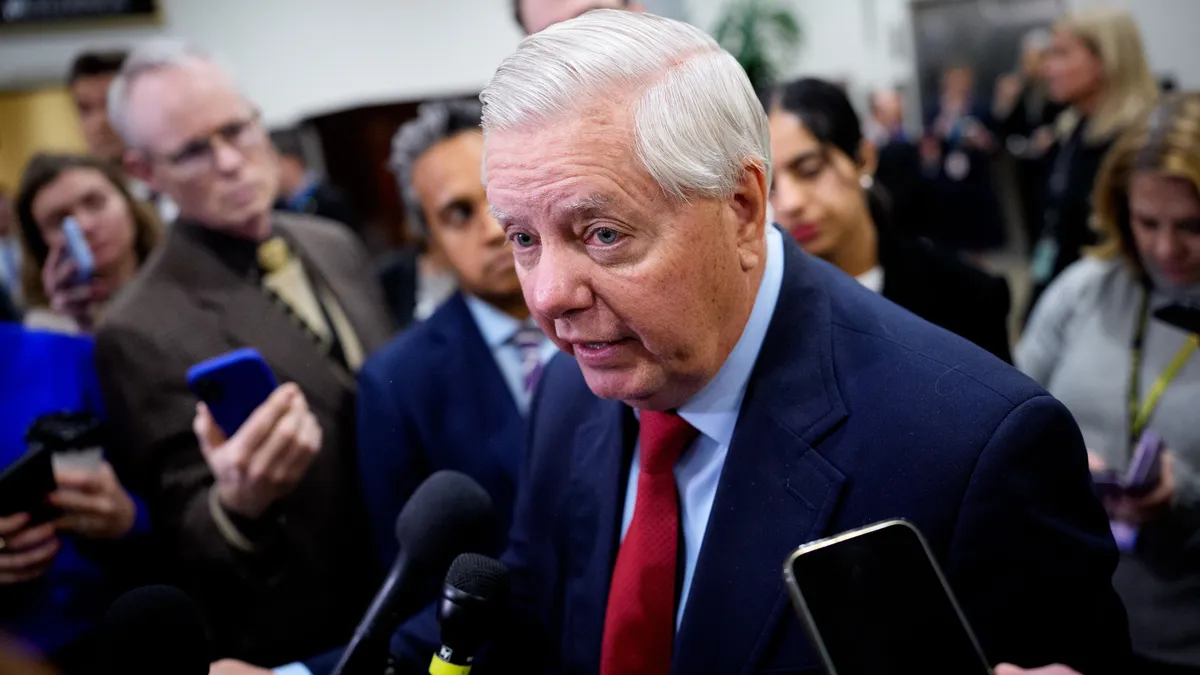
Cybersecarmor.com – Capitol Hill is reeling following the unexpected death of Senator Lindsey Graham, which occurred over the weekend. Lawmakers were caught off guard by the sudden loss of their longtime colleague, with many still processing the news in the early morning hours. The South Carolina Republican’s passing has created a significant void in one of Congress’s most influential positions.
The Budget Committee’s Growing Importance
Graham leaves behind an important vacancy at the helm of the Senate Budget Committee, a panel that has evolved into a crucial driver of major legislation impacting American citizens. While the committee might appear to be merely another technical corner of Congress, its role has expanded considerably in recent years. The Budget Committee now serves as the primary vehicle for some of the most consequential policy changes affecting everyday Americans.
The committee’s significance stems largely from its procedural advantages. Unlike most Senate legislation, which requires 60 votes to overcome a filibuster, budget bills need only a simple majority to pass. This structural advantage has made the committee increasingly central to Republican legislative strategy, particularly under President Donald Trump’s second term. Congressional Republicans, following the president’s direction, have grown more comfortable using the committee to push through major party-line initiatives.
Recent Legislative Achievements Under Graham
Before his death on July 11, Graham played a pivotal role in advancing two major Republican policy victories. The first was the legislation originally known as the “One Big, Beautiful Bill Act,” which Republicans subsequently renamed the Working Families Tax Cuts Act. This comprehensive domestic policy measure, passed approximately a year ago, fundamentally transformed several aspects of American life through changes to Medicaid, food assistance programs, and federal student loan systems.
The second significant achievement was the Secure America Act, which provided an additional $70 billion in funding for federal immigration enforcement agencies, including ICE and Border Patrol. This legislation passed both chambers of Congress earlier this summer despite Democratic opposition. Democrats had boycotted the vote, arguing that more substantial reforms to ICE were necessary.
“Why are we here? Through the normal appropriations process, Democrats would not give the Border Patrol or ICE one dime,” Graham declared on the Senate floor. “It just didn’t work.”
Looking Ahead: The Committee’s Upcoming Challenges
The leadership transition at the Budget Committee comes at a critical juncture. Just days before Graham’s death, President Trump instructed congressional Republicans to utilize both the Senate and House budget committees in an effort to pass a $350 billion infusion of funding for the Pentagon within the coming months. This ambitious goal adds to an already challenging legislative calendar that includes a difficult effort to advance voting restrictions legislation.
Whoever assumes Graham’s position on the Budget Committee will bear substantial responsibility for advancing these Republican priorities. The committee’s current roster includes several experienced Republican senators. Mike Crapo of Idaho and Chuck Grassley of Iowa both serve as chairmen of other important committees. Roger Marshall of Kansas also sits on the panel. The remaining Republican members include Senators Ron Johnson of Wisconsin, John Cornyn of Texas, Mike Lee of Utah, John Kennedy of Louisiana, Pete Ricketts of Nebraska, Bernie Moreno of Ohio, and Rick Scott of Florida.
Graham’s legacy on the Budget Committee will likely be defined by his ability to navigate the reconciliation process, which Republicans have increasingly employed to reduce hundreds of billions of dollars in federal spending while simultaneously expanding funding for priority programs. His death leaves a leadership gap that will test the committee’s ability to maintain momentum on these critical initiatives.
Zachary Schermele is the congressional correspondent for USA TODAY. He can be contacted via email at zschermele@usatoday.com. Follow his coverage on X at @ZachSchermele and on Bluesky at @zachschermele.bsky.social.