California ballot counting continues after Becerra advances in governor’s race

California Ballot Counting Continues as Becerra Secures General Election Spot
Democrat’s Lead Grows in Gubernatorial Primary Amid Intense Spending and Political Analysis
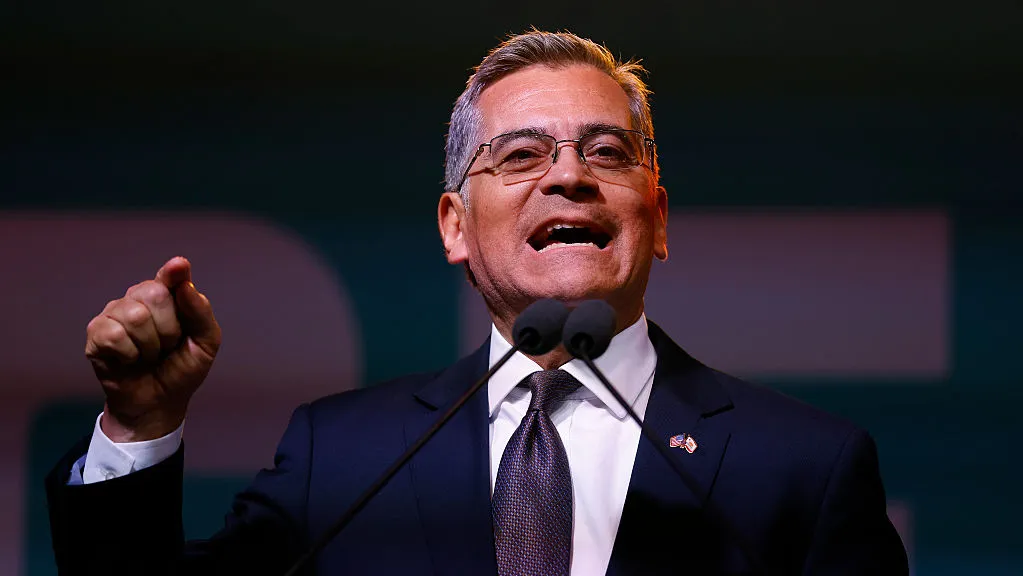
Cybersecarmor.com – California’s gubernatorial primary race is still in full swing as election officials process ballots cast in-person and by mail, with the results of the June 5 contest shaping the November general election landscape. Democrat Xavier Becerra, a former U.S. Health and Human Services secretary under President Joe Biden, emerged as the first candidate to secure a spot in the November runoff, according to the Associated Press, NBC News, and Decision Desk HQ. His victory in the nonpartisan “jungle primary” means he will face the second-place finisher in the general election, which is set for November 2.
Becerra’s path to the November ballot was a dramatic reversal. In April, he was struggling in the single digits in several polls, but his fortunes changed after former U.S. Rep. Eric Swalwell withdrew from the race amid allegations of sexual assault and misconduct, which Swalwell denies. The withdrawal opened the door for Becerra to gain momentum, ultimately allowing him to take a narrow lead over Republican challenger Steve Hilton. With 26.8% of the vote, Becerra edged out Hilton, who received 26.4%, in a race where only the top two candidates advance regardless of party affiliation.
Despite a slight increase in support, progressive billionaire Tom Steyer remained in third place with 21.1% of the vote, as 68% of ballots were counted by June 5. Steyer, a climate change advocate and entrepreneur, had been a prominent contender but now faces the challenge of catching up to secure a spot in the November election. His campaign has already spent over $200 million, accounting for 64% of the total ad spending in the race, according to AdImpact, a media-tracking firm. The race, valued at nearly $316 million, is the most expensive in California’s history and ranks as the fifth-most costly non-presidential contest on record.
The nonpartisan nature of the primary has created a unique dynamic, where candidates must appeal to a broad spectrum of voters. This system allows for unexpected shifts in momentum, as seen with Becerra’s rise and Steyer’s persistent third-place position. Political analysts have noted that the key to advancing lies in securing a majority of the remaining ballots, which are still being tallied in Southern California, a critical region for Becerra’s campaign.
“Becerra is well positioned to hold, perhaps even grow, his lead a bit given where the outstanding ballots rest,” said David McCuan, a political science professor at Sonoma State University. “The remaining votes are concentrated in areas where he has strong support, which could solidify his position in the general election.”
For Steyer, the financial investment in advertising has not yet translated into the necessary votes to join Becerra and Hilton in November. Political strategist Brian Sobel, based in the San Francisco Bay Area, argued that the candidate’s heavy ad spending may not be enough to overcome his current standing. “Maybe the question should be, how much is enough?” Sobel remarked. “Steyer initially came off as this angry man, promising to ‘fix everything’ with his attacks on Donald Trump. But running the same ad spots repeatedly could make voters question whether he can deliver on those promises.”
Sobel further emphasized that Steyer’s messaging, while strong in certain demographics, has not resonated across the state as effectively as expected. “The amount of money Tom Steyer spent just didn’t translate into enough votes,” he added. “While his ads dominated the airwaves, they may have overexposed his message, leaving voters skeptical about his ability to achieve tangible results.”
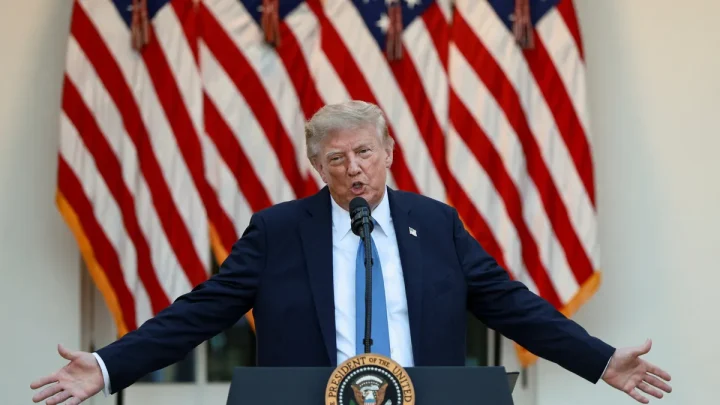
Hilton, who has received support from former President Donald Trump, remains undeterred by his current position. In a June 5 speech in San Mateo, a suburb of San Francisco, the Republican candidate declared, “Change is coming. We can’t go on like this. Thanks to this election, we see now, change is coming. A belief that we can be the best in everything—the best place to raise a family, the best place to start a business.” His campaign has focused on contrasting California’s progressive policies with a vision of economic revitalization and state governance reform.
The slow pace of ballot counting has drawn criticism from Trump, who has questioned the process on his Truth Social platform. The former president, without citing specific evidence, accused Democrats of “stealing the vote” in the gubernatorial race, highlighting concerns about the efficiency of the state’s election system. Hilton capitalized on this narrative, calling California “the laughingstock of the nation when it comes to election reporting” and demanding that Governor Gavin Newsom, who is running for re-election in November, establish an “Emergency Election Support Corps” to expedite the counting process.
Newsom, currently serving his final term, faced pressure from Hilton to address the delays. The Republican candidate argued that the current system leaves millions of voters waiting weeks for results, urging Newsom to issue an emergency executive order to deploy state employees and rapid-response teams to areas experiencing significant processing bottlenecks. While Newsom has not yet confirmed such a move, the call reflects growing frustration over the timeline of the election.
The race’s financial stakes underscore the importance of advertising in shaping voter perceptions. AdImpact reported that the total ad spending in the gubernatorial contest has reached record levels, with Steyer’s campaign alone allocating over $200 million. This investment has allowed Steyer to maintain a visible presence, but it has also raised questions about the sustainability of his strategy. As the remaining ballots are counted, the final standings could reveal whether his message will gain traction or if his efforts will fall short.
Becerra’s path to victory highlights the shifting political landscape in California. With the state’s diverse electorate, his ability to balance moderate and progressive appeals has been a key factor in his success. His campaign’s focus on economic stability and healthcare reform has resonated with voters, particularly in Southern California, where his lead is strongest. However, the challenge remains to maintain that momentum as the race moves toward its conclusion.
As election officials continue processing ballots postmarked by June 2, the final tally could still change. The fifth day of counting has seen delays in some counties, prompting calls for more efficient procedures. For Becerra, the goal is to secure a clear lead over the second-place finisher, while Steyer and Hilton must strategize to close the gap. The outcome of this primary will have significant implications for California’s governance and the direction of the state’s political future.
The governor’s race has become a microcosm of broader national debates, with candidates vying to represent contrasting visions for the state. As the counting proceeds, the focus will shift to how the remaining votes will shape the November election. With the stakes high and the narrative evolving, California voters are poised to determine the next leader of the state in a closely watched contest.