Forecast warns of dangerous weekend heat in Southeast

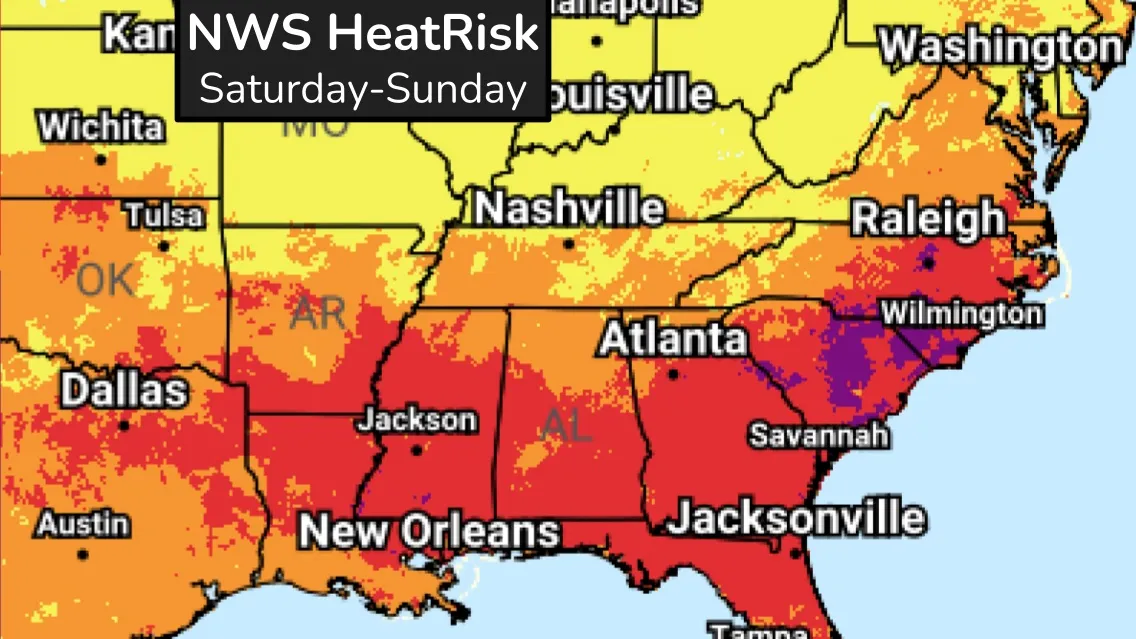
Heatwave Alert: Southeast Faces Extreme Temperatures This Weekend
Cybersecarmor.com – As the summer season intensifies, weather patterns across the United States are shifting dramatically. While the Northeast and Midwest may experience a brief respite from oppressive heat and humidity during the weekend of June 13, the Southeast is bracing for a relentless wave of extreme temperatures that could push conditions into the “hazardous” category through Sunday, June 14. This stark contrast in weather conditions highlights the dynamic nature of atmospheric systems and their impact on regional climates.
A Forecast of Intensity in the Southeast
The National Weather Service (NWS) in Tallahassee, Florida, has issued warnings about the severe weather expected in the Southeast. “Heat indices will climb to dangerous levels, posing significant risks to public health,” the service stated. The forecast indicates that daytime temperatures will surge well into the 90s, with some areas nearing 100 degrees Fahrenheit. This combination of high heat and dense humidity will create uncomfortable conditions, making it challenging for residents to cope.
“Those without access to adequate cooling or hydration should take actions such as staying indoors in A/C or shade, staying hydrated, or taking frequent breaks,” the NWS advised. The agency emphasized the importance of these precautions, as prolonged exposure to such conditions can lead to heat exhaustion or even heatstroke, particularly among vulnerable populations like the elderly and those with chronic health issues.
Heat-related illnesses often occur when the body can’t regulate its temperature effectively. The Southeast is experiencing one of its earliest heatwaves of the year, which can be more perilous due to the lack of acclimatization. Unlike later in the summer, when bodies adjust to the heat, early-season extremes can catch people off guard, increasing the likelihood of health complications.
Cold Front Offers Some Relief, But Heat Remains
Meanwhile, a cold front is expected to move into the eastern United States on Saturday, bringing cooler and drier air to the region. However, this relief will be limited in scope. NOAA’s Weather Prediction Center noted that while the front may provide a slight drop in temperatures, the Southeast will still see highs in the 80s to lower 90s. This means that even with the arrival of the front, the area will not escape the grip of the heatwave entirely.
The cold front’s influence will spread across the eastern U.S., potentially altering the path of moisture and creating a more temperate environment for parts of the region. Yet, the persistence of high temperatures underscores the strength of the heat system currently in place. For those in the affected areas, staying informed about daily forecasts is crucial to planning and mitigating risks.
Arctic Air Chills the Upper Midwest
Contrasting the Southeast’s heat, the upper Midwest and Great Lakes region will enjoy a cooler and drier climate this weekend. Meteorologist Ryan Maue of Weather Trader described the weather flow as “straight from the Arctic,” emphasizing the intensity of the cold air mass moving into the area. “It’s a very intense trough for mid-June,” he added in an email to USA TODAY, highlighting the unusual strength of the system.
This Arctic air will lead to significant temperature drops, with overnight lows potentially plunging into the 40s. The National Weather Service reported that much of the upper Midwest will experience these chilly conditions on Saturday night, offering a refreshing contrast to the sweltering heat elsewhere in the country. The trough’s impact is not just about temperatures but also about the overall atmospheric stability, which can influence precipitation patterns and wind conditions.
Such cold air masses are often associated with strong high-pressure systems that bring clear skies and minimal humidity. This is particularly beneficial for regions that have been struggling with heat and moisture, as it allows for a temporary reprieve. However, the presence of a trough also means that the weather could be more variable, with potential for sudden changes in conditions.
Seasonal Impacts and Public Awareness
Weather experts are reminding the public that early season heat can be just as dangerous as summer extremes. “Early season heat can often be more dangerous and pose a greater risk for heat-related illness,” said the Weather Prediction Center. This is due to the body’s lack of adaptation to high temperatures, which can lead to quicker onset of symptoms in unprepared individuals.
The Southeast’s heatwave is not an isolated event but part of a larger climatic trend. As the calendar turns to June, the region is seeing a shift toward warmer and more humid conditions. This pattern is expected to continue, with the potential for extended periods of high temperatures. Residents are encouraged to monitor weather updates closely and take proactive measures to protect themselves.
Public awareness campaigns are also playing a key role in preparing communities for the heat. Local authorities are collaborating with weather services to disseminate information about heat indices, hydration tips, and cooling strategies. These efforts are essential in reducing the number of heat-related emergencies and ensuring that everyone has access to necessary resources.
As the weekend unfolds, the Southeast will be under the watchful eye of meteorologists, who are closely monitoring the progression of the heatwave. The combination of high temperatures and humidity will likely create a challenging environment for outdoor activities, prompting many to seek shelter in air-conditioned spaces or shaded areas. Meanwhile, the upper Midwest and Great Lakes will provide a welcome contrast, allowing residents to experience a cooler climate and enjoy the benefits of a more temperate environment.
Doyle Rice, a national correspondent for USA TODAY, has been tracking these weather developments closely. His coverage highlights the importance of understanding regional weather patterns and how they can affect daily life. As the nation braces for the summer months, the contrasting conditions between the Southeast and the Midwest serve as a reminder of the complexity of weather systems and their far-reaching impacts.