El Sayed, Michigan Democrats run against tariffs, Canada trade war

Daftar Isi
Michigan Democrats Make Canada Trade Fight a Central Campaign Issue
Cybersecarmor.com – Michigan Democrats are putting President Donald Trump’s escalating dispute with Canada at the heart of their 2026 message, arguing that tariffs are worsening everyday costs in a state whose economy is closely connected to its northern neighbor.
The issue has gained new political weight after trade talks between Washington and Ottawa collapsed last month. Democrats seeking statewide and congressional offices say the resulting tariffs are not an abstract policy debate: they contend the duties are showing up in household budgets through higher prices for fuel, groceries, vehicles and other goods.
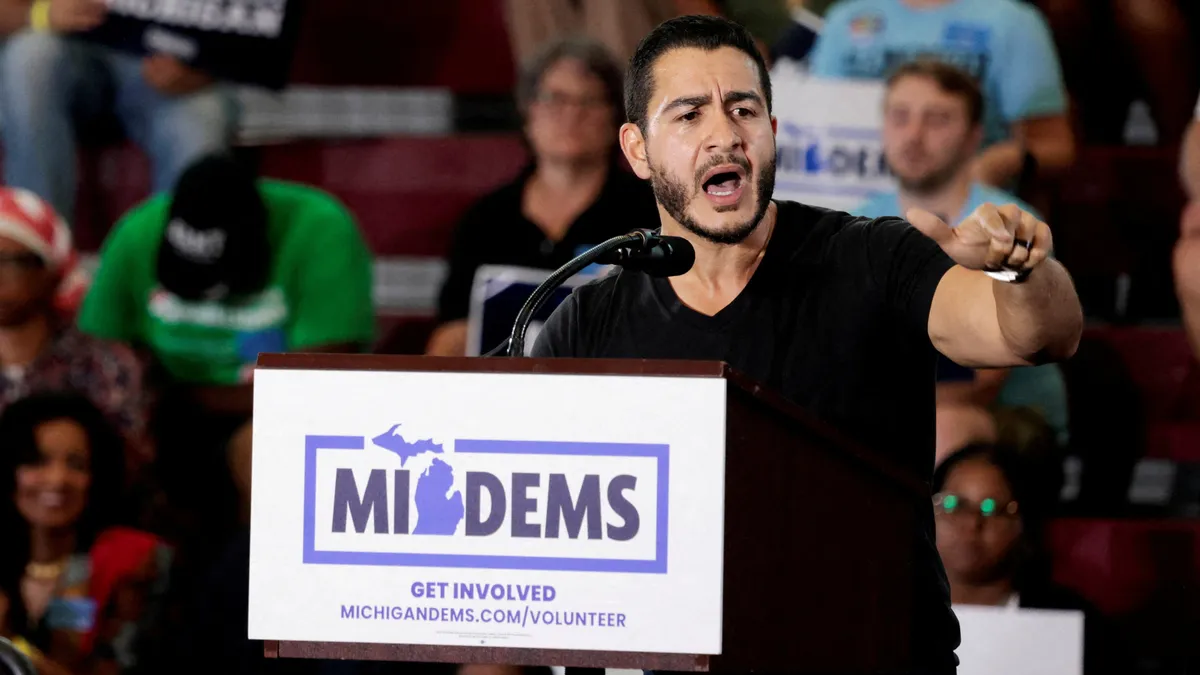
Abdul El-Sayed, the Democratic nominee for U.S. Senate, has tied the dispute directly to the financial pressures facing Michigan residents. His campaign is framing the tariffs as part of a broader cost-of-living argument heading into an election in which Democrats are trying to retain the governor’s office, keep a Senate seat and win three closely contested House races.
“By the time you’ve paid for your tank of gas and your groceries for the week, you’re looking at your budget and saying, ‘Where did all my money go?’” El-Sayed said. “And it turns out it went to pay for tariffs, too often, that you shouldn’t have to be paying.”
A state shaped by cross-border commerce
Canada is especially important to Michigan because the state’s commercial, manufacturing and transportation systems are tightly interwoven with cross-border trade. Michigan has two of the country’s largest commercial crossings with Canada, including the Detroit-Windsor corridor. The new Gordie Howe International Bridge opened this summer, adding another major connection between the Detroit area and Windsor, Ontario.
In 2025, Michigan sent $23.2 billion in goods to Canada, making Canada the state’s biggest international customer. The relationship is particularly significant for auto manufacturing, where components can move between factories in the United States and Canada multiple times before a finished vehicle reaches consumers.
That interconnected supply chain creates a particular vulnerability when tariffs rise. Duties on autos, parts, metals and other inputs can add costs at several stages of production. The broader conflict also threatens sectors beyond manufacturing. A sharp drop in Canadian travel to the United States has affected retail and tourism businesses that depend on visitors crossing the border.
The most recent confrontation intensified when the United States imposed 50% tariffs on roughly $20 billion in Canadian products after negotiations failed. Canada answered with matching retaliatory duties, ranging from 15% to 50%, that took effect Sept. 8. Trump has also said he could impose a 50% tariff next year on Canadian cars, trucks, auto parts and steel, arguing that Canada has been “ripping off the United States” for years.
Democrats see a common message after divisive primary
Michigan Democrats had already criticized the administration’s trade approach, including tariffs affecting imported automobiles, auto parts, steel, aluminum and copper. The fight with Canada has given candidates a clearer shared theme after the party’s difficult Aug. 4 Senate primary, which pitted El-Sayed, a progressive, against Rep. Haley Stevens, his more moderate rival.
For Democrats, opposition to the tariffs offers a way to connect economic concerns with a familiar Michigan reality: industries and communities on both sides of the border rely on each other. The argument is likely to feature prominently in districts with manufacturing workers, cross-border businesses and families feeling pressure from rising prices.
Christina Hines, the Democratic nominee in Michigan’s 10th Congressional District, said the dispute is difficult to justify in a state with so much at stake in the Canada relationship.
“Anybody that I’ve talked to would tell you that this trade war with Canada makes no sense,” Hines said. “We know that this is crazy, but this is all just retaliatory and a bunch of politicians that are falling in line with the president making terrible decisions.”
The costs cited by tariff opponents are substantial. A National Taxpayers Union Foundation analysis prepared by Trade Partnership Worldwide found that Michigan households paid an additional $5,619 in tariffs from January 2025 through June 2026. That was the highest household total among the states in the analysis.
Public opinion data suggests the issue may offer Democrats a meaningful opening. A June EPIC-MRA poll commissioned by the Michigan Smart Trade Alliance found 48% of Michigan voters opposed tariffs, while 43% supported them. Opposition was stronger when respondents were asked specifically about tariffs on Canadian manufacturing goods and auto parts: 63% said they opposed those duties.
“It’s very unpopular, and the blowback to the higher costs and the escalating trade war is growing by the day,” said Mark Fisk, a spokesperson for the Michigan Smart Trade Alliance. “And rather than a rational policy discussion, this is now going to become an unavoidable election year issue.”
Republicans balance Trump loyalty with Michigan’s interests
The trade dispute leaves Michigan Republicans navigating competing political and economic considerations. Many Republican candidates remain aligned with Trump, while also representing a state where Canada is a crucial trade partner and where voters have long debated the effects of trade agreements on factory jobs and local industries.
Rep. John James, the Republican nominee for Michigan governor, has acknowledged the importance of the Canada relationship while arguing that existing arrangements need to change.
“I recognize how important and crucial our partnership with our friends and family in Canada is,” James said in an August interview on CBS News’ “Face the Nation.” “But I also recognize how crucial it is that the status quo not continue.”
That tension may define the campaign debate in Michigan. Democrats are likely to keep emphasizing the immediate price effects of tariffs and risks to the auto supply chain. Republicans must explain how a harder trade posture can protect American interests without undermining the cross-border commerce that supports Michigan employers, consumers and communities.
For voters, the stakes extend beyond partisan rhetoric. The question is whether tariffs can produce the trade changes their supporters seek without imposing costs that families, manufacturers and border-region businesses are already beginning to absorb.
Related Reading
Frequently Asked Questions
What is El Sayed Michigan Democrats run against?
El Sayed Michigan Democrats run against is the main topic of this guide. The article explains the context, practical details, and next steps readers should understand.
Why does El Sayed Michigan Democrats run against matter?
El Sayed Michigan Democrats run against matters because readers are looking for a useful answer, not just a short summary. Good content should match search intent and help them decide what to do next.