Americans remember exactly where they were on 9/11

A Day That Still Lives in Memory
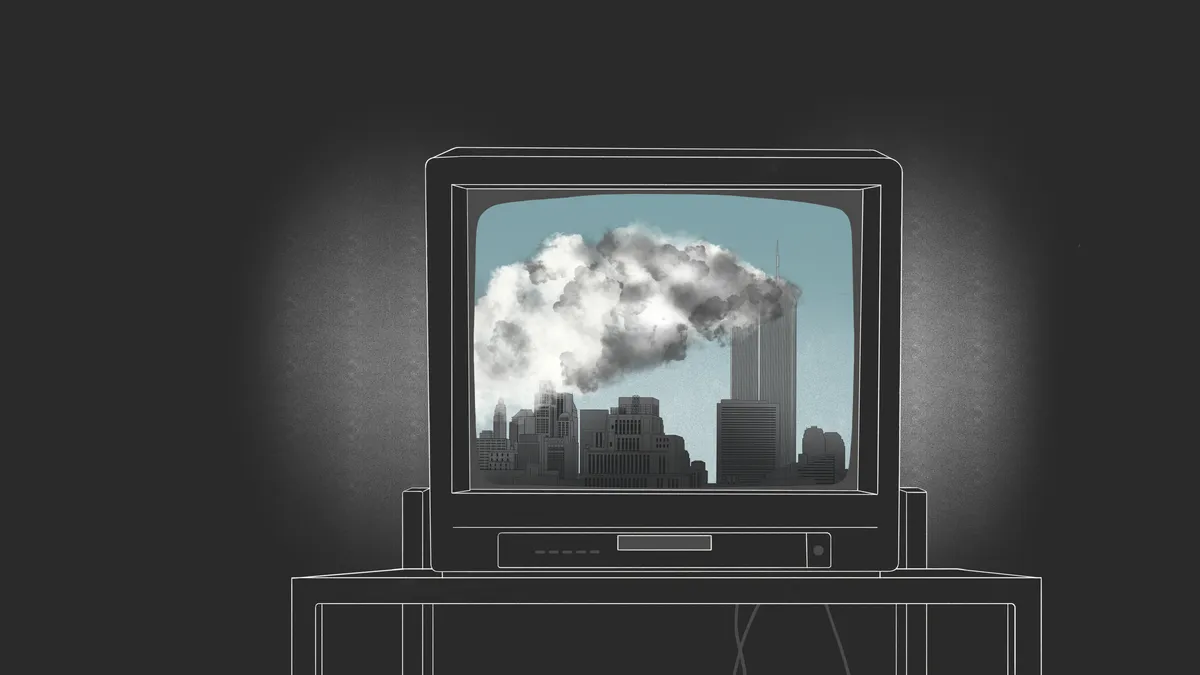
Cybersecarmor.com – Twenty-five years after Sept. 11, 2001, the details of that morning remain strikingly clear for many Americans. People remember the exact setting where they heard the country was under attack: a hospital room, an airport, a commuter platform, a family home or a school classroom. They recall the person who told them, the television images they saw and the uncertainty that followed as the scale of the disaster became known.
For some adults, Sept. 11 is among the sharpest memories of their lives. For younger Americans, it is an event they did not personally witness but one that helped shape the country, security concerns and public life they inherited. The experiences of people who lived through that day show how the attacks affected families, careers, communities and individual plans for the future.
A newborn son and an uncertain future
Rios was 22 and in a New Mexico hospital on Sept. 11, one day after giving birth to her first child, a boy. With her newborn in her arms, she watched television coverage as the second plane struck the World Trade Center.
“I literally was there holding my new son and just thinking, ‘What kind of world did I bring this kid into?’” she said. “It was very sad, and just terrifying.”
She left the hospital only hours after the attacks. During the trip home, fear of another attack weighed heavily on her. The possibility that the crisis could widen felt immediate, and her family responded with practical preparations.
“We panicked and went and bought fuel for our vehicles and sent someone to buy some groceries for us,” Rios said.
Her memory captures one of the day’s lasting emotional contrasts: a moment normally defined by the joy of welcoming a child was suddenly overshadowed by grief, alarm and questions about what would happen next.
Air travel, distance and fear
For Hal Hinton, then a 36-year-old American Airlines pilot, the news arrived during a Honolulu layover. Another pilot urged him to turn on the television, warning that it felt like “the end of the world.”
His first concern was Beth, his wife and a United Airlines flight attendant. He did not know which route she had been assigned that day, an uncertainty made more frightening as reports emerged about the hijacked planes.
“First and foremost, it was trying to find her,” Hinton said. “I was scared. I didn’t know where she was. We obviously didn’t know what else was going to happen.”
It took hours before the two were able to speak by telephone. As commercial aviation remained grounded in the days that followed, they waited and heard from family members and friends who were trying to reach them. For Hinton, the inability to get immediate answers deepened the sense of isolation.
“It was such a feeling of helplessness, of disconnection and just being unable to wrap my head around the tremendous loss of life,” he said.
He understood quickly that the attacks would have a permanent effect on his family and on aviation.
“This was certainly going to change our life,” Hinton said.
Ordinary routines interrupted
In Northern California, Gertler was traveling her usual route from Oakland to Berkeley when she noticed fear spreading through the people leaving the train. She was 27 at the time. A businessman approached her and advised her not to board because no one knew what might happen next.
“All of these people were walking out of [the train], looking terrified,” Gertler said. “This businessman came up to me and was like: ‘Don’t get on the train. We don’t know what’s going to happen next.’”
After learning what had occurred, she immediately thought about her sister, who had departed New York City by plane the previous day. She also worried that California could become a target. The attacks shattered a sense that daily routines were protected from distant national events.
“It shook us all to our core, and nothing was the same after that,” Gertler said. “It was like the end of innocence.”
In Virginia’s Shenandoah Valley, Beaune was 21 and at the beginning of adulthood when he watched the attacks unfold on television. He spent the rest of the day with relatives as uncertainty spread across the country.
“I spent the rest of the day with my family,” he said. “I think that’s what everybody did, kind of hunkered down at that point.”
Beaune had recently launched a landscaping business and was expecting a baby. The attacks also brought concern about whether customers would continue spending amid economic anxiety.
“Nobody was spending money. Everybody was scared,” he said. “I do remember that.”
He continued working, concentrating on his growing family and business despite the broader uncertainty.
“I kept moving forward and plugging away. That’s what I did,” Beaune said.
Children saw the adults’ alarm
For children in school that morning, the significance of the event was often understood through the behavior of teachers and staff. Taylor remembered an elementary school in Virginia Beach coming to a halt as educators learned about the attacks. Students were brought outside to the bleachers, where they recited the Pledge of Allegiance together.
“We went outside on the bleachers and all did the Pledge of Allegiance,” Taylor recalled. “I guess that was a way to keep us from thinking about how heavy of a thing had just happened.”
Reet, who was 7, remembered seeing an expression on teachers’ faces that felt entirely unfamiliar. Their concern and disbelief revealed that something serious had happened, even before children could fully grasp the news.
“The level of concern on their face, the disbelief, the dismay, the processing. … [They were] definitely trying to hold it together,” Reet said.
These memories span generations and places, yet they share a common thread: a normal day abruptly became a dividing line between before and after. Whether people learned the news beside a newborn child, far from a spouse, on public transit, at home or in school, Sept. 11 remains fixed in personal memory as well as national history.
Related Reading
Frequently Asked Questions
What is Americans remember exactly where they were?
Americans remember exactly where they were is the main topic of this guide. The article explains the context, practical details, and next steps readers should understand.
Why does Americans remember exactly where they were matter?
Americans remember exactly where they were matters because readers are looking for a useful answer, not just a short summary. Good content should match search intent and help them decide what to do next.