How do Democrats, Republicans feel about AI? New poll sheds light

How do Democrats, Republicans feel about AI? New poll sheds light
Cybersecarmor.com – As artificial intelligence becomes increasingly embedded in everyday life, a recent survey highlights a growing consensus across political lines on the need for stronger government oversight. Conducted by the Washington-based AI Policy Institute (AIPI), the poll reveals that a majority of Americans support measures to regulate the technology more rigorously.
Poll Reveals Bipartisan Consensus on AI Regulation
The AIPI survey found that 68% of respondents back the creation of a “formal review process for the most advanced AI models before they can be widely released.” This suggests a shared concern about the pace of AI development and its potential societal impact. The support spans all major political groups, with Republicans, Democrats, and independents showing comparable levels of agreement. Specifically, 64% of Republicans, 76% of Democrats, and 63% of independents endorsed the idea of mandatory federal scrutiny for cutting-edge AI systems.
Notably, the findings emerged just weeks after President Donald Trump signed an executive order on June 2, 2026, requiring AI developers to voluntarily submit their models for federal evaluation. While the order focuses on security risks, the poll underscores a broader demand for proactive regulation. The AIPI survey, which ran from June 10 to June 11, included 1,007 likely voters and had a margin of error of ±4.2%, reflecting a reliable snapshot of public sentiment.
Public Opposition to Data Centers Grows
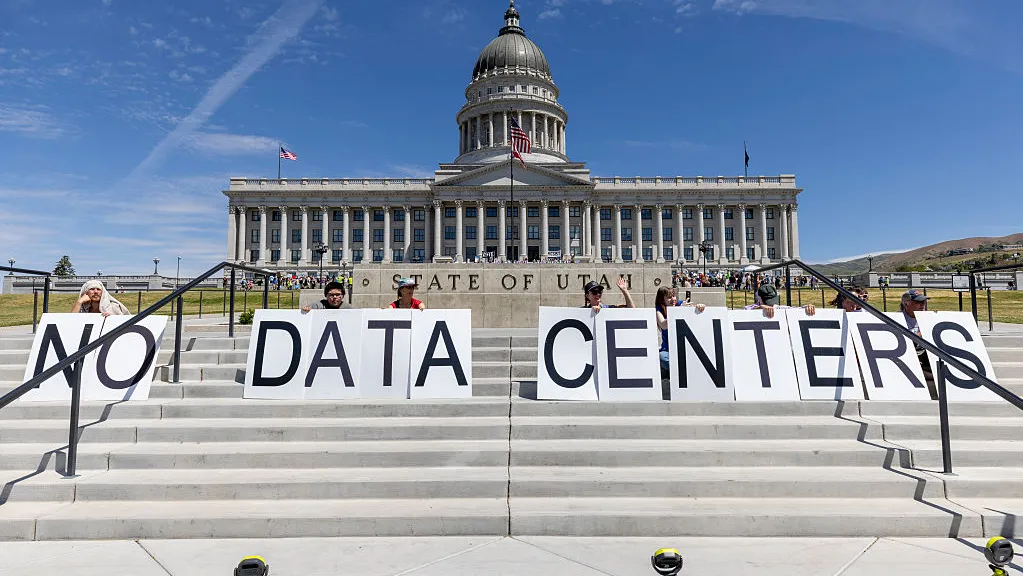
While the poll centers on AI governance, other data highlights a separate but related issue: widespread resistance to AI data centers. A Gallup survey released in May found that 70% of Americans oppose building these facilities in their communities, with over half expressing “strong opposition.” Concerns center on environmental impacts, such as high energy and water usage, as well as electronic waste and noise pollution.
These anxieties have spurred local governments to act. In California’s Monterey Park, voters approved a permanent ban on AI data centers via a ballot initiative on June 2, 2026, making it the first city to implement such a restriction. However, achieving similar results statewide has proven challenging. Legislators in states like North Carolina have proposed stricter rules, but broader bans remain elusive.
Legislative Efforts to Address AI Concerns
The push for regulation extends beyond local actions. In March 2026, Senators Bernie Sanders (I-Vermont) and Representative Alexandria Ocasio-Cortez (D-New York) introduced the Artificial Intelligence Data Center Moratorium Act. This legislation seeks to pause the construction of AI infrastructure until federal reviews are completed, ensuring transparency and public input. It also includes a unique provision: transferring 50% ownership of major AI companies to a U.S. sovereign wealth fund, thereby giving citizens a stake in the technology’s development.
Sanders emphasized the urgency of the issue in a statement accompanying the bill. “As a society, we can no longer allow a small group of tech giants to dictate the future of AI without meaningful democratic oversight,” he said. The act aims to balance innovation with accountability, addressing both environmental and ethical concerns. While the measure has gained traction, its success will depend on bipartisan backing and effective implementation.
Broader Implications of the Poll
The AIPI poll’s findings suggest that public opinion is shifting toward a more structured approach to AI governance. With 68% supporting federal review processes, the data underscores a desire for safeguards against unchecked technological advancement. This aligns with the growing number of cities and states adopting moratoriums to slow down AI infrastructure expansion. Monterey Park’s initiative, for example, reflects a grassroots movement to prioritize local interests over corporate agendas.
However, the poll also reveals nuances in political alignment. While Democrats are more enthusiastic about regulation, with 76% expressing support, Republicans’ backing at 64% highlights a more cautious stance. Independents, meanwhile, stand at 63%, indicating a middle ground that could influence future policy debates. These differences may shape how lawmakers approach the issue, particularly as federal and state authorities vie for authority in AI governance.
Challenges and Opportunities Ahead
Despite the momentum, challenges remain. The AI industry has already begun scaling up, and delaying infrastructure projects could affect economic growth. Yet, the public’s demand for accountability is clear. The combination of local bans and federal legislation may create a dual framework for regulating AI, blending community-driven action with national policy.
Additionally, the debate over AI ownership raises questions about equity and control. By granting 50% public ownership through a sovereign wealth fund, the Moratorium Act attempts to democratize the technology sector. This idea has sparked discussions about whether such a model could reduce corporate monopolies and ensure fairer distribution of AI benefits.
As the technology evolves, so too does the public’s understanding of its implications. The AIPI poll and associated initiatives signal a pivotal moment where Americans are actively shaping the trajectory of AI through policy and advocacy. Whether this translates into lasting change will depend on sustained public engagement and political cooperation.
“As a society, we can no longer sit back and allow a handful of Big Tech oligarchs to determine the future of this revolutionary technology with no democratic input,” Sanders said.
The survey’s timing, just weeks after Trump’s executive order, also highlights the role of presidential leadership in setting regulatory priorities. While the order offers a voluntary framework, the AIPI poll suggests a stronger push for mandatory measures. This divergence between executive action and public demand may drive further legislative action in the coming months.
With the stakes high and the technology advancing rapidly, the findings of this poll and related efforts may redefine the landscape of AI governance. The balance between innovation and regulation will be critical as the U.S. seeks to harness AI’s potential while mitigating its risks.
Joey Garrison contributed to this report. Fernando Cervantes Jr. is a trending news reporter for USA TODAY. Reach him at fernando.cervantes@usatodayco.com and follow him on X @fern_cerv_.
Key Takeaways
The AIPI poll and subsequent legislative proposals reflect a national conversation about the future of AI. While the technology’s benefits are undeniable, its rapid expansion has raised concerns that require collective action. As the debate continues, the focus will be on how to ensure that AI development serves the public interest, not just corporate interests.