Sammy Hagar says planned Freedom 250 show was ‘not a political thing’

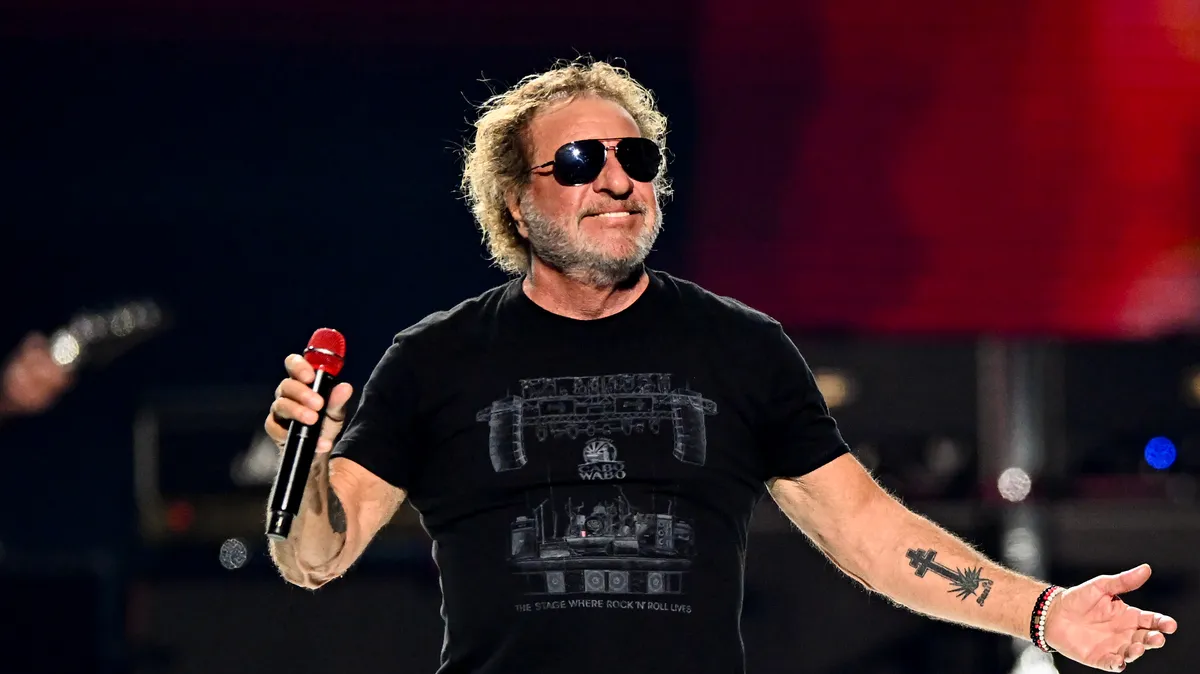
Sammy Hagar Defends July 4 Performance Amid Political Criticism
Cybersecarmor.com – Sammy Hagar, the legendary rock vocalist known for his energetic performances and long-standing career with Van Halen, found himself at the center of a public debate after his participation in the Freedom 250 event was linked to political associations. The controversy arose as fans questioned whether the Fourth of July celebration, which had initially featured several high-profile acts, was being used as a platform to promote specific political views. Despite the backlash, Hagar remained steadfast in his belief that the event was a celebration of American independence, regardless of its organizers’ affiliations.
Freedom 250’s Original Lineup and Cancellation
The Freedom 250 event, which was designed as a “Salute to America” celebration, originally showcased a diverse array of musical talent. Among the confirmed performers were Lynyrd Skynyrd, Gretchen Wilson, Big & Rich, and Lee Greenwood—artists whose careers span decades and whose music has often resonated with patriotic themes. However, the event faced unexpected challenges when most of its programming was scrapped due to weather concerns. Hagar’s appearance was one of the few that remained on the schedule, though his performance ultimately did not take place.
As the July 4 event approached, Hagar shared a behind-the-scenes video of his rehearsal on Instagram, offering a glimpse into the preparation for what he described as a “celebration of our country’s birthday.” The post quickly became a flashpoint for discussion, with some fans interpreting the event’s ties to President Donald Trump as a political statement. Freedom 250, the organization behind the event, was formed under Trump’s guidance and has drawn criticism from various public figures for its alignment with his administration. Critics argued that the event’s name and programming were being leveraged to support his political agenda, even as the group maintained its nonpartisan image.
Social Media Backlash and Hagar’s Response
Following the release of Hagar’s rehearsal video, a wave of comments flooded the post, with several fans expressing disappointment. One user wrote, “This is the most tone deaf thing you’ve ever done,” while another accused the artist of being “involved in this fiasco.” These reactions highlighted the growing divide over the event’s political implications, even as Hagar himself sought to clarify his stance.
“Freedom 250 is a nonpartisan organization, full stop,” Hagar asserted in a comment the next day, emphasizing that the event’s purpose was to honor the nation’s heritage. “Our track record of collaboration across red, blue, and purple states speaks for itself,” he added, referencing the group’s efforts to unite different political factions. The musician also pointed out that the celebration was meant to be inclusive, regardless of the current leadership. “This is the celebration of our country’s birthday no matter who the president is at this time,” he wrote, defending his decision to participate.
“Freedom 250 is a nonpartisan organization, full stop – and our track record of collaboration across red, blue, and purple states speaks for itself,” Rachel Reisner, a spokesperson for Freedom 250, previously told USA TODAY.
Hagar’s message was met with mixed responses. While some supporters praised his patriotism, others remained skeptical. One fan countered, “The Celebration is not about party politics, It WAS always about Celebrating Our Independence Day!! Glad to see you’re involved,” acknowledging the event’s primary purpose but questioning Hagar’s association with its organizers. The exchange underscored the tension between celebrating national identity and aligning with political entities, even in a nonpartisan context.
Artist Withdrawals and Event’s Political Controversy
Not long after Hagar’s rehearsal video surfaced, several other artists also withdrew from the event. In May, a number of musicians who had been scheduled to perform at Freedom 250’s 16-day state fair event cited political reasons for their exits. This wave of cancellations added to the perception that the event was more than just a patriotic gathering, and that it was being used to advance a political narrative. However, the group denied allegations of partisanship, maintaining that their focus was on unity and national pride.
Freedom 250’s organizers had previously emphasized their bipartisan efforts, highlighting collaborations with figures from across the political spectrum. Yet, the association with Trump’s administration continued to draw scrutiny. The event’s name, “Salute to America,” was seen by some as a convenient branding choice, especially as the country grappled with polarizing political issues. Hagar’s performance, which had been one of the last scheduled acts, became a symbol of the broader debate over whether music events should be shielded from political influence or actively reflect it.
Hagar’s Speech and the Event’s Cancelation
Even as the event’s programming was canceled due to weather, Hagar took to social media to share a message he intended to deliver at the Freedom 250 event. The speech, which he had prepared for the Independence Day celebration, began with a strong statement: “Right now we are celebrating our country’s 250th birthday & right now would be a good time to reunite this country.” The text called for unity, urging people to “stop the violence” and “stop the hate,” framing the event as a moment to transcend political divisions.
Hagar’s speech reflected his belief in using the platform to inspire collective patriotism. “Come together right now,” it continued, “and work toward a shared vision for the future.” The message aligned with the event’s stated goal of fostering national unity, even as some fans questioned its political undertones. Despite the cancelation, the speech served as a testament to Hagar’s commitment to the cause, emphasizing that the event’s significance extended beyond its organizers.
Other performers, such as Lynyrd Skynyrd, also addressed the situation in their own way. The band shared photos and videos from their rehearsals on Instagram, captioning the post with a statement about their disappointment over the weather-related changes. “We are still disappointed that the weather had other plans for us last night,” they wrote, underscoring the emotional investment of the artists in the event despite the logistical setbacks.
Hagar’s experience with Freedom 250 highlights the complex relationship between entertainment and politics in modern times. While he sought to distance himself from the event’s political connections, the controversy over his participation raised broader questions about the role of public figures in endorsing or supporting political initiatives. For Hagar, the July 4 performance was a chance to celebrate American values, but for others, it became a symbol of the nation’s ongoing political divides.
As the dust settled, the incident served as a reminder of how quickly public perception can shift. While some fans rallied behind Hagar’s message of unity, others remained critical of the event’s alignment with Trump’s administration. Regardless of the outcome, the controversy underscored the power of social media in amplifying debates over patriotism, politics, and the role of artists in national celebrations.
Melina Khan, a national trending reporter for USA TODAY, has covered similar stories, tracking how public figures navigate the intersection of entertainment and politics. Readers can follow her insights on X @melinakh and Instagram @bymelinakhan.