Lindsay Clancy case on brink of mistrial as jury deadlocks: Updates

Daftar Isi
Clancy Trial Teeters on Edge of Mistrial as Single Juror Defies Verdict
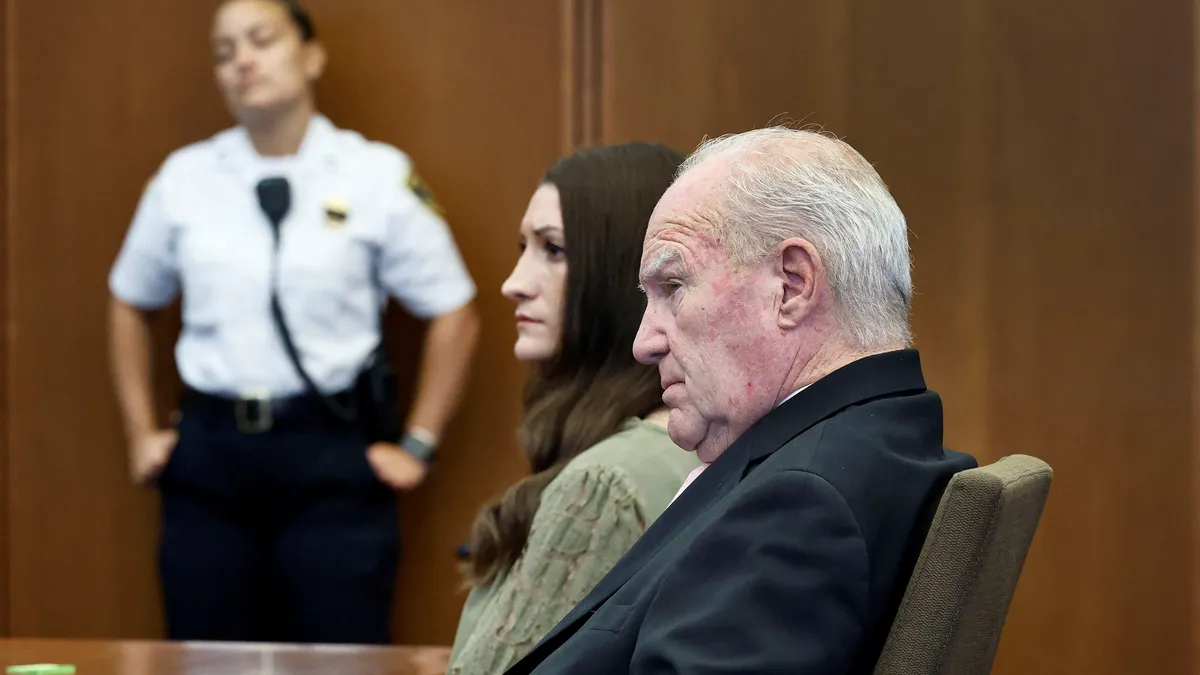
Cybersecarmor.com – The high-stakes Massachusetts triple-murder trial of Lindsay Clancy entered its seventh day of jury deliberations on Thursday, Sept. 4, with the courtroom on the verge of a mistrial. Judge William Sullivan signaled his intention to dissolve the jury unless defense counsel could secure intervention from the state’s highest court within a narrow window of time.
The impasse centers on one juror who, according to notes relayed to the bench, has repeatedly rejected the court’s instructions on the standard of reasonable doubt. Sullivan granted Kevin Reddington, Clancy’s attorney, roughly one hour — beginning around 11:30 a.m. ET — to lodge an emergency single-justice appeal with the Massachusetts Supreme Judicial Court before he formally declared a mistrial. Minutes before that deadline was set, the jury delivered yet another note confirming they could not reach a unanimous verdict.
What the Jury Has Been Told — and What One Member Allegedly Ignores
The jury, composed of nine women and three men, had already logged more than 36 hours of closed-door deliberation by the afternoon of Sept. 3 when the foreperson first flagged the problem. In that initial communication, the note alleged that one member “refused to listen” to the court’s guidance on reasonable doubt, Reddington told reporters. A second note arrived before 3 p.m. ET that same day, stating the holdout “refuses to listen to the law” as articulated by the judge.
Sullivan responded by pulling each juror aside for individual questioning before returning the full panel to the courtroom. He reiterated the definition of reasonable doubt and sent them back to deliberate. The next morning, however, the deadlock persisted, and the jury indicated twice that they were deadlocked.
The Emergency Appeal and Procedural Stakes
Under Massachusetts law, the Supreme Judicial Court retains supervisory authority over lower courts and may intervene when no other remedy exists. Reddington invoked that power in a last-ditch motion, asking Sullivan for time to file the appeal before the mistrial order took effect.
Describing the situation to the bench, Reddington framed the holdout as an intractable obstacle to a lawful verdict:
“I believe that this is a situation where there is a clear and present danger, that this individual, for some reason, what it is, we don’t know, but is taking a position that’s intractable regardless of proof beyond a reasonable doubt.”
The appeal, if accepted, would allow the state’s top court to issue directions to the trial judge — potentially ordering the juror’s removal or mandating further instructions — rather than letting the entire trial collapse into a mistrial that would require starting over from scratch.
Sharp Exchanges Between Counsel and the Bench
The morning of Sept. 4 opened with friction. After hearing from both sides on how to proceed following the prior day’s notes, Sullivan asked what each party wanted. Assistant District Attorney Jennifer Sprague urged the judge to simply instruct the jury to keep deliberating. Reddington, by contrast, pressed again for the juror’s removal — a motion he had already made unsuccessfully the day before.
Reddington argued the notes suggested the holdout was not applying the law correctly and may have misrepresented her position under oath during individual voir dire. He pointed to language in the note indicating the juror “made statements acknowledging doubt,” then turned to the bench:
“Clearly, judge, we have a person who, under their oath, stood in front of you yesterday, when you did the individual voir dire, and according to this information, under oath, looked you in the eye and lied.”
Sprague pushed back, cautioning that the note merely reflected a disagreement among jurors about how reasonable doubt should be applied.
“The note indicates that the parties disagree on what is reasonable doubt or what doubt is and how it should be applied. And we are in no position to judge if the 11 are right or the one is right,” Sprague said.
When Sullivan declined to conduct further individual questioning, Reddington asked the judge to deliver the instructions more forcefully. Sullivan pushed back, noting he had read the language as drafted by the Supreme Judicial Court itself.
“The fact that I perhaps didn’t give it my full inflection, I’m sorry about that. I’m not an actor. I’m just giving the instructions,” Sullivan said.
Before sending the jury back out, Sullivan added a wry aside:
“I’ll try and give this with more pizzazz than I gave yesterday, I suppose.”
Earlier in the session, Sullivan had also quipped at Reddington’s insistence on a stern delivery:
“What do you want me to do? Get a brass band?”
The Case Behind the Deadlock
Clancy, now 36, stands accused of strangling her three young children at the family home in Massachusetts in January 2023. Prosecutors contend the killings were deliberate and planned. The defense, by contrast, maintains that Clancy was suffering from postpartum psychosis at the time and therefore cannot be held criminally responsible. She has pleaded not guilty to all three murder counts.
The trial has drawn sustained national attention given the severity of the charges and the unusual psychiatric defense. A mistrial would mean weeks of testimony, exhibits, and jury selection would be discarded, with any retrial potentially months away. That prospect is precisely what Reddington’s emergency appeal seeks to avert — by asking the state’s highest court to find a path forward that preserves the trial without forcing a verdict from a jury that cannot agree.
As of the latest updates, the outcome of the appeal window remained unresolved, leaving the fate of the trial hanging on whether the Supreme Judicial Court would act before Sullivan’s deadline expired.
Related Reading
Frequently Asked Questions
What is Lindsay Clancy case on brink of mistrial?
Lindsay Clancy case on brink of mistrial is the main topic of this guide. The article explains the context, practical details, and next steps readers should understand.
Why does Lindsay Clancy case on brink of mistrial matter?
Lindsay Clancy case on brink of mistrial matters because readers are looking for a useful answer, not just a short summary. Good content should match search intent and help them decide what to do next.