Scientists mull controversial plan to steer hurricanes

Scientists Explore Controversial Strategy to Redirect Hurricanes
Cybersecarmor.com – Recent advancements in technology have brought the idea of human intervention in natural disasters closer to reality, as revealed by a groundbreaking study published in the journal *PLOS Water* on June 24. The research suggests that with the right tools, it may be possible to alter the paths of massive weather systems like hurricanes, potentially mitigating their impact on vulnerable regions.
From Fiction to Feasibility
While the notion of steering hurricanes might seem like a plot from a science fiction film, some researchers argue that it’s no longer a distant dream. The study’s authors emphasize the urgency of adopting modern technologies to manage extreme weather events, which are becoming increasingly frequent and severe due to climate change. They warn that traditional methods such as dams, levees, and insurance alone may not be enough to safeguard communities from the growing risks of weather-related disasters.
According to the researchers, leveraging existing techniques—often used for cloud seeding to induce rainfall—combined with high-tech data analysis could enable humans to exert control over weather systems. If implemented effectively, this approach might shift the trajectory of hurricanes or reduce their intensity, offering a proactive solution to protect densely populated areas.
Case Studies and Theoretical Scenarios
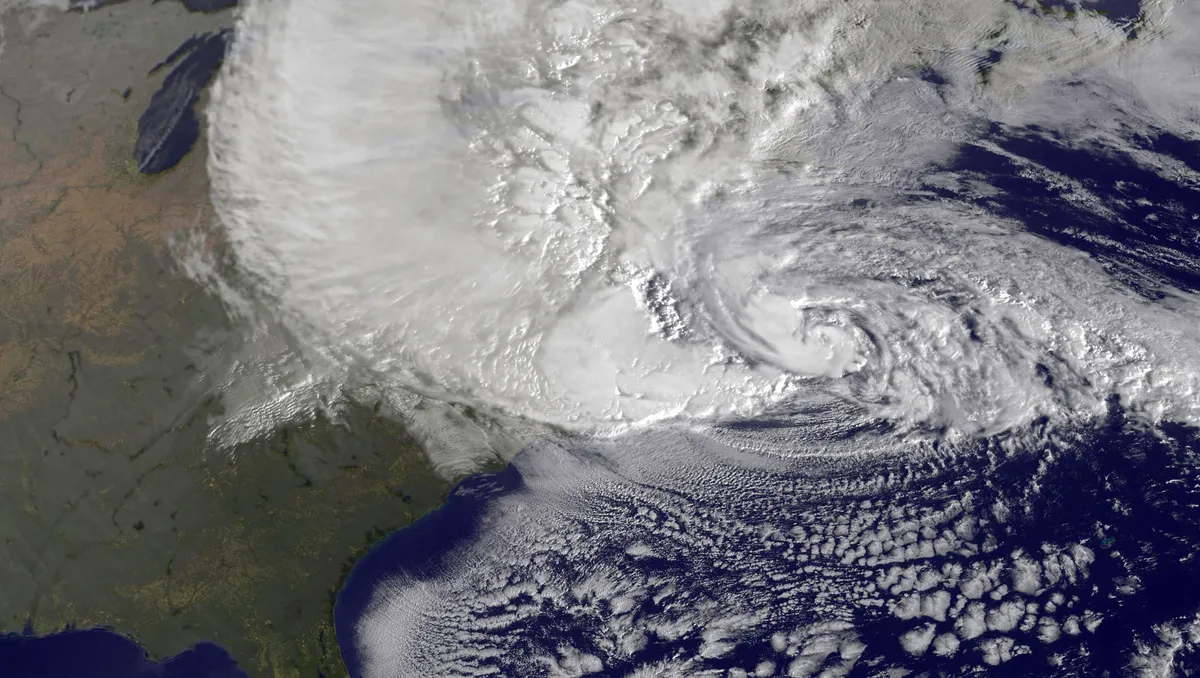
The study presents several hypothetical examples to illustrate the potential of cloud seeding. If applied strategically days before an extreme event, the technique could have altered the path of Superstorm Sandy in 2012 by approximately 300 miles, preventing its devastating impact on New York City. Similarly, it might have increased the low temperatures during the 2021 Texas freeze by around 18 degrees Fahrenheit or decreased the rainfall from a 2022 atmospheric river that caused floods in California by about 5%.
These scenarios highlight the ambitious goals of the research, but they also raise questions about the feasibility of such interventions. Critics argue that the evidence supporting these claims remains limited. Katja Friedrich, an assistant professor at the University of Colorado’s department of atmospheric and oceanic science, stated in an email to USA TODAY that “there is currently NO scientific evidence” confirming that existing cloud-seeding methods can modify large-scale weather systems, such as hurricanes or thunderstorms, which are driven by powerful atmospheric forces.
Friedrich’s skepticism is echoed by other experts. “The challenge lies in isolating the effects of human intervention from the natural variability of weather patterns,” noted Kara Lamb, an associate research scientist at Columbia University. This difficulty has plagued previous efforts, including a decades-old attempt to weaken hurricanes through cloud seeding. Those experiments, she explained, struggled to demonstrate clear results, as it was hard to determine whether observed changes were due to the intervention or natural fluctuations.
Technological Foundations and Challenges
The study’s proponents believe that modern tools, including advanced AI models and real-time observational data, could overcome these hurdles. Upmanu Lall, a co-author from Arizona State University, drew an analogy to the martial art of jiu-jitsu. “The basic principle of jiu-jitsu is to achieve maximum efficiency with minimal effort,” he said. “It relies on the idea that a smaller, weaker force can redirect a larger, stronger one through leverage and strategic timing.”
Lall described the process as requiring a high density of observations, AI-driven analysis, and a precise delivery system to apply the nudge. However, the study also acknowledges that cloud seeding may not be the sole method for altering weather systems. “We are still working on the best technology for delivering the nudge,” Lall added. “A large-scale seeding effort at the right moment could be a viable option, but it’s not the only possibility.”
Cloud seeding itself is a well-established technique that has been used for decades to modify weather. The National Oceanic and Atmospheric Administration (NOAA) explains that it typically involves dispersing tiny particles like silver iodide into clouds to enhance precipitation or suppress hail. While nine U.S. states currently employ the method, ten have either banned it or are considering doing so, including Florida, which enacted a ban in 2025. This divide reflects ongoing debates about its effectiveness and ethical implications.
Future Prospects and Ethical Considerations
Despite the skepticism, study authors remain optimistic that modern technology and AI computing could revolutionize the field. They argue that the ability to predict and manipulate weather systems is within reach, provided sufficient data is available and the right strategies are applied. “The key is identifying the right locations and timing for intervention,” Lall explained, emphasizing the need for precise, targeted approaches.
However, the ethical dilemmas of such interventions are complex. For example, diverting a hurricane to protect one region could expose another to greater risk. In a best-case scenario, redirecting Superstorm Sandy away from New York City might have placed New England in harm’s way. “This is a question for future generations to decide,” the authors concluded. “We are focused on building the scientific and engineering capacity to make these possibilities a reality.”
The study’s findings underscore a broader conversation about humanity’s role in shaping nature. While cloud seeding offers a promising tool, its success hinges on overcoming technical and scientific challenges. Researchers are also exploring alternative methods, such as using drones or other delivery systems to enhance the precision of interventions. The ultimate goal is to create a framework where humans can influence weather events without compromising the natural balance.
From Doubt to Potential
Historically, cloud seeding has been met with both enthusiasm and doubt. Early experiments showed mixed results, with limited evidence of its ability to significantly alter weather patterns. Yet, the study’s authors argue that the integration of AI and real-time data analysis could provide the necessary precision to make these efforts more impactful. They envision a future where weather modification becomes a routine part of disaster management, much like how dams and levees are used today.
As the debate continues, the potential of cloud seeding to redirect hurricanes and other extreme weather events remains a topic of intense discussion. With the right tools and strategies, scientists hope to turn this controversial idea into a practical solution. The challenge lies not only in proving its effectiveness but also in ensuring that the benefits outweigh the risks. For now, the focus is on refining the technology and gathering more data to support its use in the real world.
Ultimately, the study represents a bold step forward in the quest to control nature’s most powerful forces. Whether it will succeed or not depends on the ability of researchers to navigate scientific uncertainties and ethical questions. As the climate continues to change, the need for innovative solutions becomes more urgent, and cloud seeding may one day play a crucial role in safeguarding communities from the impacts of extreme weather.