China demands answers after man dies in ICE custody

Daftar Isi
Beijing Demands Full Investigation After Chinese Man Found Dead in Pacific Island Detention Facility
Cybersecarmor.com – The death of a 51-year-old Chinese national inside an Immigration and Customs Enforcement holding facility on the remote Pacific island of Saipan has prompted a formal diplomatic demand from Beijing, which is pressing Washington for a complete accounting of circumstances surrounding the incident. The man, identified as Lianyong Wei, was found unresponsive roughly an hour after being placed in federal custody following a local arrest tied to a domestic assault allegation.
The episode has sharpened an already tense conversation between the two governments over how foreign nationals are treated inside American immigration enforcement infrastructure, particularly in outlying territories where oversight mechanisms differ from those on the mainland.
The Arrest and Charges
Wei was taken into custody on August 21 by officers of the Commonwealth of the Northern Mariana Islands Department of Safety. He had been accused of assaulting a family of five at their home. ICE confirmed that, following his arrest, he faced charges including assault with a dangerous weapon, disturbing the peace, and aggravated assault and battery. Because removal proceedings were already in motion, the agency took him into its own custody on August 22.
The next morning, around 7 a.m., a corrections officer performing a routine wellness check discovered Wei unresponsive. He was rushed to the emergency room at Commonwealth Health Care Corporation, where medical personnel attempted resuscitation. At approximately 7:30 a.m. Chamorro Standard Time, staff pronounced him dead. ICE stated that the cause of death remains under investigation.
Beijing’s Diplomatic Response
The Chinese consulate issued a statement expressing what it called “serious concerns” over the incident. The statement, relayed through broadcast reporting, laid out a specific set of demands directed at U.S. authorities:
“We have expressed serious concerns to the relevant U.S. authorities over this incident and required a timely and thorough investigation into the cause of Mr. Wei’s death, notification of the findings, measures to prevent any recurrence of similar incidents, and assistance to the family of the deceased in handling the aftermath.”
The language signals a level of diplomatic engagement that goes beyond routine consular notification. By explicitly requesting preventive measures and family assistance, Beijing is framing the death not merely as a tragic individual event but as a systemic question about how ICE manages detainees in territories far from the agency’s main operational footprint.
Saipan: A Remote Piece of American Territory
Saipan, the capital and largest island of the Northern Mariana Islands, sits in the Pacific’s Mariana Archipelago just north of Guam. American forces seized Saipan and the neighboring island of Tinian from Japanese control during World War II in 1944. Over the following decades, the islands moved through a series of political arrangements until they formally became a U.S. commonwealth and territory in the 1970s and 1980s, per the U.S. Department of the Interior.
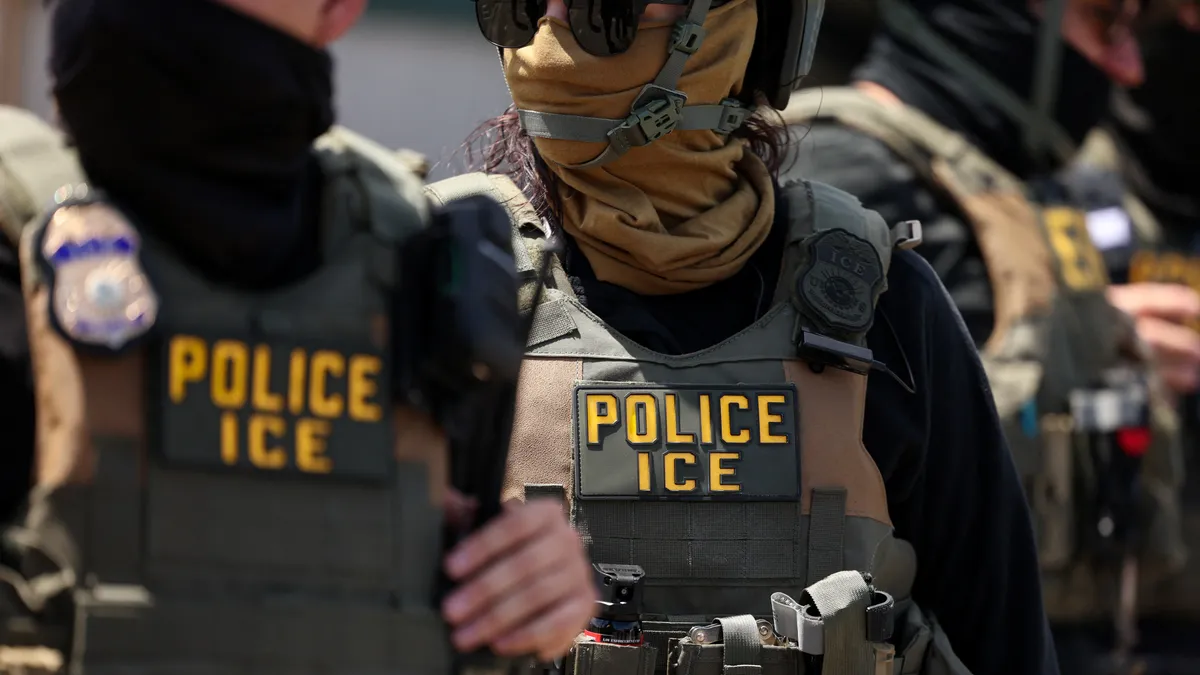
Today the islands host an ICE detention facility, making them part of a scattered network of federal immigration holding sites that stretches from the southwest border to the Caribbean and across the Pacific. The Transactional Records Access Clearinghouse, a public research project at Syracuse University that tracks immigration enforcement data, has documented the geographic spread of these facilities.
“While many of these detention facilities are concentrated along the southwest border with Mexico, every state and territory—including Puerto Rico, Guam, the Virgin Islands, and the Northern Mariana Islands—has at least one ICE detention facility. Some detention facilities are temporary holding rooms, while others are designed for long-term stays. Some hold only a single person on one occasion during the entire year, while others have tens of thousands who pass through their doors during this same period.”
ICE also operates a facility at the U.S. naval base in Guantanamo Bay, Cuba, underscoring how far the agency’s physical reach extends beyond the contiguous United States.
Wei’s Immigration History
Agency records indicate that Wei had been paroled by U.S. Customs and Border Protection in February 2019, granted temporary authorization to remain in Saipan for one week. He stayed well beyond that window without obtaining permission from the U.S. Department of Homeland Security. U.S. Citizenship and Immigration Services subsequently issued him a notice to appear on July 14, 2026, and his next court hearing had been scheduled for the month of his death.
A Broader Pattern of Detainee Deaths
Wei is listed as the 57th immigrant detainee to die in ICE custody since President Donald Trump assumed office, and the 24th such death recorded in 2026, according to the agency’s own detainee death reporting list. That tally, however, excludes individuals who were released from custody while already ill and who died shortly afterward.
Two recent examples illustrate the gap. Prisciliano Trejo Ricano, 29, spent several weeks detained in Georgia where he reported coughing up blood, migraines, severe pain, and progressive weakness before being diagnosed with aggressive leukemia. ICE released him while he was unconscious in a hospital; he died eight days later. Days afterward, Jose Chajon-Raxon of Guatemala died at a hospital in Newark, New Jersey, after ICE granted him a “discretionary release.” He had experienced seizure-like symptoms and had been hospitalized while still in custody. Neither death appears on the agency’s official list of immigrant detainee fatalities.
ICE has not resumed public reporting of deaths that occur after release, a practice that ended before the current administration took office. Advocacy groups have long argued that the distinction between “in-custody” and “post-release” deaths obscures the full toll of the detention system.
Local Response and Procedural Review
Anthony Torres, commissioner of the Commonwealth of the Northern Mariana Islands Department of Corrections, issued a statement addressing the incident directly:
“Following this incident, the Department is reviewing relevant procedures and will implement any necessary corrective actions to strengthen prevention and response measures.”
The statement, obtained through broadcast reporting, stops short of identifying specific procedural failures but signals that internal review is underway. For the family of Wei and for the Chinese government awaiting answers, the coming weeks will determine whether the investigation yields concrete findings or dissolves into the routine administrative language that has followed previous detainee deaths in remote territories.
Related Reading
Frequently Asked Questions
What is China demands answers after man dies?
China demands answers after man dies is the main topic of this guide. The article explains the context, practical details, and next steps readers should understand.
Why does China demands answers after man dies matter?
China demands answers after man dies matters because readers are looking for a useful answer, not just a short summary. Good content should match search intent and help them decide what to do next.