‘Microdosing’ GLP-1s can shed pounds, but here are the dangers

Daftar Isi
Staying on the Lowest Dose of GLP-1 Drugs: What New Data Reveals About Weight Loss and Risk
Cybersecarmor.com – The trend of deliberately keeping GLP-1 weight-loss medications at their initial, lowest doses has moved from social-media chatter into peer-reviewed research. High-profile figures including Andy Cohen, executive producer of the “Real Housewives” franchise, and Rebel Wilson, known for her role in “Pitch Perfect,” have publicly endorsed what they call microdosing — a practice of remaining on the smallest starter dose of a prescription anti-obesity drug rather than escalating to the full therapeutic level. The cultural momentum behind this approach prompted a closer scientific look at whether the shortcut actually delivers meaningful results, and what it costs patients in the way of adverse effects.
What the New Study Examined
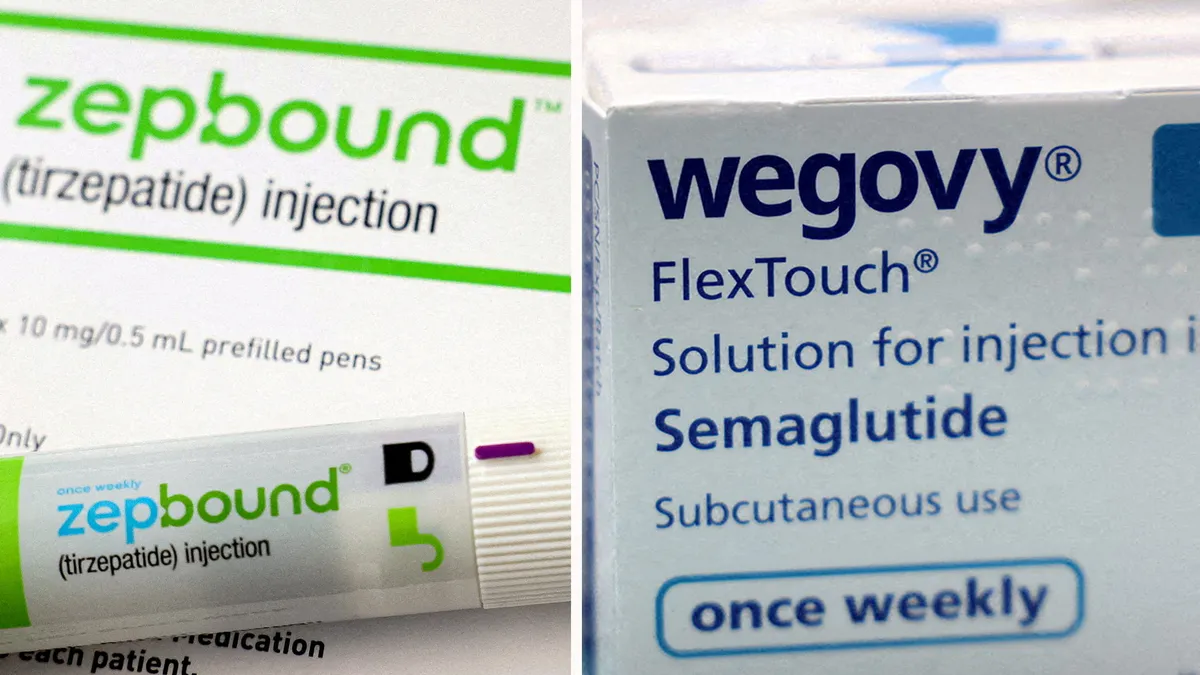
A study published on August 31 in the journal Biology Methods & Protocols analyzed outcomes for two cohorts, each comprising more than 500 individuals, who were prescribed three fills of either semaglutide (marketed by Novo Nordisk as Wegovy) or tirzepatide (marketed by Eli Lilly as Zepbound) over a six-month window. Rather than following the manufacturers’ titration schedules — which call for stepwise dose increases until a Food and Drug Administration–approved maintenance level is reached — these patients stayed at the entry-level dose: 0.25 milligrams of semaglutide or 2.5 milligrams of tirzepatide per injection.
The researchers, led by Venky Soundararajan, co-author and founder of the artificial-intelligence and health-technology firm nference, pulled data from electronic health records and employed AI-assisted curation of physician notes to identify adverse events patients reported during follow-up. Because the design is observational, the findings cannot establish causation; the authors themselves flagged unknowns such as whether participants consistently filled prescriptions or adhered to dosing instructions.
Weight-Loss Outcomes at Low Doses
Over a twelve-month observation period, patients sustained on the low tirzepatide dose lost an average of 5.5 percent of body weight, while those on the low semaglutide dose lost an average of 2.2 percent. By comparison, an earlier head-to-head clinical trial showed that patients who completed the full recommended titration lost 20.2 percent of body weight on tirzepatide and 13.7 percent on semaglutide. The gap between microdosing results and full-dose outcomes is substantial, underscoring that the lowest dose captures only a fraction of the drug’s intended efficacy.
“Talk with your doctor, but go in with your eyes open,” Soundararajan said. “Expecting large amounts of weight loss at the lowest doses will not be practical.”
Soundararajan framed the work as an effort to arm both consumers and clinicians with concrete information about what sustained microdosing can and cannot achieve, so that treatment conversations are grounded in data rather than anecdote.
Side-Effect Profiles Diverge Between the Two Drugs
The study found that patients remaining on low-dose tirzepatide experienced higher incidence rates of kidney injury, constipation, muscle cramps, lumbar disc disease, shortness of breath during physical activity, and skin spots relative to their semaglutide counterparts. Conversely, low-dose semaglutide users reported elevated rates of ear inflammation, excessive sweating, and ankle swelling. The distinction matters for patients who choose to stay at a reduced dose: the risk landscape is not uniform across the two molecules, and the specific adverse-event profile should factor into any decision to deviate from the manufacturer’s titration pathway.
Manufacturer Positions and Patient Guidance
Novo Nordisk’s standard recommendation is to initiate new Wegovy patients on a weekly 0.25-milligram injection and escalate gradually until the individual reaches a maintenance dose of 1.7 mg, 2.4 mg, or 7.2 mg for the injectable form, or 25 mg for the oral Wegovy pill. In a statement, company spokesperson Liz Skrbkova emphasized that patients should discuss optimal treatment options directly with their prescriber.
“For Wegovy pill and injection, there are options to slow the dose escalation or reduce the dose to help mitigate gastrointestinal side effects, but any of these options should be considered in partnership with patients’ health care prescriber,” Skrbkova said.
Eli Lilly, in its own statement, pointed to the FDA-approved labeling for tirzepatide and noted that efficacy and safety have been established across clinical trials enrolling more than 25,000 participants. The company urged that treatment decisions be made in consultation with a qualified health-care professional.
Why Microdosing Has Gained Cultural Traction
GLP-1 receptor agonists and dual GIP/GLP-1 agonists have reshaped the obesity-treatment landscape since their approvals, and demand has outstripped supply in many markets. For some patients, the prospect of a full titration schedule — with its associated gastrointestinal side effects during dose escalation — feels daunting. Microdosing offers the psychological comfort of a gentler entry point, and celebrity endorsement has amplified the perception that a modest dose is “enough.” The new data complicates that narrative: while a small degree of weight reduction is possible at the lowest dose, the magnitude of loss is a fraction of what full-dose therapy achieves, and the side-effect profile is not simply a scaled-down version of the full-dose experience.
For patients weighing whether to remain at a reduced dose, the practical takeaway from the research is straightforward. Sustained microdosing is not a proven substitute for the recommended regimen, and the observational design leaves open questions about adherence, confounding, and long-term safety. A conversation with a prescribing physician — informed by both the new data and the individual’s medical history — remains the most reliable path to a treatment plan that balances weight-management goals against the specific risks each molecule carries at each dose level.
Related Reading
Frequently Asked Questions
What is Microdosing GLP 1s can shed pounds?
Microdosing GLP 1s can shed pounds is the main topic of this guide. The article explains the context, practical details, and next steps readers should understand.
Why does Microdosing GLP 1s can shed pounds matter?
Microdosing GLP 1s can shed pounds matters because readers are looking for a useful answer, not just a short summary. Good content should match search intent and help them decide what to do next.