Potential 2028 candidates rise to the top of new poll

Daftar Isi
Vice Presidents Dominate Early 2028 Primary Polling as Both Parties Take Shape
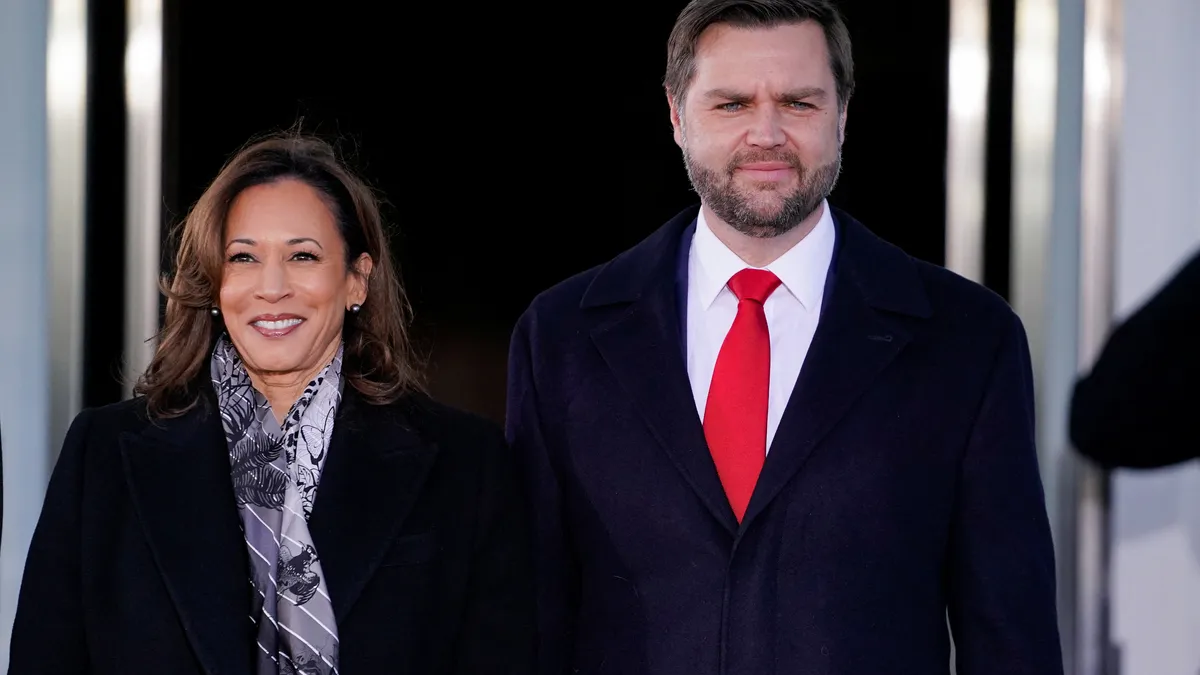
Cybersecarmor.com – No candidate has formally entered the race for the White House in 2028, yet the contours of both major-party primaries are already visible. A survey conducted by Harvard CAPS/HarrisX between Aug. 28 and 30, released on Sept. 2, reveals that the two vice presidents — one who served under President Joe Biden and one who currently serves under President Donald Trump — are pulling ahead of every other name in their respective party fields. The poll, which sampled 2,100 registered voters with a margin of error of 2.1 percentage points, underscores how the vice-presidential office has become a natural springboard to a presidential bid in an era when both parties are still searching for their next standard-bearer.
The Democratic Field: Harris Holds a Wide Lead
On the Democratic side, former Vice President Kamala Harris commands 42 percent of likely primary voters, a figure that places her well ahead of any challenger. California Governor Gavin Newsom trails at 18 percent, while former Transportation Secretary Pete Buttigieg and Representative Alexandria Ocasio-Cortez each register 9 percent. The gap between Harris and the rest of the field is substantial enough that, absent a dramatic shift in national politics over the next two years, she would enter the general election as the presumptive nominee. Newsom’s position benefits from his statewide name recognition and his record as a high-profile progressive governor, yet his 18 percent share suggests he has not yet converted that visibility into a broader primary coalition.
Buttigieg’s continued presence in the top tier of polling is notable given his earlier attempts to run. He has topped several early 2028 surveys before this one, and in August he offered a pointed signal on Steven Bartlett’s “The Diary of a CEO” podcast that he remains interested in another White House run.
“I’m more inclined than not” to make another White House bid, Buttigieg said, adding that his final decision would hinge on factors that will not become clear for some time.
That measured ambiguity keeps him in play without committing him to a timeline, a strategy that allows him to test the waters while retaining the option to step aside if the political environment shifts.
The Republican Field: Vance Leads, Rubio and Trump Jr. Follow
Among Republican primary voters, current Vice President JD Vance holds 44 percent, a margin that mirrors Harris’s advantage on the other side. Secretary of State Marco Rubio sits second at 21 percent, and Donald Trump Jr. — the eldest son of the sitting president — collects 18 percent. The presence of a Trump family member in the top tier of polling is a reminder that the Republican primary landscape in 2028 will be shaped as much by dynastic loyalty as by policy positioning.
Vance’s position is reinforced by his proximity to the president and his visibility in foreign-policy and domestic-oversight roles. Rubio, meanwhile, benefits from his long tenure in Congress and his current cabinet portfolio, which keeps him in the daily news cycle. Trump Jr.’s showing is intriguing given that he has not announced any formal candidacy; his numbers likely reflect name recognition and the gravitational pull of the Trump brand rather than a developed policy platform.
Vance Weighs Cruz and Hegseth
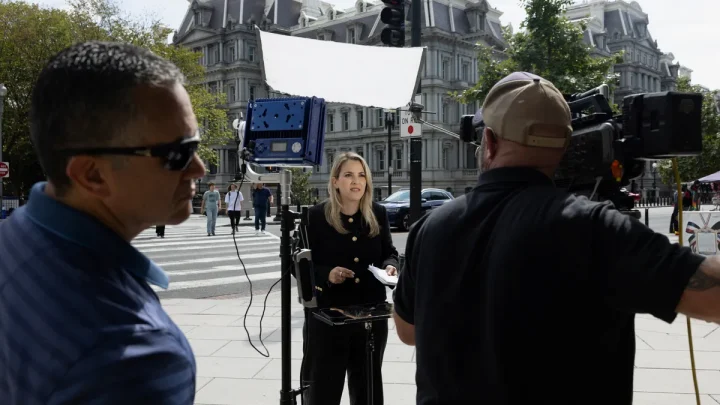
Just one day before the poll’s release, Vance found himself fielding questions at a White House media briefing about whether he could envision backing Senator Ted Cruz of Texas or Secretary of Defense Pete Hegseth for president in 2028. His answer was characteristically diplomatic.
“Clearly Ted is a very authentic and likable guy, and I’m sure he’ll do great,” Vance said.
The remark landed amid a wave of speculation about Cruz’s intentions. The Texas senator, who finished second to Trump in the 2016 Republican primaries, has recently made no effort to conceal his ambitions.
“It’s no secret that I want to be president,” Cruz told Texas Lieutenant Governor Dan Patrick during an appearance on Patrick’s podcast.
Cruz’s statement, combined with his continued media presence and his base of support among the party’s most ideologically committed voters, keeps him in the conversation even though he did not appear in the Harvard CAPS/HarrisX poll’s top tier. Whether his name will gain traction as the primary season approaches remains an open question.
Family Signals and the Question of Succession
In the Vance household, signals have been deliberately soft. Usha Vance appeared on Fox News’ “Fox and Friends” in a recent interview and described herself as keeping an “open mind and open heart” regarding whatever her husband might choose to do ahead of the 2028 primaries. The phrasing — warm but noncommittal — leaves room for either a run or a quiet retirement from public office.
President Trump, for his part, has so far declined to name a preferred successor. Yet in May, at a White House event, he paired Vance and Rubio in a way that drew immediate attention.
“I do believe that’s a dream team, but these are minor details. That does not mean you have my endorsement under any circumstances,” Trump said. “I think it sounds like a presidential candidate and vice presidential candidate.”
The comment was enough to fuel speculation about a Vance-Rubio ticket while simultaneously disclaiming any formal endorsement. For a president who has historically wielded his personal brand as a primary weapon, the careful hedging suggests either genuine uncertainty about his preferred heir or a strategic choice to keep multiple options alive until the political calculus becomes clearer.
What the Numbers Mean for 2028
Two years out, primary polls are inherently provisional. Voter preferences shift with economic conditions, foreign crises, and the personal ambitions of candidates who have not yet declared. Still, the Harvard CAPS/HarrisX survey captures a moment in which both parties’ front-runners are, by a wide margin, the two vice presidents. That symmetry — a former VP and a sitting VP each leading their own primary — is a product of the current political moment and may not persist. If either vice president chooses not to run, or if a new national crisis reshapes voter priorities, the fields could reorganize quickly.
For now, the data points to a 2028 contest in which the vice-presidential office, rather than a governorship or a congressional seat, will be the most likely on-ramp to the White House. Whether that trajectory holds through the fall of 2027 and into the primary season of 2028 will depend on decisions no one has yet made.
Related Reading
Frequently Asked Questions
What is Potential 2028 candidates rise to the top?
Potential 2028 candidates rise to the top is the main topic of this guide. The article explains the context, practical details, and next steps readers should understand.
Why does Potential 2028 candidates rise to the top matter?
Potential 2028 candidates rise to the top matters because readers are looking for a useful answer, not just a short summary. Good content should match search intent and help them decide what to do next.