
Sculpting the past: Michelangelo and Rodin mixed and matched in Paris Louvre exhibition
Sculpting the Past: Michelangelo and Rodin in a Paris Louvre Dialogue
Sculpting the past – Under the iconic glass pyramid of the Louvre in Paris, a compelling juxtaposition of two monumental figures in the world of sculpture is unfolding. Michelangelo, the Renaissance master whose works epitomize classical perfection, faces off against Rodin, the 19th-century innovator who redefined the possibilities of form. The exhibition, titled “Michelangelo Rodin ‘Living Bodies’,” showcases approximately 200 pieces spanning diverse materials—marble, bronze, plaster, terracotta, casts, and countless drawings. These artifacts, separated by three centuries, are united by a central theme: the exploration of the human body as a vessel of life and emotion.
The Louvre’s decision to bring these two titans into conversation marks a bold attempt to bridge the gap between classical tradition and modern expression. While Michelangelo’s sculptures are rooted in the Renaissance ideal of harmonious proportion and divine symmetry, Rodin’s creations emphasize raw vitality, emotional intensity, and the body’s imperfections. This contrast is not merely aesthetic; it reflects a profound shift in artistic philosophy. The exhibition does not simply display works side by side but invites visitors to trace the evolution of sculptural thought through the lens of these two giants.
Curator Chloé Ariot, who also oversees the Rodin Museum, provides insight into the exhibition’s intent. “Michelangelo’s style embodies the Renaissance ethos, serving as a bridge to the Mannerist movement. His approach to the human form is meticulous, almost mathematical, in its precision,” she explains. “Rodin, however, challenged these conventions. In his era, he dismantled the rigid structures of traditional sculpture, favoring spontaneity and a more introspective portrayal of the body.” Ariot’s perspective highlights how the two artists, though separated by time, each grappled with the essence of human existence through their craft.
“We are coming out of a century where sculpture danced between homage to antiquity and the fervor of Romanticism. The Renaissance revived classical ideals, while the 19th century embraced the emotional and psychological dimensions of the human form,” Ariot adds.
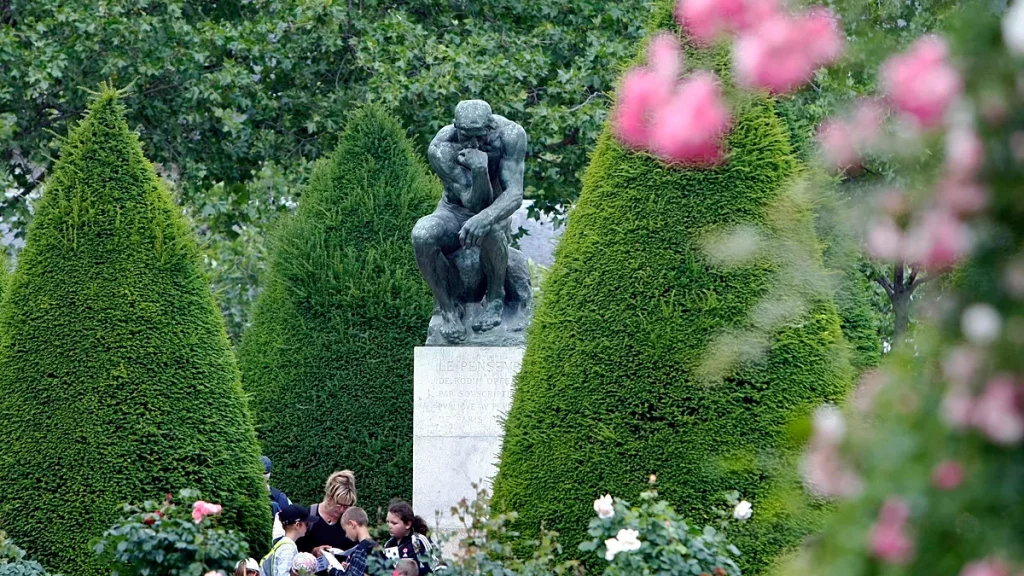
The exhibition’s focus on the “living body” transcends mere physical representation. It delves into the interplay between the corporeal and the spiritual, capturing the inner turbulence of the soul through the body’s gestures and contours. Michelangelo’s Pieta and David are celebrated for their serene grace, yet even these masterpieces hint at the dynamic forces that shaped them. Rodin’s The Thinker and Walking Man, on the other hand, convey a sense of motion and mental engagement, as if the body itself is in flux. This duality invites viewers to consider how the same subject—human life—has been interpreted through different historical lenses.
Art historians often highlight the Renaissance as a period of rediscovery, where artists like Michelangelo sought to revive the grandeur of ancient Greece and Rome. His works, such as the David or the Genesis series, are characterized by their mastery of anatomy and the seamless integration of form and function. Yet, Rodin’s approach to the human body is far more fragmented. His sculptures, like The Kiss or St. John the Baptist Preaching, appear to capture moments of tension and revelation, where the body becomes a canvas for raw emotion and psychological depth.
Despite their stylistic differences, both artists share a preoccupation with the body as a medium for storytelling. Michelangelo’s figures often exude a sense of timeless dignity, while Rodin’s are imbued with immediacy and vulnerability. This tension is further amplified by the materials they chose. Michelangelo’s marble carvings, polished to a level of almost ethereal perfection, contrast with Rodin’s bronze casts, which carry the weight of time and texture. The Louvre’s curation weaves these elements together, creating a dialogue that spans centuries.
A Cross-Disciplinary Encounter
Complementing the visual experience, the Louvre has also incorporated performance art. Two dance performances, inspired by the works of Michelangelo and Rodin, are staged by dancers from the Paris Opera. These performances serve as a dynamic extension of the exhibition’s theme, translating the sculptures’ themes into movement and rhythm. “When we conceptualized this evening, we envisioned a showcase of duets,” says Luc Bouniol-Laffont, director of the performing arts department. “The exhibition itself is a duet between two sculptors, and so the evening is a collection of duets that are both timeless and contemporary.”
“This evening is not just a tribute to the past but a creative fusion of tradition and innovation. We’ve drawn from the Paris Opera Ballet’s rich repertoire, selecting pieces that resonate with the essence of Michelangelo’s grandeur and Rodin’s emotional resonance. Additionally, a new creation by Yvon Demolle, a Paris Opera Ballet dancer, bridges the gap between the two artists’ legacies,” Bouniol-Laffont elaborates.
The dance performances are designed to mirror the sculptures’ exploration of the body’s inner life. For instance, a piece inspired by Michelangelo’s David might emphasize structured movement and balance, while a performance echoing Rodin’s The Kiss could focus on fluidity and passion. This integration of visual and performing arts underscores the Louvre’s commitment to a multidisciplinary approach, inviting audiences to experience the “living body” through multiple senses.
The exhibition’s broader significance lies in its ability to highlight the continuity of artistic inquiry. While Michelangelo’s era celebrated the body as a symbol of divine order, Rodin’s work reflects the individual’s inner world. Yet, both artists share a common goal: to capture the essence of human life in three dimensions. By juxtaposing their works, the Louvre demonstrates how the same question—how to represent the living—has been approached in different ways across time.
Visitors are encouraged to reflect on the evolution of sculpture as a discipline. The Renaissance revival of classical forms gave way to Romanticism’s emphasis on emotion, and later, to modernism’s focus on abstraction. Michelangelo’s sculptures, though rooted in antiquity, laid the groundwork for later innovations. Rodin, in turn, paved the way for contemporary sculptors who prioritize psychological complexity over idealized forms. This exhibition serves as a reminder that artistic progress is often built upon the foundations of the past.
The Louvre’s effort to blend these two eras also raises questions about the role of the body in art. Is the human form a vessel for eternal truths, or a reflection of contemporary anxieties? Michelangelo’s David represents an idealized hero, while Rodin’s The Burghers of Calais captures the fragility and sacrifice of ordinary men. The exhibition invites a broader conversation about how the body has been used as a narrative tool, from mythological allegories to personal expressions.
As the exhibition runs through July 20, 2026, it offers a rare opportunity to witness the collision of two artistic worlds. The Louvre, known for its classical treasures, now embraces a more experimental approach, merging the timeless with the modern. This cross-disciplinary reading not only enriches the visitor experience but also redefines the museum as a space where past and present coexist in dialogue. The result is a celebration of sculpture’s enduring power to convey the complexities of human existence.
For those interested in the intersection of art and performance, the Louvre’s dance performances add another layer to the exhibition’s narrative. These pieces, ranging from classical interpretations to original creations, allow the sculptures’ themes to take on new life. The fusion of static art with kinetic expression underscores the idea that the body is not just a subject of study but a dynamic entity capable of movement, emotion, and transformation. This interplay between mediums reinforces the exhibition’s thesis: the human form, in all its forms, remains a central axis of artistic exploration.
Ultimately, the exhibition challenges viewers to see beyond the surface. Michelangelo’s perfectionist style and Rodin’s expressive flair are not opposing forces but complementary perspectives on the same human condition. By bringing their works together, the Louvre crafts a narrative that spans centuries, reminding us that the pursuit of the “living body” is as relevant today as it was in the Renaissance or the 19th century. This is not just a display of art; it is an invitation to engage with the timeless dialogue between form and feeling, between tradition and innovation, and between past and present.

