
Indian PM Modi begins European tour with meeting of Dutch royals
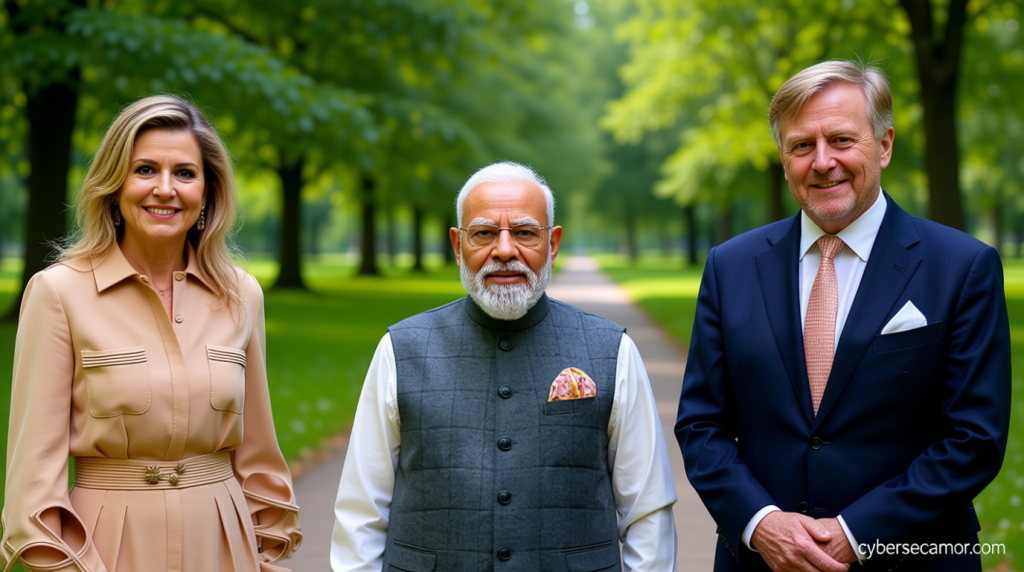
Indian PM Modi Begins European Tour with Meeting of Dutch Royals
Indian PM Modi begins European tour – Prime Minister Narendra Modi of India commenced his official European leg of a six-day diplomatic journey on Saturday, engaging in a high-profile session with the Netherlands’ King Willem-Alexander and Queen Máxima at Huis ten Bosch Palace in The Hague. This meeting marks the first stop of his itinerary, which includes visits to the United Arab Emirates, Sweden, Norway, and Italy. Alongside the royal pair, Modi also held discussions with Dutch business leaders, focusing on collaborative opportunities in defence, security, innovation, and energy. The interactions underscore the strategic importance of the Netherlands in India’s global trade network and its role as a key partner in advancing economic ties.
Strengthening Bilateral Ties
During his address to the Indian diaspora in The Hague, Modi emphasized the growing significance of India-Netherlands partnerships, particularly in technology and innovation. He praised the progress made in recent years and expressed optimism about future collaborations, noting that these areas represent a critical direction for both nations. The Ministry of External Affairs reports that bilateral trade between India and the Netherlands reached USD 27.8 billion in the 2024-25 fiscal year, highlighting the robust economic relationship. Modi’s visit is expected to further solidify this partnership through policy alignment and joint ventures in emerging sectors.
“We are committed to expanding trade and economic cooperation, with technology and innovation at the forefront of our shared priorities,” Modi stated, addressing the Indian community. The remarks reflect his emphasis on leveraging the Netherlands’ expertise in sustainable development and advanced manufacturing to drive India’s industrial growth.
Modi’s European tour follows a successful visit to the Middle East, where he engaged with leaders in the United Arab Emirates to discuss regional stability and economic collaboration. The Netherlands, with its strategic location and developed infrastructure, serves as a vital bridge for India’s expanding global footprint. The Prime Minister’s engagement with Dutch counterpart Rob Jetten is set to explore mutual interests in defence modernization, energy security, and innovation-driven growth. This dialogue comes at a time when both countries seek to enhance their strategic alignment amid shifting geopolitical dynamics.
EU-India Collaboration
Modi’s meetings with European Commission President Ursula von der Leyen will occur during his stop in Sweden, where he is set to participate in the European Round Table for Industry alongside von der Leyen. The EU-India free trade agreement, finalized during the 16th EU-India summit in January, is a central theme of these discussions. The accord, aimed at reducing tariffs and administrative hurdles, is expected to streamline trade flows and benefit consumers by increasing market access for goods and services.
“The agreement will create a more efficient trading environment, fostering growth and innovation across both regions,” said a press release from India’s Ministry of External Affairs. This sentiment aligns with Modi’s vision of strengthening multilateral ties to bolster India’s economic resilience and global influence.
Following his meeting in Sweden, Modi will proceed to Oslo for the India-Nordic summit, a critical event in the European leg of his tour. The summit will bring together leaders from Norway, Sweden, Denmark, Finland, and Iceland to discuss cooperative initiatives in technology, renewable energy, Arctic research, and defence. The Netherlands, as a founding member of the EU, has long been a partner in India’s trade and investment strategies, but the Nordic countries are now emerging as new focal points for strategic alignment.
Modi’s engagement with Sweden’s Prime Minister Ulf Kristersson will center on reviewing the comprehensive scope of bilateral relations, with a particular emphasis on strengthening ties in innovation and sustainability. The Netherlands’ role in facilitating trade between India and the EU is well-established, but the upcoming meetings in Sweden and Norway may further diversify India’s engagement with European blocs. This approach reflects Modi’s broader strategy to balance relationships with both traditional and emerging partners in Europe.
Italy as the Final Destination
The European tour will conclude in Italy on 20 May, with Modi meeting Italian Prime Minister Giorgia Meloni. Their previous collaboration in 2024, which resulted in the signing of a Joint Strategic Action Plan, has already laid the groundwork for cooperation in security, defence, and safe migration channels. The new plan aims to enhance bilateral coordination on issues ranging from counterterrorism to regional stability, while also promoting seamless migration processes for Indian workers and students in Italy.
Italy’s strategic location in the Mediterranean makes it a key player in India’s broader European outreach. The meeting with Meloni is expected to reinforce this partnership, particularly in light of shared interests in energy security and technological advancement. Modi’s visit will also highlight the growing cultural and economic ties between the two nations, as well as the potential for further collaboration in emerging fields like space exploration and digital innovation.
Global Implications of Modi’s Diplomatic Push
As Modi travels across Europe, his emphasis on bilateral and multilateral partnerships signals a broader strategy to deepen India’s economic and political ties with Western nations. The Netherlands, with its historical role as a trade hub, and the Nordic countries, known for their innovation-driven economies, are pivotal in this effort. Italy, meanwhile, represents a bridge to the EU’s southern member states, offering opportunities for expanding India’s influence in the Mediterranean.
Modi’s itinerary underscores the importance of diversifying India’s international engagement to reduce dependency on a single region. By targeting key trading partners and political allies in Europe, he seeks to create a more resilient global network for India’s exports and investments. The trade agreement with the EU, combined with the growing economic ties with the Netherlands and the Nordic countries, positions India as a rising power in the European market. This diplomatic push is also aimed at enhancing India’s soft power, as cultural and economic interactions with European nations can foster greater international recognition and cooperation.
Throughout the tour, Modi will engage with leaders and stakeholders to address pressing global challenges, including climate change, technological competition, and security threats. The meetings in The Hague, Stockholm, and Rome will serve as platforms for aligning India’s strategic priorities with those of its European counterparts. As the European Union continues to evolve its trade and investment policies, Modi’s visits are likely to play a crucial role in shaping India’s participation in this dynamic bloc.
With the European leg of his tour set to conclude in Italy, Modi’s diplomatic engagements across the continent will provide valuable insights into the future of India’s economic and political relationships. The culmination of these efforts may pave the way for new agreements and partnerships, further solidifying India’s position as a global leader in trade, innovation, and diplomacy. The success of his European journey will depend on the depth of these interactions, as well as their ability to translate into tangible benefits for both nations.

