‘Dad left him in charge.’ Walter Payton’s son, Jarrett, mourns Matt Suhey

Daftar Isi
A Father’s Charge: How Matt Suhey Stepped Into the Payton Family After Walter’s Passing
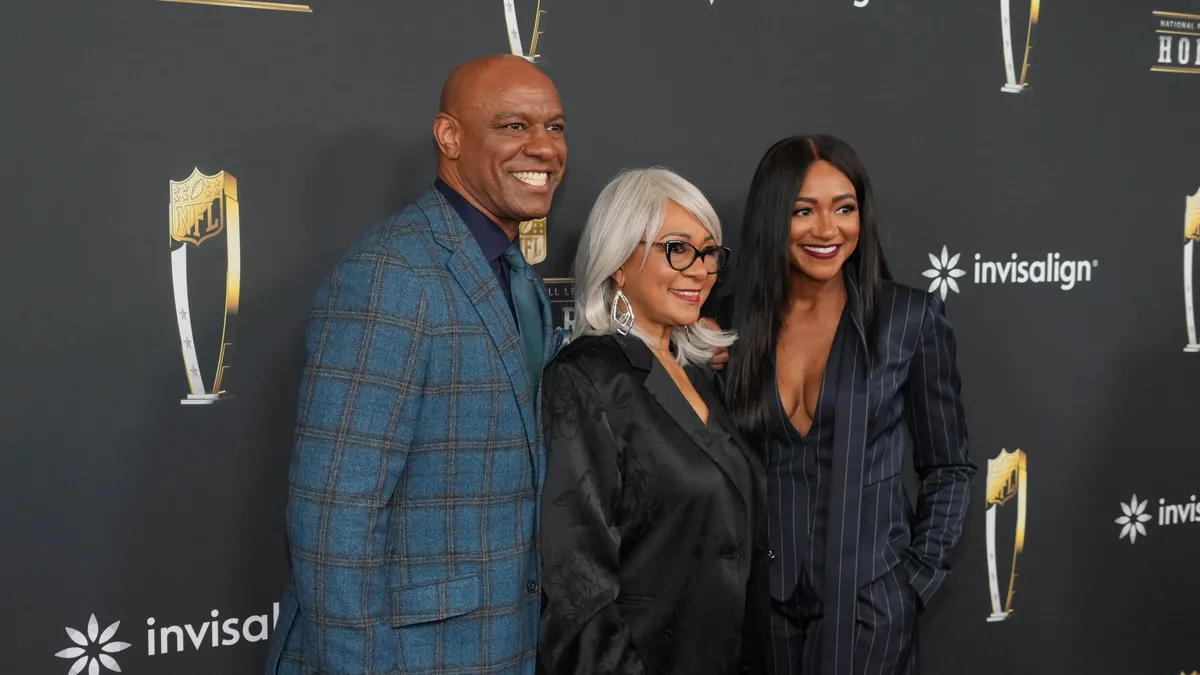
Cybersecarmor.com – When Walter Payton died in 1999, his son Jarrett was left without the man who had defined his childhood, his identity, and his place in the world. Into that void walked one man — not by accident, not by obligation alone, but by a bond forged over a decade of shared trenches, shared glory, and shared silence after the final whistle. Matt Suhey, the fullback who spent every one of his ten NFL seasons in a Bears uniform, became the steady hand on the Payton household’s shoulder for more than two decades after Walter’s death.
Suhey passed away on Sunday, September 6. The Chicago Bears confirmed the news. One day later, Jarrett Payton took to Instagram to honor what he called his father’s “closest friend,” and in doing so offered a rare, unguarded window into how two families had leaned on each other through grief, uncertainty, and the long stretch of ordinary days that follow extraordinary lives.
“He was my dad’s closest friend,” Jarrett Payton wrote. “After we lost my dad in 1999, Matt became the biggest father figure I had. When everything felt uncertain, he was there. My dad left him in charge and Matt never let that responsibility sit lightly. He protected our family. He looked after us. He made sure we were okay, year after year, without ever making it about himself.”
The phrase “my dad left him in charge” carries a weight that goes beyond football. It implies a deliberate, conscious transfer of guardianship — a man who understood his own mortality and chose, with full clarity, who would watch over his children when he could no longer do so. That choice fell on Suhey, and Suhey accepted it without fanfare, without public ceremony, and without ever turning the arrangement into a story about himself.
The Friendship That Preceded the Fatherhood
The relationship between Suhey and Walter Payton was not built in a living room or over a phone call. It was built in the backfield of Soldier Field, week after week, season after season, from the moment Suhey arrived as a second-round draft pick out of Penn State in 1980. Payton, already the league’s most feared running back, found in Suhey a blocking partner, a locker-room confidant, and eventually a friend so close that the two families braided themselves together. Payton became the godfather of Suhey’s son, Scotty. The reverse was equally true: Suhey became, in Jarrett’s own words, the “biggest father figure” in his life.
They shared one championship. In January 1986, the Bears dismantled the New England Patriots 46-10 in Super Bowl XX, and Suhey accounted for 52 rushing yards and the game’s first touchdown. It remains the only Lombardi Trophy in the history of a franchise that has existed for well over a century. The irony of that night — and the one detail that has lingered in Bears lore ever since — is that Walter Payton, the man whose name was synonymous with the rushing attack, did not score. Head coach Mike Ditka later acknowledged the decision to keep Payton out of the game was an oversight. The image of Payton watching from the sideline while Suhey carried the ball into the end zone became, in a sense, the visual metaphor for the entire friendship: one man’s glory inseparable from the other’s quiet labor.
A Career Measured in Blocks, Not Headlines
Suhey’s statistical résumé reads like a footnote next to Payton’s, and that is precisely the point. Over 148 games — 100 of them starts — Suhey accumulated 2,946 rushing yards and 20 touchdowns. Payton routinely produced those numbers in roughly two seasons. Yet the fullback’s value was never captured by a single yardage line. He hauled in 260 receptions for 2,113 yards, five receiving touchdowns, and 93 first downs, making him a reliable second option out of the backfield when defenses stacked the box. He retired after the 1989 season, having given the Bears a decade of physical, unglamorous, essential work.
In an era when fullbacks were still expected to be two-way athletes — capable of absorbing a 250-pound guard’s shoulder and then releasing a clean route three plays later — Suhey represented the archetype at its most complete. His career was not defined by a single highlight reel. It was defined by repetition, reliability, and the willingness to be the unnamed variable in someone else’s equation.
What the Loss Means Now
For Jarrett Payton, the death of Matt Suhey closes a chapter that began in grief and was sustained by loyalty. The tribute he posted is not merely a eulogy for a former teammate; it is an acknowledgment that the architecture of his adult life was, in part, built by a man who chose to show up, year after year, without credit and without condition. The Bears organization, which lost its most iconic player in 1988 and its most iconic coach in 1999, now loses the man who stood between those two losses and the family they left behind.
The bond between the Payton and Suhey households was never institutional. It was not a franchise arrangement or a media obligation. It was two men who decided, in the private economy of friendship, that the other’s children were their own. That decision outlasted contracts, outlasted retirement, outlasted one of the two men. Now it outlasts the second. What remains is the record of what was done: a father’s charge, accepted and kept, for more than twenty-five years.
Related Reading
Frequently Asked Questions
What is Dad left him in charge Walter?
Dad left him in charge Walter is the main topic of this guide. The article explains the context, practical details, and next steps readers should understand.
Why does Dad left him in charge Walter matter?
Dad left him in charge Walter matters because readers are looking for a useful answer, not just a short summary. Good content should match search intent and help them decide what to do next.