The 9/11 story America’s teachers keep telling

Daftar Isi
A Young Trader’s Last Choice, Now a Lesson in 40 States
Cybersecarmor.com – For the students sitting in American classrooms this fall, September 11, 2001, is no longer a day they remember feeling the ground shake or hearing sirens wail through their neighborhoods. The current cohort of high school seniors entered the world roughly seven years after the twin towers fell. Most of today’s kindergartners were born in 2019, nearly two decades removed from the attacks. The event has migrated from lived trauma into textbook history, and educators face the challenge of making that distance feel meaningful without trivializing the grief.
One answer has taken shape around a single act of bravery performed by a 24-year-old equities trader named Welles Crowther. His story now appears in curricula across more than 40 states, reaching students from kindergarten through twelfth grade as a concrete illustration of what courage looked like inside the burning World Trade Center.
The Three Trips to the 78th Floor
When United Airlines Flight 175 sliced through the south tower’s sky lobby, survivors scattered in confusion, unsure whether any exit remained accessible. Through the smoke and chaos, one voice cut through: “I found the stairs.” That was Crowther, pointing the way out.
He guided as many as 18 people to safety, then turned around and climbed back up into the inferno. He made three such trips to the 78th floor, each time returning to pull more people toward the stairwell. He did not come down for a fourth time.
In the years since, Crowther has accumulated posthumous honors. This year he will receive the Presidential Medal of Freedom. Boston College, his alma mater, marks his memory annually with a dedicated football game and a road race. Yet the most enduring tribute may be the classroom: his name now anchors lessons on empathy, leadership, and moral choice for millions of young Americans.
Six Months in the Debris
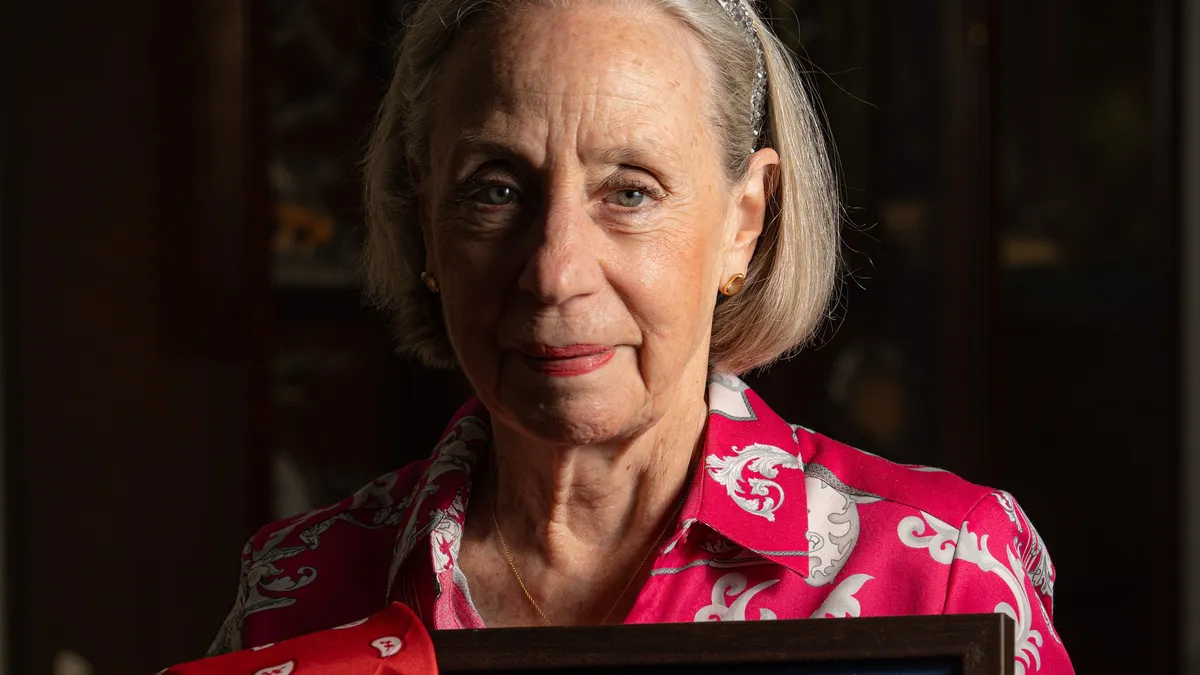
Like countless other families who lost someone that morning, the Crowthers received no confirmation of what happened to Welles until recovery workers located his body roughly six months after the attacks. He was found lying amid the rubble of what had been the south tower’s lobby, positioned beside a cluster of about ten New York City firefighters and close to the building’s exit. The question that haunted his mother, Alison Crowther, was simple and unbearable: why hadn’t he made it out?
The answer surfaced unexpectedly over Memorial Day weekend in 2002. A New York Times piece titled “Fighting to Live as the Towers Died” quoted survivors describing a mysterious rescuer whose face was obscured by a red bandanna. Alison recognized the detail instantly. Her son had carried that particular handkerchief since childhood. She contacted the individuals quoted in the article and confirmed, beyond doubt, that the man they described was Welles.
From Personal Grief to Public Curriculum
The family’s home sits in Nyack, New York, and local schools there began inviting Alison to speak about her son’s story within years of the attacks. Boston College launched a Red Bandanna 5K run in his name. On the tenth anniversary of the attacks, ESPN aired a 13-minute documentary that, in Alison’s recollection, carried “that shot Welles – the story – all around the world.”
Letters poured into her mailbox from teachers, students, coaches, and parents. She decided to build a structured curriculum around her son’s actions that morning. The resulting program, called The Red Bandanna Project, takes its name from the handkerchief survivors saw him wearing. Its stated aim is to steer students toward the lessons embedded in 9/11—empathy, leadership, the willingness to act for strangers.
“The history is the history,” Alison Crowther has said. “I say to young people, ‘This happened. It was devastating. But you can’t live in fear, and you can’t be controlled by fear.'”
“9/11 should never be forgotten or diminished in any way. It should be addressed in the schools,” she added. “You have to move forward.”
The 25th-Anniversary Revamp
For the 25th anniversary of the attacks, the family’s nonprofit, the Welles Remy Crowther Charitable Trust, overhauled the curriculum. Kevin Holbrook, project director of the Red Bandanna Project, described the updated lessons as free, digitally downloadable, and oriented toward emotional learning. They span elementary through middle school and cover topics such as teamwork, the “power of one,” and caring for others. Exercises prompt students to reflect on Crowther’s choices and identify parallel examples of people helping strangers in their own lives. One middle-school assignment asks students to consider why someone like Welles might extend love and compassion to a complete stranger.
“What makes Welles’ story so powerful for young people is that he wasn’t a historical figure from another century. He was a young man,” Holbrook said. “He was an ordinary person who made extraordinary choices when it mattered.”
The Teacher Who Watched the Towers Fall
Crystal Bozigian teaches history at North Providence High School in Rhode Island. Her current classroom sits one room over from the space where she stood, watching live television coverage, as the towers collapsed twenty years ago. When she first took the teaching position, every student in her room carried a vivid, sensory memory of where they had been that morning. Today, some of her students misstate the date of the attacks. The visceral immediacy has faded; the story must now do the work that memory once did.
That shift is precisely why Crowther’s narrative has become so central to how schools approach the anniversary. A young man, not a general or a president, making a series of small, repeated decisions to go back up into danger—those choices translate more readily into a teenager’s moral imagination than any abstract statistic about casualties. The bandanna, the voice saying “I found the stairs,” the three trips up and down: these are the details that let a child in a suburban classroom feel the weight of a decision without needing to have been there.
As the nation marks another anniversary, the question for educators is no longer whether to teach about 9/11 but how to make the event speak to people who have never felt its shock. Stories like Crowther’s offer one answer: not the spectacle of the planes, but the quiet, repeated choice to turn around and go back up.
Related Reading
Frequently Asked Questions
What is The 9 11 story America s teachers?
The 9 11 story America s teachers is the main topic of this guide. The article explains the context, practical details, and next steps readers should understand.
Why does The 9 11 story America s teachers matter?
The 9 11 story America s teachers matters because readers are looking for a useful answer, not just a short summary. Good content should match search intent and help them decide what to do next.