
Greece opens laser ground station as Europe races to strengthen satellite links
Greece opens laser ground station as Europe races to strengthen satellite links
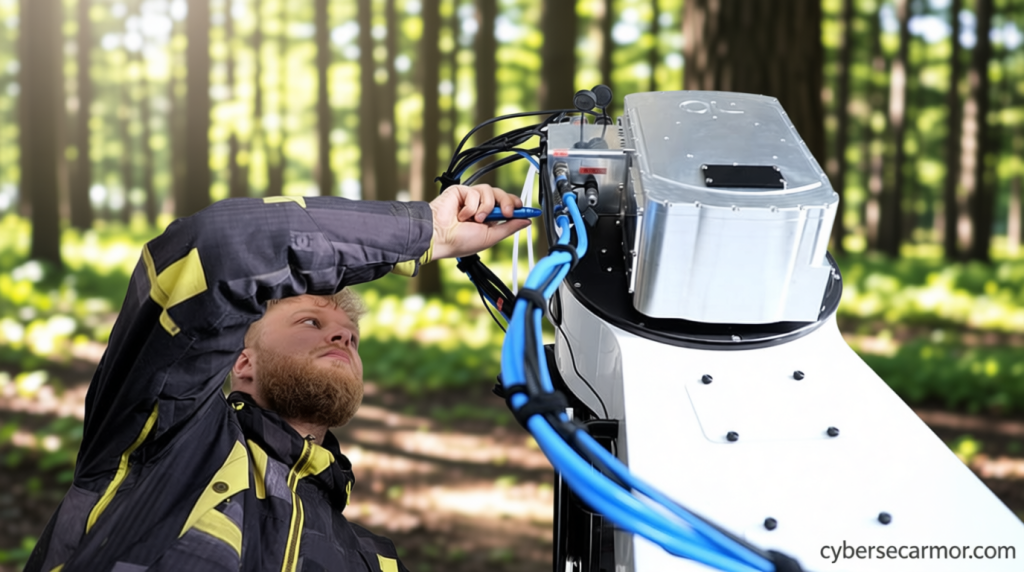
Greece opens laser ground station as Europe – Europe is advancing its push to create a continent-wide network for cutting-edge satellite communications, and a new laser ground station has started operations in Greece. This facility, part of a broader effort to improve data transfer efficiency and security, is a key component of the region’s strategy to modernize its space infrastructure. The Holomondas Optical Ground Station, developed through a joint initiative between the European Space Agency (ESA), the Greek Ministry of Digital Governance, and Aristotle University of Thessaloniki, will play a central role in supporting future satellite missions using optical communication technology. The project was announced by the partners, who emphasized its significance in expanding Europe’s capabilities in space-based data exchange.
Optical Communication Innovation
The Holomondas Optical Ground Station is engineered to provide faster and more cost-effective data transmission compared to traditional satellite systems. Developers of the station highlighted that its design allows for greater efficiency in handling high-speed optical communications, which are essential for next-generation space missions. Astrolight, a Lithuanian company responsible for supplying the optical equipment, stated that the station’s ability to maintain precision despite environmental fluctuations—such as temperature changes and minor mechanical adjustments—makes it adaptable to simpler and less expensive infrastructure. This innovation could streamline operations and reduce the overall cost of maintaining satellite networks across Europe.
The station will serve as a critical support system for two Greek satellite missions, PeakSat and ERMIS, launched into orbit on 30 March 2026. These satellites are part of Greece’s in-orbit demonstration program, which aims to test laser-based data transmission between space and Earth. By leveraging this technology, the missions will explore how optical links can revolutionize the way data is sent and received from satellites, offering alternatives to the limited radio frequency spectrum currently used in space communications. The success of these projects could lay the foundation for more advanced satellite systems in the future.
From Observatory to Communication Hub
Originally constructed as an astronomical observatory, the Holomondas site in northern Greece has been repurposed to serve as an optical communications hub. This transformation is a key element of ESA’s Greek Connectivity Programme, which seeks to bolster the country’s role in Europe’s growing optical communications infrastructure. The station’s strategic location underscores its potential to strengthen the continent’s network by connecting various regions and ensuring seamless data exchange across Europe. By integrating this facility into the existing framework, ESA aims to create a more resilient and interconnected system for satellite operations.
Frederic Rouesnel, Greek Connectivity RRF Project Manager at ESA, noted the importance of this development in the context of Europe’s expanding space communication ecosystem. “The commissioning of the Holomondas Optical Ground Station signifies a pivotal moment in enhancing faster, more secure, and reliable connectivity,” he said. “As the Greek CubeSats enter their demonstration phase, they will help refine and validate new laser communication technologies that can alleviate the strain on scarce radio frequencies and redefine high-capacity data transmission in space.”
Advantages of Laser Technology
Laser-based communication systems offer distinct advantages over traditional radio-based methods. Unlike radio waves, which rely on broader signal spread, laser systems use narrow beams of infrared light to transmit information. This approach enables data to be sent at significantly higher speeds while also reducing the likelihood of interference, as the signals remain tightly focused. Astrolight claims its optical technology can achieve data reception rates of up to 2.5 Gbps, even under challenging weather conditions and varying operational environments. Such performance could drastically cut the time required to process large satellite datasets, with information that currently takes hours to transfer potentially arriving in under a minute.
The benefits of this technology extend beyond speed. Laser communication systems are also more secure due to their targeted nature, making it harder for signals to be intercepted or disrupted. Additionally, they provide a more cost-effective solution for data transmission, as they require less power and can be integrated into smaller, more compact satellite systems. These factors make laser communications an attractive option for future space missions, particularly as the demand for high-capacity data exchange continues to grow.
Global Expansion and Future Prospects
The development of the Holomondas station is part of a larger trend in satellite communication. As the number of satellites in low Earth orbit is projected to rise by 190% in the next decade, according to a World Economic Forum report, the need for robust and scalable connectivity solutions has become urgent. Astrolight, which has already made strides in this field, is expanding its presence globally by constructing a new laser ground station in Greenland, set for completion this year. This initiative reflects the company’s ambition to establish a comprehensive network that supports the increasing satellite traffic across different regions.
Europe currently operates a network of dozens of satellite ground stations, many of which are older radio-based facilities. However, there is a growing number of newer optical stations that are being developed to meet the evolving demands of space communication. These include sites in Spain such as Tenerife and Almería, as well as Nemea in Greece. The placement of these stations is vital, as they form the backbone of Europe’s space network. Stronger connections between stations in northern, western, southern, and eastern regions would enable quicker data sharing, minimize coverage gaps, and ensure uninterrupted service in the event of disruptions in specific areas.
Established and Emerging Infrastructure
Key radio ground stations across Europe, such as Kiruna in Sweden, Redu in Belgium, and Santa Maria in the Azores, have long been central to space operations. These sites facilitate the transmission of data for a variety of missions, including weather forecasting, climate monitoring, navigation, and emergency response. While they remain critical, the addition of optical stations like Holomondas signals a shift towards more advanced technology that can handle the increasing volume of data generated by satellites.
The transition from radio to optical communication is not just about speed or cost—it’s also about future-proofing Europe’s space network. As orbital traffic becomes more congested, traditional radio systems face challenges in maintaining consistent connectivity. Laser technology, with its ability to transmit data over long distances with minimal signal loss, offers a scalable solution to this problem. Astrolight’s role in supplying the equipment for the Holomondas station highlights its contribution to this transformation, positioning it as a leader in the development of next-generation optical networks. With projects like this, Europe is well on its way to establishing a more efficient and secure system for satellite communication.

