Trump keeps touting data centers as Republicans try to pivot

Daftar Isi
The Data Center Divide: How One Infrastructure Boom Is Splitting the Republican Party
Cybersecarmor.com – Across swing states and battleground districts, Republican candidates are scrambling to distance themselves from the very technology their party’s leader champions most loudly. The issue at the center of this internal fracture is the data center — the sprawling, power-hungry warehouses that house the computing infrastructure behind artificial intelligence. What began as a bipartisan economic-development talking point has curdled into a campaign-season liability, and the party’s own standard-bearer is making it nearly impossible for his colleagues to escape the controversy.
A Polling Reality That Cuts Across Party Lines
The public mood shift is not a partisan phenomenon. A Gallup survey fielded in March found that 71 percent of Americans oppose new data center construction in their own communities. The breakdown by affiliation tells the story: 75 percent of Democratic voters, 63 percent of Republican voters, and 74 percent of independents all said no. That near-universal resistance — spanning neighborhoods that fear transformer noise, sky-high electricity bills, and the displacement of local character by industrial-scale facilities — has turned data centers into one of the defining flashpoints of the 2026 midterm cycle.
For years, politicians on both sides of the aisle pitched these facilities as job engines and tax magnets. The pitch has inverted. Voters now see the enormous footprints, the staggering energy draw, and the absence of tangible neighborhood benefit, and they are voting with their voices in town halls, school boards, and election surveys.
State-by-State Pivots
In Texas, the pivot arrived with a governor who had, just a year earlier, branded the state the “epicenter of AI development.” Republican Gov. Greg Abbott announced this month a pause on approvals for new data centers, directing state regulatory agencies to audit existing facilities before any further permits are issued. His attorney general and Senate nominee, Ken Paxton, moved quickly to codify the freeze into a formal “Texas First Data Center Plan,” explicitly endorsing the moratorium and signaling that the state’s Republican ticket will not campaign on pro-expansion messaging.
Wisconsin’s gubernatorial race has turned the issue into a personal jab. Republican nominee Rep. Tom Tiffany has repeatedly labeled his Democratic opponent, Milwaukee County executive David Crowley, “data center David Crowley,” seizing on a written questionnaire answer in which Crowley stated, “I do not believe Wisconsin should automatically roll back all data center tax incentives.” Crowley has fired back by highlighting Tiffany’s federal voting record, which supported legislation designed to streamline permitting for AI-related construction projects.
Ohio offers perhaps the starkest before-and-after. Sen. Jon Husted, running for reelection, introduced the Ratepayer Protection Act in July, a bill framed to shield Ohio electricity consumers from bearing the cost of new data center load. The irony is not lost on observers: in 2019, following a Google announcement to expand operations in the state, Husted declared Ohio was “becoming the tech capital of the Midwest.” Democrat Sherrod Brown has weaponized that history in an aggressive television ad campaign, branding Husted “the face of data centers in Ohio” and accusing him of helping recruit the very companies whose facilities now strain local grids.
Trump’s Unwavering Backing
While his party’s candidates recalibrate, President Donald Trump has doubled down. He has described data centers as “big, strong, bold and money machines,” asserted that “red states” want the facilities, and urged governors to “convince your community how great these things” are. He has aligned himself publicly with the technology executives pushing the buildout, framing the issue as a national-competition question: the United States must match China’s pace of AI innovation, and that requires massive compute infrastructure.
“You can’t fight it, you have to go with it,” Trump said in July. “You’re going to have something where, if you don’t have it, everybody else wants it.”
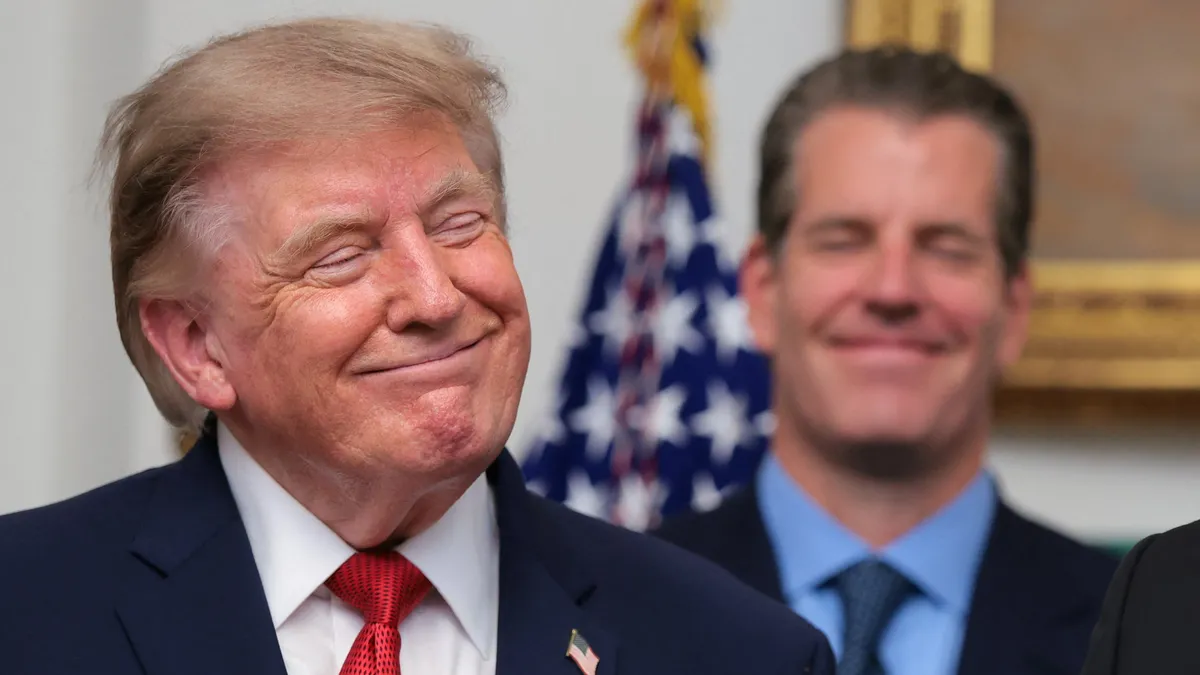
On August 19, standing beside senior executives from major technology firms at the White House, Trump dismissed Abbott’s Texas freeze as “a mistake” and painted an expansive vision of continued growth.
“We’re building the biggest plants anywhere in the world,” he said. “If I were the mayor of a town or the governor of a state, and I had a chance to get a big plant in, an AI plant or a data center, I would absolutely want it because the jobs are enormous and the money paid, the taxes paid, are just enormous.”
He acknowledged the facilities could “use a little public relations help” but insisted “many of them are designed in a very beautiful way,” a remark that drew little sympathy from residents already coping with transformer hum and construction traffic.
The Democratic Side Also Shifts
The pivot is not exclusively a Republican phenomenon. Pennsylvania Gov. Josh Shapiro, a Democrat facing his own reelection contest, signed an executive order this month imposing new restrictions on future data center projects. The order reverses a prior policy that had expedited permitting for such facilities, effectively putting a bureaucratic brake on the buildout while the state assesses environmental and grid-impact concerns.
The broader implication for the November elections is straightforward: candidates who once courted data-center announcements as campaign wins now find themselves explaining why their districts should not host the next one. The technology itself is not going away — the compute demand behind generative AI, autonomous systems, and cloud services continues to climb. What is changing is the political calculus around who bears the local costs, who captures the tax revenue, and whether a community’s consent was ever meaningfully sought. That question, more than the engineering, is what will define how voters in dozens of states cast their ballots this fall.
Related Reading
Frequently Asked Questions
What is Trump keeps touting data centers as Republicans?
Trump keeps touting data centers as Republicans is the main topic of this guide. The article explains the context, practical details, and next steps readers should understand.
Why does Trump keeps touting data centers as Republicans matter?
Trump keeps touting data centers as Republicans matters because readers are looking for a useful answer, not just a short summary. Good content should match search intent and help them decide what to do next.