Trump ballroom soars to $600M, with taxpayers on hook for half: Report

White House Ballroom Project Surpasses $600 Million Estimate, with Taxpayer Funds Covering Half: Report
Cybersecarmor.com – According to a recent report by the Washington Post, the construction of Donald Trump’s White House ballroom is expected to exceed $600 million in total cost, a significant increase from the president’s earlier claims. The report, which references internal government documents, highlights that taxpayers will be responsible for more than half of the funding, raising questions about the project’s reliance on public resources.
Trump’s Initial Estimates and Commitments
Initially, Trump had projected the cost of the East Wing ballroom at $400 million, a figure he later revised from a previous estimate of $200 million announced in July 2025. At that time, the president asserted that private donations would fully cover the project’s expenses, distancing himself from any use of public funds. However, new details reveal a much larger financial scope, with the actual cost surpassing his stated budget by a substantial margin.
Clark Construction’s Update on Project Costs
On March 5, Clark Construction, the firm contracted to oversee the ballroom project, notified the White House of a revised cost estimate. The project summary, obtained by the Washington Post, indicated that the total budget had risen to $600 million, with $293 million allocated to private sources. The remaining $307 million, however, comes from taxpayer-funded accounts, including $155 million from the Secret Service, $149 million from the White House Military Office, and $3 million from the Executive Residence. This shift in funding sources has sparked renewed debate over the project’s financial transparency.
White House Justifies Security Spending
The White House has maintained that security-related expenditures—such as the construction of a subterranean hospital and a rooftop drone center—are distinct from the ballroom project itself. Officials argue that these additions are essential to safeguarding the president and ensuring the facility can host large-scale events safely. Despite this explanation, critics question whether the increased costs justify the use of public money, especially as the project’s scope expands.
Response to the Report: Private Funds Remain the Focus
Reacting to the report, the White House reiterated its commitment to private funding. Spokesman Davis Ingle emphasized that Trump and “generous American patriots” are covering the $400 million cost through donations. “This is taxpayer-free. We have no taxpayer putting up 10 cents,” Ingle stated during a March 31 press briefing in the Oval Office. Yet the Post’s findings contradict this, citing internal records that show taxpayer money was already allocated to the project from its inception.
“President Trump and generous American patriots are funding the ballroom to the tune of approximately $400 million, which will be a secure and appropriate venue for Presidents for generations to come,” Ingle said.
Taxpayer Contributions from the Start
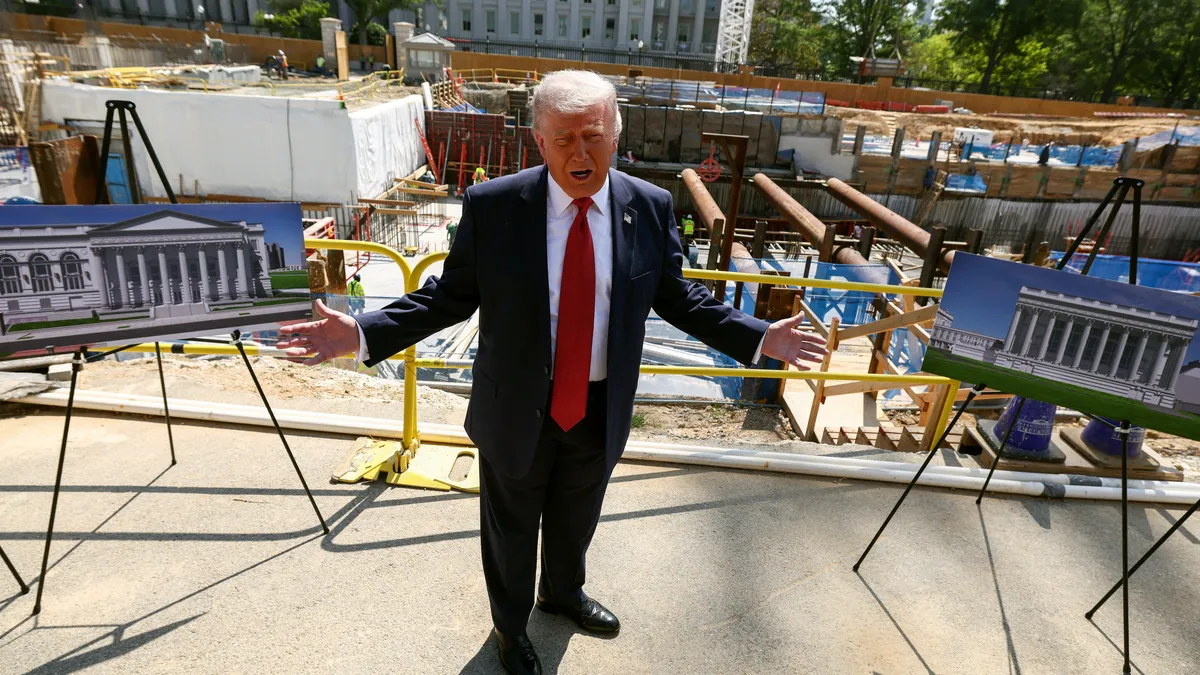
The Washington Post’s investigation uncovered evidence that public funds were used as early as the project’s planning phase. Emails from administration officials reveal that $3.6 million in Secret Service money was directed toward site preparation before the East Wing was demolished. An additional $1.6 million from the same agency was earmarked for the demolition process. These allocations suggest that taxpayer support was not a recent development but an integral part of the project’s financing from the beginning.
Democrats Criticize Trump’s Financial Claims
Democrats have seized on the report to challenge Trump’s assertions about the project’s cost. House Whip Katherine Clark, D-Massachusetts, tweeted that Trump’s claim of no taxpayer money being used is misleading. “How many times did Trump say zero taxpayer dollars would go to his gilded ballroom?” she asked. “He lied. Every time. But still not a dime to help lower costs for families.” The party has framed the ballroom as a symbol of Trump’s focus on personal projects at a time when many Americans are grappling with economic challenges.
Senate Republicans Strip $1 Billion from Ballroom Security Budget
Despite congressional criticism, Senate Republicans advanced the ballroom project by removing a proposed $1 billion allocation for security-related expenses from a larger reconciliation bill. This move, which aimed to boost border and immigration enforcement, did not halt construction efforts. At the East Wing site, two cranes and a team of workers remain active, underscoring the ongoing commitment to the project. The White House has not publicly addressed the impact of this budget cut on the ballroom’s timeline or features.
Public Opinion and Political Context
A Washington Post-ABC News-Ipsos poll conducted in October 2025 found that 56% of Americans oppose the East Wing demolition and ballroom construction, with 45% expressing strong opposition. Democrats have leveraged this sentiment to position the project as a key issue in the 2026 midterm elections, accusing Trump of prioritizing luxury spaces over the needs of ordinary citizens. The debate reflects broader tensions between the administration’s vision for the White House and public perceptions of its value.
Trump’s Argument for the Ballroom’s Necessity
Trump has defended the project, arguing that the 90,000-square-foot ballroom is essential for hosting large events that currently require outdoor or limited indoor space. Following the April 24 shooting at the White House Correspondents’ Dinner, officials highlighted the importance of a secure, enclosed venue for such gatherings. “The events over the weekend and the foiled attempted attack on the historic UFC Freedom 250 event at the White House prove exactly why the East Wing Modernization Project is severely needed,” Ingle noted, emphasizing the need for security enhancements like drone-proof structures and rooftop drone ports.
“The events over the weekend and the foiled attempted attack on the historic UFC Freedom 250 event at the White House proves exactly why the East Wing Modernization Project is severely needed for large scale events, which include drone proof structures and drone ports among other critical security enhancements,” Ingle said.
Project Timeline and Future Prospects
With the cost estimate now at $600 million, the ballroom project continues to evolve. The White House has also considered expanding the West Wing to create a “symmetrical” layout, adding a second floor for additional space. While these changes may further increase the budget, they are framed as necessary to modernize the presidential residence. The debate over the project’s cost and purpose is likely to persist as construction progresses and political scrutiny intensifies.
As the ballroom nears completion, its role as a symbol of both Trump’s presidential legacy and potential mismanagement of public funds remains a focal point. The report underscores the growing divide between the administration’s priorities and the concerns of taxpayers, who now face the prospect of contributing significantly to what they perceive as a lavish expansion. Whether this investment is seen as a strategic necessity or a misuse of resources will depend on the final outcome of the project and its long-term benefits to the nation’s leadership.