Investigation underway into cause of B-52 bomber crash that killed 8

Investigation Underway into B-52 Bomber Crash That Killed Eight
Cybersecarmor.com – On June 15, a United States Air Force B-52 Stratofortress suffered a fatal crash in Southern California, resulting in the loss of eight lives. Officials confirmed the incident occurred shortly after the aircraft took off from Edwards Air Force Base at approximately 11:20 a.m. local time. The cause of the crash remains under scrutiny, with an ongoing inquiry expected to span several months before definitive conclusions are reached.
Crash Details and Immediate Response
The B-52, a heavy long-range bomber known for its versatility and endurance, was on a routine test flight when it encountered a critical failure. Col. James Hayes, a spokesperson for the Air Force, described the crash as “unsurvivable,” emphasizing the severity of the event. According to Hayes, the aircraft “crashed and burst into flames” almost immediately after liftoff, leaving a large charred area at the crash site.
“We lost eight great Americans. This crash is deemed to be unsurvivable,” said Col. James Hayes.
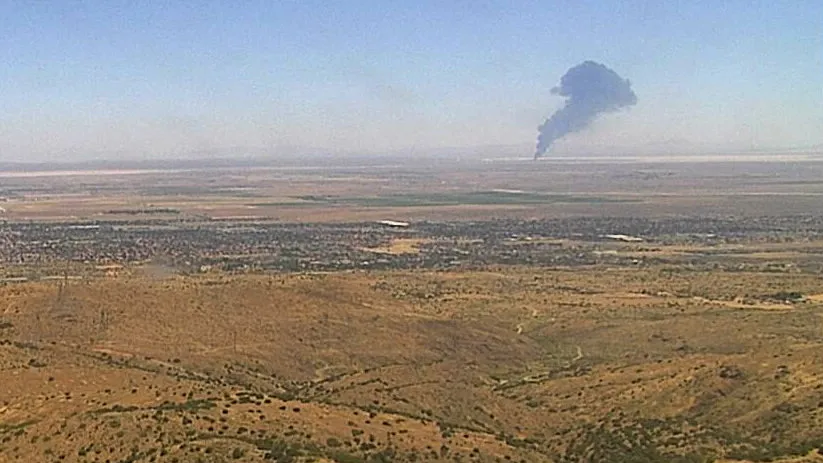
First responders quickly mobilized to address the situation, extinguishing the flames and securing the scene. The crash was reported to have been “totally contained” on the base’s runway, preventing any wider impact. Footage from the aftermath showed debris scattered across the area and smoke rising from the wreckage, underscoring the intensity of the incident.
Victims and Identification Process
Authorities have not yet officially identified the victims, though they confirmed the onboard crew included a combination of military personnel and civilian contractors. Family members were notified on June 15 as the identification process progressed. The crash site, located within the expansive Edwards Air Force Base, spans parts of Kern, Los Angeles, and San Bernardino counties, about 100 miles north of downtown Los Angeles.
While the cause of the crash remains unclear, officials provided no immediate indication of what triggered the disaster. The investigation is focusing on the aircraft’s performance during the test mission, which was part of a radar modernization initiative. This program aims to enhance the capabilities of the Air Force’s fleet, but the crash has raised questions about its effectiveness and safety protocols.
Aircraft Specifications and Role in Testing
The B-52 Stratofortress, a staple of the U.S. military since its introduction in the 1950s, is designed to operate at altitudes up to 50,000 feet and maintain subsonic speeds during extended missions. Its robust design and reliability have made it a workhorse for both strategic bombing and experimental testing. The plane involved in the crash was participating in a test flight to evaluate new radar systems, a critical component of the Air Force’s modernization efforts.
Such test missions often involve evaluating advanced technologies under real-world conditions, which can expose potential vulnerabilities. The crash occurred during one of these flights, highlighting the challenges of integrating new systems into existing aircraft. Officials have not disclosed specific details about the test’s objectives or the aircraft’s condition prior to takeoff, though they are analyzing data from the flight’s final moments.
Boeing’s Involvement and Support Offered
Boeing, the manufacturer of the B-52 Stratofortress, released a statement confirming that two of the victims were employees of the company. The firm has since reached out to the families of the deceased to provide assistance and express condolences. This marks the first time the company has publicly acknowledged its connection to the incident, underscoring the significance of the event for both the Air Force and the aviation industry.
The Boeing statement also highlighted the company’s commitment to the safety and service of its personnel, reflecting broader concerns about maintenance and operational standards. The crash has prompted discussions about the reliability of aging aircraft models and the balance between technological upgrades and safety margins. While the B-52 has been in service for decades, its continued use in high-stakes missions necessitates rigorous testing and evaluation.
Impact and Ongoing Inquiry
As of June 16, no official cause of the crash had been determined, with investigators working to piece together the sequence of events. The crash site, which lies within the confines of the base, has been cordoned off for examination. Col. Hayes emphasized the importance of the investigation, stating that the findings could influence future operations and safety measures for the Air Force’s bomber fleet.
Edwards Air Force Base, a key location for military testing and training, has been a witness to numerous aviation milestones. However, this crash has added a somber chapter to its history. The incident has sparked a renewed focus on the safety protocols for test flights, particularly those involving advanced radar systems. Officials are also reviewing the performance of the aircraft’s systems to identify any contributing factors.
Statements from Air Force Leadership
Air Force Secretary Troy Meink issued a statement expressing deep sorrow over the loss of life and honoring the service of those involved. “We mourn this loss and honor the service of our Airmen, civilians, and contractors who work every day to advance our mission. I send my sincerest condolences to their families and loved ones,” Meink said. His comments underscore the dual role of the B-52 as both a military asset and a symbol of technological progress.
The crash has also drawn attention to the broader implications for military aviation. While the B-52 is a durable aircraft, its participation in test missions highlights the risks inherent in pushing technological boundaries. The Air Force is expected to release further updates as the investigation progresses, including details about the victims and any system malfunctions that may have led to the disaster.
As the inquiry continues, the community and families of the victims are awaiting clarity on the circumstances surrounding the crash. The incident serves as a reminder of the high stakes involved in military aviation, where even the most reliable aircraft can face unforeseen challenges. With the investigation still in its early stages, the focus remains on uncovering the root cause and ensuring that such tragedies are minimized in the future.