Reporters denied White House access as Trump enforces ban on 3 outlets

Daftar Isi
White House blocks reporters from CNN, MS NOW and Politico after Trump announces ban
Cybersecarmor.com – Journalists from CNN, MS NOW and Politico were turned away from the White House on Saturday, Sept. 19, after President Donald Trump’s announced prohibition on the three organizations took effect.
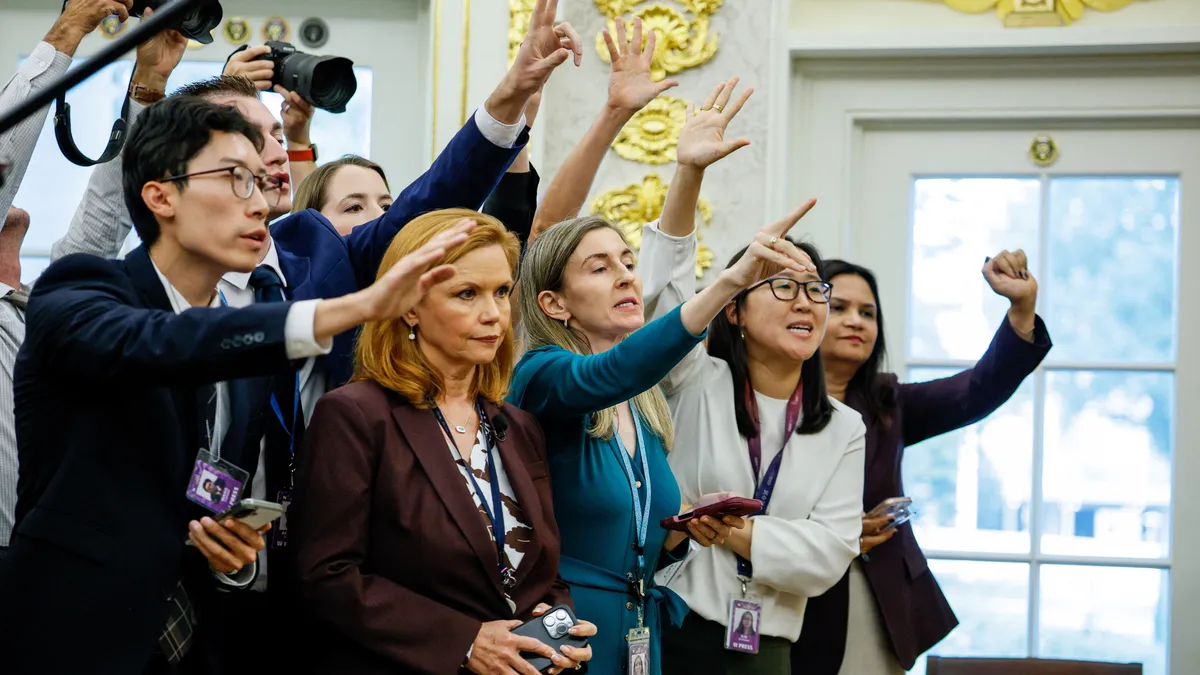
The action removed the outlets’ ability to enter White House grounds, question the president in person and speak directly with administration officials in the normal course of daily coverage. Their reporters may still cover Trump and his administration from outside the complex, but the loss of credentials limits access to a central setting for presidential news.
Press passes confiscated at White House entrance
MS NOW reporter Akayla Gardner said her credential failed when she attempted to enter through the press gate Saturday morning. A security officer then instructed her to surrender the pass while she was approaching the magnetometers.
“I asked why I could not get inside; he said it was above him,” Gardner said during an interview on MS NOW.
She added that a photographer for the network also had a badge taken away. CNN and Politico said separately that their journalists were likewise denied entry and that their White House credentials had been confiscated.
The denials followed Trump’s Sept. 18 announcement that CNN, Politico and MS NOW would no longer be allowed on White House grounds. Trump has repeatedly criticized media coverage he considers unfair and accused all three organizations of publishing “fake news.” He did not cite a particular article, broadcast or episode as the basis for the ban, instead pointing to what he described as an accumulation of coverage over several years.
Legal questions surround the restriction
The move drew immediate criticism from advocates of press freedom, who argued that excluding outlets over the substance of their coverage raises serious First Amendment concerns. Trump himself characterized the decision to reporters Friday as a “ban on the free press.”
A key legal precedent is the 1977 federal appeals court case Sherrill v. Knight. The ruling held that once the White House opens access to journalists and creates press facilities, it cannot arbitrarily withhold credentials because of the content of a reporter’s work. The case is likely to be central to any challenge involving the latest restriction.
White House access is not simply ceremonial. Reporters with credentials can attend briefings, observe events, seek answers from officials and question the president when opportunities arise. Restricting that access does not end an outlet’s reporting, but it can make it harder for the public to hear direct questioning and immediate responses from government officials.
News organizations pledge to continue coverage
MS NOW said it would pursue every available option to protect its constitutional rights and the role of independent reporting.
“The White House belongs to the American people and the decisions made inside are funded by our tax dollars,” the network said. “We stand firmly behind our anchors, our reporters, and our newsroom. We will continue to report on the President, the administration, and the issues that impact the American people.”
CNN said it would continue its work covering the federal government despite the loss of physical access to the White House.
“We have a right under the U.S. Constitution to do our reporting without hindrance or interference from the government and this ban is an illegal assault on this fundamental right,” CNN said. “We will not be deflected from our duty to hold the government and other public bodies to account, and we will continue to report on the actions and processes of this administration without fear or favor.”
Jonathan Greenberger, Politico’s global editor-in-chief, told the publication’s newsroom that it supported its White House reporters and would defend its constitutional protections.
“As we said yesterday, we will vigorously defend our First Amendment rights,” Greenberger said.
The White House declined further comment Saturday and pointed to Trump’s earlier remarks.
A continuing conflict between Trump and the press
The dispute fits into Trump’s longstanding and often confrontational relationship with major news organizations and individual reporters. He has frequently challenged coverage he believes is inaccurate or hostile, while his administration has also expanded opportunities for nontraditional conservative-leaning commentators to ask questions in the briefing room and Oval Office during his second term.
Earlier in his return to office, Trump removed The Associated Press from the White House press pool after the organization declined to revise its style guidance following his decision to rename the Gulf of Mexico the Gulf of America. The pool receives particularly close access to the president and often distributes information and images that are used more broadly by other news organizations.
The administration also faced a high-profile credentials dispute during Trump’s first term. In 2018, the White House revoked CNN correspondent Jim Acosta’s pass. A federal judge later ruled for CNN, requiring the administration to restore Acosta’s access.
That earlier case underscored the limits on a president’s authority over press access. The White House can impose security procedures and establish rules for credentials, but courts have recognized that those rules cannot be used arbitrarily to punish journalists for coverage. Any legal challenge to the current ban will likely test how those principles apply to the exclusion of entire news outlets.
For readers, the immediate consequence is a narrower group of journalists inside the White House at a moment when daily questions, briefings and presidential events remain important avenues for public accountability. The broader issue is whether access to government spaces can be conditioned on coverage that officials favor.
Related Reading
Frequently Asked Questions
What is Reporters denied White House access as Trump?
Reporters denied White House access as Trump is the main topic of this guide. The article explains the context, practical details, and next steps readers should understand.
Why does Reporters denied White House access as Trump matter?
Reporters denied White House access as Trump matters because readers are looking for a useful answer, not just a short summary. Good content should match search intent and help them decide what to do next.