Trump touts ‘crystal clear’ Reflecting Pool using old X posts

Trump Highlights ‘Crystal Clear’ Reflecting Pool with Vintage Posts
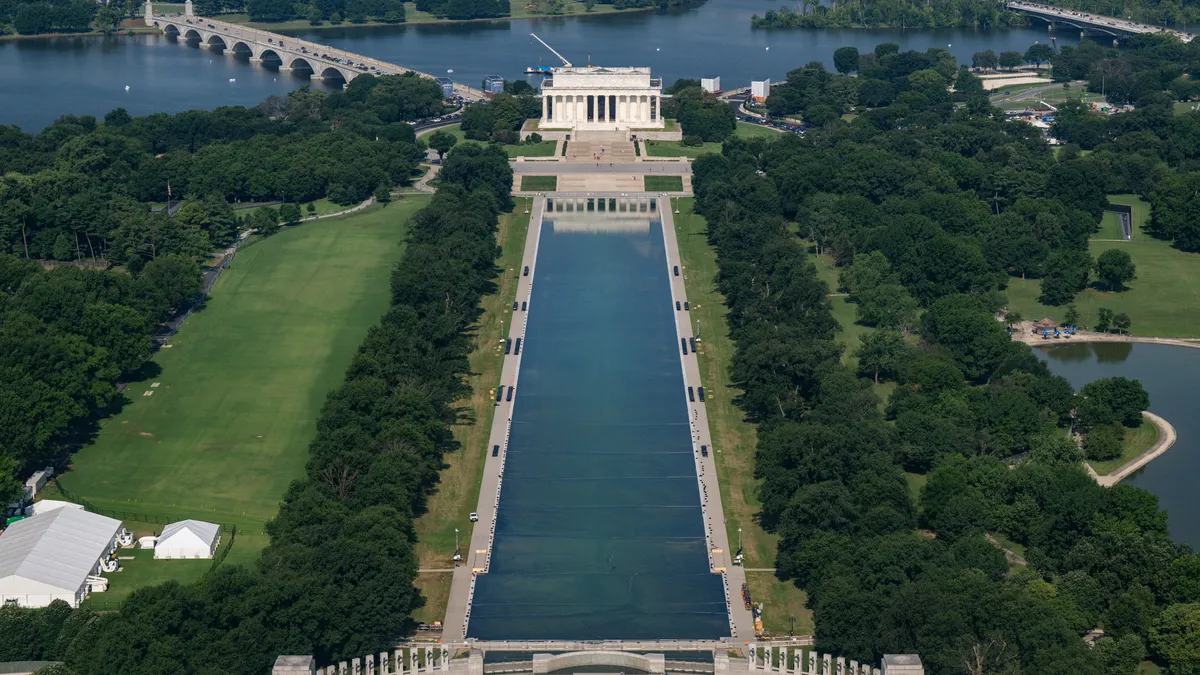
Cybersecarmor.com – On July 5, former President Donald Trump took to his Truth Social platform to celebrate the recent restoration of the Reflecting Pool on the National Mall, describing its waters as “crystal clear.” The posts, which circulated on the same day, featured images and a brief explanation of the project’s progress, emphasizing the improvements made to the iconic site. However, the content Trump shared was not new—it had been posted to X (formerly Twitter) nearly a month earlier, on June 17, during the initial phase of the pool’s renovation efforts.
Reusing Content to Frame Progress
Among the visuals Trump highlighted was a screenshot of an undated memo penned by Greg Wischer, a critical minerals consultant and deputy assistant secretary at the Interior Department. The memo, though lacking official letterhead, asserted that the pool’s water had become “crystal clear” due to the implementation of “advanced nanobubbler technology.” Wischer also claimed that the National Park Service was “vacuuming up” the last remnants of dead algae, a process he described as the final maintenance step after refilling the pool.
“The vacuuming is the final maintenance step after refilling the pool, and it will be complete in a few days,” Wischer wrote, accompanied by photos of the pool and the Washington Monument.
Trump’s posts mirrored this language and imagery, suggesting that the project had reached a new milestone. Yet, the key detail here is that the message he shared was originally posted in early June, when the project was first declared complete. This raises questions about the timing of the updates and whether the renovation’s progress was overstated or repurposed for political messaging.
The Algae Crisis and Public Perception
The Reflecting Pool, a central feature of Washington, D.C., has long been a symbol of national pride. However, its recent algae problems have sparked controversy, with Trump repeatedly blaming “vandals” for damaging the industrial liner. During his July 5 posts, he highlighted the nanobubbler technology as the solution, positioning it as a breakthrough that transformed the pool’s appearance. The technology, which uses microbubbles to oxygenate water and inhibit algae growth, was presented as a key innovation in the project’s success.
Meanwhile, the Interior Department’s press office had already published a similar message on June 17. This post, which featured the same language and photographs as Wischer’s memo, was likely used to announce the project’s completion. Trump’s recycling of this content on July 5, however, appears to have created a narrative that frames the pool’s current state as a significant achievement, despite the fact that the work had already been finalized months prior.
Burgum Defends Project and Cost Overruns
Interior Secretary Doug Burgum, who was on ABC’s “This Week” with George Stephanopoulos on July 5, reiterated the claim that the pool is now “crystal clear” thanks to the nanobubbler technology. He described the system as a novel solution, stating it “hasn’t existed before” and was critical to resolving the algae issues. Yet, when questioned about the project’s ballooning costs—rising from $2 million to over $15 million—Burgum defended the decision, attributing the increase to the complexity of the work required.
“Well, it’s fixed in the sense that it’s no longer leaking 45,000 gallons a day,” Burgum said, addressing concerns about the pool’s continued problems.
Burgum also addressed Trump’s allegations about the pool’s liner damage. He clarified that the 350-foot gash cited by the former president was actually composed of multiple smaller tears, totaling less than one-tenth of 1% of the total industrial liner. “99.99% of the pool bottom is perfect,” he added, arguing that the remaining damage was minimal and that the project’s overall success should not be overshadowed by minor issues.
Indictment and Doubts About Vandalism Claims
Adding to the debate, a grand jury indictment was handed down on July 2 against David Hearn, an Olympic canoeist accused of tampering with the pool’s liner. Hearn, who denied the allegations, claimed he only touched a piece of liner that was floating on the surface, not cutting it. This has fueled discussions about whether the damage was intentional or accidental. While some photos of tourists interacting with the pool’s water have emerged, no concrete evidence has been released to support Trump’s assertion that vandals were responsible for the liner’s deterioration.
Trump’s repeated emphasis on vandalism has contrasted with the Interior Department’s more technical explanation. Burgum noted that the agency has video and eyewitness accounts of individuals damaging the pool, but he also acknowledged that the public’s access to these details remains limited. “The press should move on from the Reflecting Pool story,” he said during the interview, calling the renovations a “big success” despite the ongoing scrutiny.
Public Reaction and the Politics of Perception
The controversy over the Reflecting Pool has become a microcosm of broader debates about transparency and accountability in government projects. While the nanobubbler technology has indeed improved water clarity, critics argue that the narrative around the pool’s completion has been manipulated to downplay the extent of the issues. The use of older posts to create the impression of recent progress has drawn attention to how political figures leverage media to shape public opinion.
Some have pointed out that the pool’s algae problems date back decades, with maintenance efforts spanning years. However, the current situation has been amplified by Trump’s public statements and the Interior Department’s communication strategy. As the project moves forward, the focus remains on how the story is told rather than the tangible outcomes. The public, meanwhile, is left to navigate a mix of technical solutions and political claims, often without clear distinctions between the two.
The Reflecting Pool’s journey from a symbol of American beauty to a focal point of political discourse highlights the intersection of environmental challenges and public perception. With the nanobubbler technology as a potential answer to the algae crisis, the pool’s condition is now a point of contention between officials and critics. As the narrative continues to evolve, the key question remains: Are the improvements genuinely significant, or are they being presented as such to align with a specific political agenda?
Drew Pittock, a national trending news reporter for USA TODAY, contributed this article. He can be contacted at DPittock@usatodayco.com for further information or clarification on the project’s details.