Obama says AI’s future shouldn’t just be left to tech leaders

Daftar Isi
Obama urges broad public role in shaping AI rules
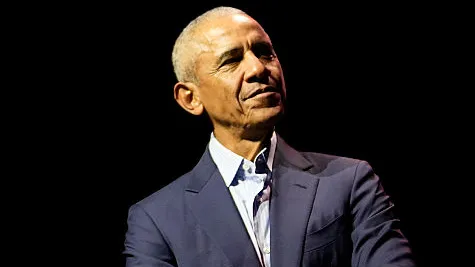
Cybersecarmor.com – Former President Barack Obama is calling for a wider public and governmental role in directing artificial intelligence, arguing that decisions about the rapidly advancing technology cannot be left solely to the companies creating it.
In a Sept. 14 social media statement, Obama welcomed signs that major AI developers are discussing a slower, more cautious pace of progress. But he said the central question is larger than whether companies voluntarily pause or adjust their plans.
“Whether this technology results in amazing breakthroughs in medicine, energy and education or unleashes huge economic disruptions, greater inequality, and potential catastrophe will depend on the choices that we make right now.”
Obama said those choices should involve the public as well as the firms developing AI systems. He urged federal leaders to create concrete protections addressing safety, employment effects, children and the fair distribution of potential gains from the technology.
“We need government – and specifically our leaders in Washington – to get proactive in coming up with concrete proposals, laws and regulations that deal with serious safety concerns, anticipate AI’s impact on jobs and our kids, and make sure that AI’s benefits are widely spread.”
Calls for caution gain momentum
The renewed debate intensified after Anthropic chief executive Dario Amodei published an essay warning that AI development may be moving faster than safeguards can keep pace. Amodei argued for slowing development enough to give risk-prevention efforts time to catch up.
His position quickly received support from OpenAI chief executive Sam Altman and xAI founder Elon Musk. While Amodei emphasized that AI could deliver major benefits, he said increased caution is needed as the systems become more capable.
The risks he identified include cyberattacks, bioterrorism and substantial disruption to the economy. Those concerns have become more visible as AI tools spread into workplaces, classrooms, consumer products and online information systems.
Another warning came from Jacob Coxon, a former AI researcher who left Anthropic on Sept. 8 and had previously worked at OpenAI. Coxon drew attention with a grave assessment of how some people working on frontier AI view the stakes.
“The people building AI earnestly believe that it could kill us all by the end of the decade.”
Obama described a slower approach as a useful initial measure, while stressing that it should not be the end of the conversation. He said the more important development is growing recognition that AI policy deserves sustained public debate.
“But I’m even more encouraged by the growing recognition that how this powerful new technology develops should be at the center of our public debate.”
Sharp disagreement in Washington
Obama’s message puts him in direct contrast with President Donald Trump, who rejected demands for AI guardrails in a series of Sept. 14 social media posts. Trump argued that the nation needs rapid technological development to compete with China and dismissed catastrophic AI warnings as a Democratic “hoax.”
Trump said the only AI control or “guardrails” needed was a “STRONG AND SMART (High IQ!) PRESIDENT.” He compared fears that AI could destroy the world with concerns surrounding climate change.
Vice President JD Vance and House Speaker Mike Johnson have also expressed skepticism toward a regulatory approach promoted by technology executives. Vance questioned why frontier AI companies would seek government rules for their own industry.
“I have to say, just personally, I feel a little bit weird about the fact that you have so many frontier AI tech companies kind of coming to the government and begging the government to regulate them.”
Vance said the movement could resemble a “Trojan Horse,” suggesting policymakers should carefully examine whether proposed regulations would genuinely protect the public or instead favor the biggest companies already operating in the field.
AI oversight enters the political agenda
For Obama, the argument is not that AI is guaranteed to bring either extraordinary progress or disaster. He wrote that he does not identify with people who expect a technological utopia, nor with those who see humanity’s destruction as unavoidable.
“I’ve been watching the progress on AI for over a decade now, and one thing that’s clear to me is that the potential impact of this technology is not overhyped.”
He added that the technology is developing at exceptional speed, potentially faster than even its engineers can fully manage. That pace makes early policy decisions especially consequential, since rules developed after systems are widely embedded may be harder to enforce or revise.
The debate is also becoming an election issue. Obama recently encouraged Democrats to make AI oversight a priority during a Democratic Congressional Campaign Committee fundraiser. Some Democratic lawmakers are likewise pressing Congress to respond to concerns raised by AI industry leaders.
Public attention extends beyond software itself. The large data centers supporting AI systems have generated backlash in some communities, placing questions about electricity use, infrastructure and local impacts alongside broader fears about jobs, privacy and safety.
Obama’s intervention underscores a growing split over how the United States should govern AI: whether speed and global competitiveness should take priority, or whether federal standards should be established before the technology becomes still more powerful. His position is that the outcome remains open—and that the public should help determine it.
Related Reading
Frequently Asked Questions
What is Obama says AI s future shouldn?
Obama says AI s future shouldn is the main topic of this guide. The article explains the context, practical details, and next steps readers should understand.
Why does Obama says AI s future shouldn matter?
Obama says AI s future shouldn matters because readers are looking for a useful answer, not just a short summary. Good content should match search intent and help them decide what to do next.