Lake Powell, the vital reservoir for the Southwest, hits record low

Daftar Isi
Record-Low Waters at Lake Powell Signal Deepening Crisis Across the American West
Cybersecarmor.com – The reservoir straddling the Utah-Arizona border that supplies hydroelectric power to millions of households has slipped below every level previously recorded in its operational history. On August 15, automated monitoring instruments operated by the Bureau of Reclamation registered the lake’s surface at 3,519.91 feet above sea level — a figure one hundredth of a foot beneath the prior record of 3,519.92 feet set back in April 2023. The margin is microscopic, yet it marks another step down a trajectory that has persisted for months and was broadly anticipated by water managers around mid-August.
The Bureau cautions that daily gauge readings may be revised later, but the directional trend leaves little room for optimism. Federal officials have already begun drawing water from smaller upstream reservoirs in an effort to slow the descent toward a critical threshold: 3,490 feet, known as “minimum power pool.” Below that elevation, the lake’s turbines lose sufficient hydraulic head to generate electricity reliably. Federal projections suggest the lake could approach that danger zone as early as next spring.
Downstream Consequences Stretch Half a Thousand Miles
If minimum power pool is breached and the lake continues falling toward what engineers call “dead pool” — the elevation at which water can no longer flow downstream through the Colorado River channel — the consequences would ripple far beyond Utah and Arizona. Drinking-water allocations for millions of residents could face draconian reductions. Agricultural operations in California’s Imperial Valley, roughly 500 miles south, depend on reliable river flows to irrigate vast acreage of citrus, lettuce, and other crops. A collapse in outflow would imperil those farms and the communities that depend on them.
The situation at Lake Powell does not exist in isolation. Lake Mead, the reservoir outside Las Vegas created by the Hoover Dam, fell to its own all-time low on August 7 and has since been setting new record-low readings virtually every day. Together, the two reservoirs form the backbone of water storage for seven Western states, numerous Native American tribes, and two northern Mexican states, supplying agriculture, municipal drinking water, hydroelectric generation, recreation, and fish-and-wildlife habitat.
A Warming West Accelerates the Drought
Climatologists emphasize that the current multi-year drought is being intensified by a changing climate. Warmer temperatures alter snowpack accumulation in the Rocky Mountains, reducing the volume of meltwater that feeds the Colorado River each spring and summer. Peter Goble, assistant state climatologist for Colorado, made the situation explicit earlier this year:
“There’s no way to look at the numbers and think the Colorado River is doing well right now. In a world that’s warmer, all signs point to droughts that will be more intense and more frequent.”
Goble noted that the Western United States is warming at a pace faster than the national average, which translates directly into less available water for farmers, businesses, and households across the basin.
Proposed Fixes Range From Pragmatic to Extraordinary
Aaron Weiss, executive director of the Center for Western Priorities, characterized the policy challenge in June:
“Whatever the solutions are, they’re going to have to happen rapidly.”
He added that any viable fix will be “both really hard and really urgent.” The menu of proposals under discussion spans a wide spectrum. Some plans call for expanding inter-basin transfers — piping water from the Mississippi River system into Arizona. Others envision hauling icebergs from polar regions or constructing nuclear-powered desalination facilities along the California coast. More conventional measures include tighter restrictions on lawn irrigation and payment programs that compensate farmers for reducing agricultural withdrawals.
A separate faction of environmental organizations has floated a far more radical restructuring: removing or entirely bypassing Glen Canyon Dam, draining whatever water remains in Powell into Lake Mead, and pairing that move with substantially stricter conservation mandates across the basin.
The System Was Built for a Different Climate
The Powell-Mead reservoir system was engineered with a simple seasonal logic: store surplus water during extra-wet years and release it during dry ones. That design assumed a relatively stable climate baseline. Long-term trends have eroded that assumption. Less snow now falls on the Colorado Rockies, shrinking the annual inflow. Simultaneously, rapid population and economic growth across the West — growth made possible in large part by the very reservoirs now struggling — has layered additional demand onto an already stressed system.
A federal management plan released last month calls for significantly reducing the volume of water flowing out of Lake Mead. That reduction would make irrigation more difficult for growers in California and Arizona and could compel additional water-saving measures in numerous cities along the river’s course.
What Comes Next
Neither reservoir stands to receive meaningful new inflow until next spring, and even then only if winter brings substantial snowfall. The 2025–2026 winter proved unusually dry and warm, offering little relief to basin managers. Climatologists project that Colorado River flows will continue their downward trajectory over coming decades unless emissions are curtailed sharply.
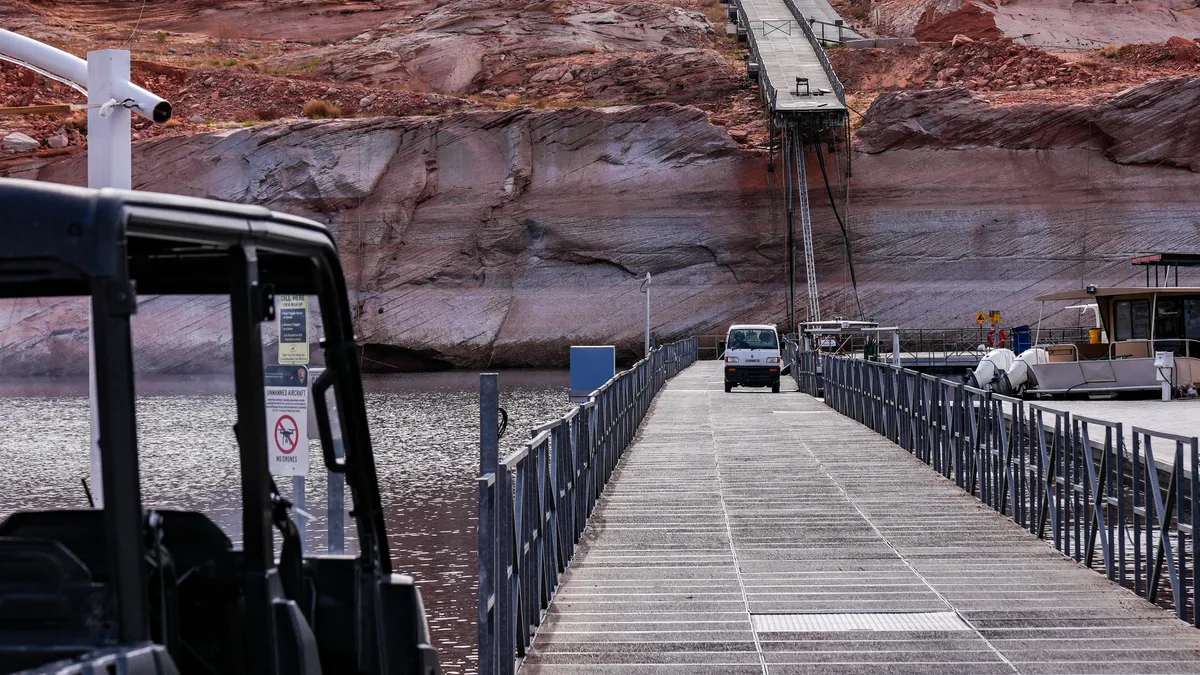
For the roughly four million recreation visitors who houseboat, water-ski, kayak, and explore the scenic side canyons and Rainbow Bridge rock arch each year, the shrinking shoreline is already visible. For the millions of people whose taps, fields, and power grids depend on the river’s flow, the coming months will test whether institutional responses can outpace a hydrological curve that has been bending in one direction for years.
Related Reading
Frequently Asked Questions
What is Lake Powell the vital reservoir?
Lake Powell the vital reservoir is the main topic of this guide. The article explains the context, practical details, and next steps readers should understand.
Why does Lake Powell the vital reservoir matter?
Lake Powell the vital reservoir matters because readers are looking for a useful answer, not just a short summary. Good content should match search intent and help them decide what to do next.