Earthquake rattles northern California, magnitude measured at 5.6

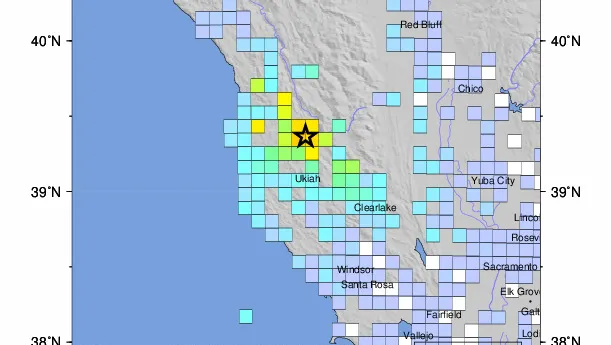
Earthquake Shakes Northern California, Magnitude 5.6 Recorded
Cybersecarmor.com – On the early morning of Wednesday, June 24, a significant tremor struck the northern regions of California, registering a magnitude of 5.6 on the Richter scale. The United States Geological Survey (USGS) confirmed the event, which sent alerts rippling through the Bay Area and beyond. The seismic activity, though not catastrophic, raised concerns among residents and emergency responders, prompting a swift assessment of its potential impact.
Seismic Epicenter and Depth
The earthquake originated approximately 6 miles from Redwood Valley, a small community nestled in Mendocino County. According to USGS data, the quake occurred at 8:10 a.m. Pacific Time, shaking the region with a noticeable intensity. The depth of the tremor was measured at 8.1 miles, placing it within the upper crust of the Earth, which often results in more pronounced surface effects compared to deeper quakes.
Redwood Valley, located roughly 125 miles north of San Francisco, is part of a seismically active zone in northern California. While the area is not typically prone to frequent large earthquakes, the occurrence of a 5.6 magnitude event highlights the region’s susceptibility to tremors, especially during the early morning hours when fewer people are actively monitoring seismic activity.
Government Response and Immediate Concerns
California’s Governor, Gavin Newsom, swiftly addressed the situation following the tremor. His office shared a social media update confirming that he had received briefings on the event. “The Governor’s Office is closely coordinating with emergency officials and evaluating the possible consequences of the earthquake,” the statement emphasized, underscoring the importance of rapid response in mitigating risks.
Although initial reports indicated no immediate injuries or structural damage, the USGS noted that the quake was felt across a wide area. This widespread perception of shaking could have implications for infrastructure, such as roads, bridges, and utility lines, particularly in regions with older building codes. Emergency services were on high alert, preparing to assess any potential hazards and assist affected communities.
Follow-Up Tremor and Regional Impact
Shortly after the main earthquake, a smaller tremor of magnitude 2.5 rattled the same area, further emphasizing the ongoing seismic activity in the region. As of 9 a.m. PT, officials stated that no tsunami was expected, which is a critical factor in coastal areas where large earthquakes can trigger oceanic waves. However, the secondary quake added to the sense of unease, with residents reporting brief but noticeable vibrations.
Seismologists are closely monitoring the situation to determine if the smaller quake is part of a larger sequence or a separate event. Such follow-up tremors can sometimes indicate stress adjustments in the Earth’s crust, which might increase the likelihood of additional quakes in the near future. The USGS is gathering data to analyze patterns and provide updates on the seismic activity.
Understanding Earthquake Magnitudes
To contextualize the significance of the 5.6 magnitude quake, experts at Michigan Technological University have outlined the effects of earthquakes of varying intensities. According to their research, a magnitude 5.6 event is capable of causing moderate damage to buildings and infrastructure, particularly in populated areas. The energy released by such quakes is equivalent to approximately 12.2 megatons of TNT, a figure that underscores their power even if they do not result in immediate destruction.
While the 5.6 magnitude tremor is less severe than the 7.0 or higher quakes that can lead to widespread devastation, it still poses a risk to communities not adequately prepared for seismic events. The university’s analysis highlights that the impact of an earthquake depends on factors such as depth, location, and the type of soil or rock in the area. For instance, shallow quakes like this one tend to produce stronger shaking at the surface, even if they are not the largest in scale.
Comparing the 5.6 quake to smaller magnitudes, a 2.5 magnitude tremor is generally not felt by people, though it may be detected by sensitive instruments. Such quakes are often classified as minor and do not pose a significant threat to human safety. However, their cumulative effect over time can contribute to stress buildup, potentially leading to more substantial events in the future. The 2.5 magnitude quake that followed the main event serves as a reminder of the region’s ongoing seismic activity.
Historical Context and Local Preparedness
Residents of northern California are no strangers to earthquakes, as the region lies near the San Andreas Fault system, which is known for its frequent seismic activity. While the 5.6 magnitude quake was not the most powerful in the area’s history, it adds to a pattern of tremors that have occurred in recent years. For example, in 2023, a 6.2 magnitude quake near the same area caused minor damage and prompted evacuations in some parts of Mendocino County.
Local authorities have been working to enhance preparedness in the region, implementing stricter building codes and conducting regular drills. The recent events have provided an opportunity to assess the effectiveness of these measures. In Redwood Valley, officials have already begun inspecting structures for potential damage, while neighboring towns have remained vigilant, anticipating any further seismic activity.
Communities in Mendocino County, particularly those in rural areas, are more vulnerable to earthquakes due to their reliance on older infrastructure and limited emergency resources. The 5.6 magnitude quake, though not devastating, serves as a warning of the need for continued investment in seismic resilience. Residents have also taken to social media to share their experiences, with many describing the shaking as “like a heavy truck passing by” or “a sudden jolt that left them unsure if they were safe.”
Global Implications and Scientific Analysis
Earthquakes of magnitude 5.6 are classified as moderate to strong, according to the USGS. They are capable of causing noticeable damage in populated areas but are generally not as destructive as larger quakes. However, their frequency and distribution can provide valuable insights into the Earth’s tectonic behavior. Scientists are using data from this event to refine models of seismic activity, which can improve predictions and preparedness efforts.
While the 5.6 quake did not trigger a tsunami, it serves as a reminder of the interconnected nature of seismic events. The Pacific Ring of Fire, which includes northern California, is a region of frequent earthquakes and volcanic activity. The presence of the Cascadia subduction zone, which runs along the Pacific coast, further complicates the seismic landscape, as it has the potential to generate massive quakes with tsunamis as a secondary effect.
Despite the current focus on the 5.6 magnitude event, experts are also considering the broader implications of its occurrence. The USGS and other geoscience organizations are analyzing the quake to determine if it is part of a larger tectonic movement or a standalone event. Such studies are crucial for understanding the long-term risks associated with earthquakes and developing strategies to protect communities.
As the situation continues to unfold, officials are urging residents to stay informed and report any unusual activity. The local emergency management team is conducting a thorough review of the quake’s effects, with plans to release a comprehensive report in the coming days. This event has also sparked discussions about the need for improved early warning systems, especially in areas where tremors can occur with little to no prior warning.
Ultimately, the 5.6 magnitude earthquake in northern California, while not a disaster, serves as a critical reminder of the Earth’s dynamic nature. It underscores the importance of vigilance, preparedness, and scientific study in mitigating the risks associated with seismic activity. As the region continues to monitor the situation, the focus remains on ensuring the safety and resilience of its communities.
“The Governor’s Office is closely coordinating with emergency officials and evaluating the possible consequences of the earthquake,” his office said.
Natalie Neysa Alund, a senior reporter for USA TODAY, contributed to this report. You can reach her at nalund@usatoday.com or follow her on X @nataliealund for additional updates on the earthquake and its aftermath.