At least 5 dead after Amazon cargo plane crashed at Miami airport

Daftar Isi
Amazon Cargo Jet Overruns Miami Runway, Kills Five and Closes One of America’s Busiest Airports
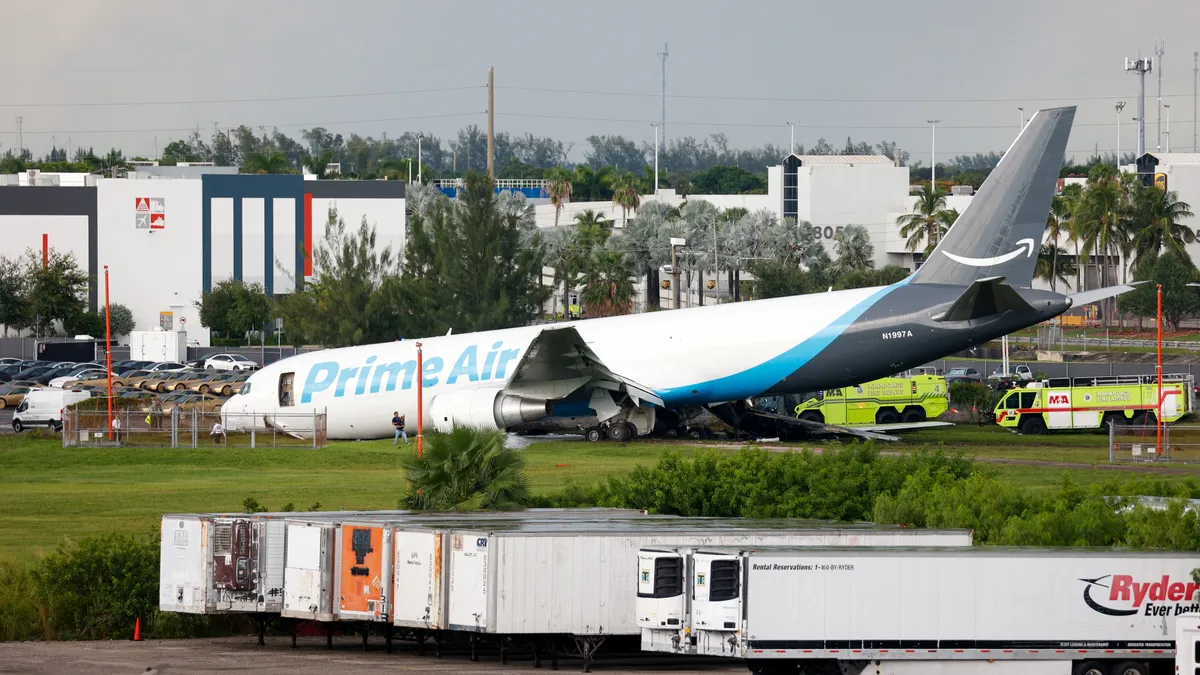
Cybersecarmor.com – Miami International Airport went dark on Sunday afternoon when a fully loaded Amazon freight jet slid past the end of a runway, plowed into parked vehicles, and burst into a towering column of fire. At least five people were killed and another five were rushed to hospitals, according to local law-enforcement officials who briefed reporters hours after the disaster. Every runway and taxiway at the airport was shut down, effectively freezing one of the most heavily trafficked gateways in the country and sending thousands of passengers into limbo.
The Crash and Immediate Aftermath
The aircraft, identified as Prime Air Flight 7598, departed the diagonal runway at roughly 2 p.m. local time before losing control and overshooting the paved surface. Miami-Dade Sheriff Rosie Cordero-Stutz confirmed the sequence of events during a press conference held that same afternoon. She stated that the jet struck multiple vehicles on the airfield before catching fire.
“We will continue to update you as soon as information is confirmed,” Cordero-Stutz told reporters gathered outside the airport. “Our entire community is joined in prayers and grieving for those who are affected.”
More than sixty units from Miami-Dade Fire Rescue converged on the wreckage. Firefighters worked through the smoke and debris while medics triaged injured individuals. The department described itself as “assessing patients” and did not immediately disclose the condition of those transported to area hospitals. Footage captured by local news crews showed thick black smoke billowing from the fuselage as flames consumed sections of the airframe.
Ground Stop and Investigation
The Federal Aviation Administration imposed a full ground stop at Miami International until at least 5:30 p.m. Eastern Time, halting all departures and arrivals while investigators secured the scene. The FAA announced it would lead the investigation into what caused the runway overrun. Transportation Secretary Sean Duffy addressed travelers directly, urging anyone with tickets through Miami that day to expect significant delays and possible cancellations as the airport worked to clear debris and reopen its infrastructure.
The Aircraft and Its Flight Path
The crashed jet was a Boeing 767-300 operated under the Amazon Air cargo brand. Its operator, 21 Air, had been contacted for comment but had not issued a statement as of the latest updates. The flight had originated in San Juan, Puerto Rico, earlier on September 6, carrying commercial freight across the Caribbean before its final approach into Miami. Amazon issued a brief public statement acknowledging the event.
“We’re working closely with local authorities and officials to understand exactly what happened,” the company said. “Right now, our absolute priority is the safety, well-being, and care of everyone involved.”
The Boeing 767-300 is a wide-body twin-engine workhorse commonly used for long-haul cargo operations. Its size and fuel load make any runway excursion particularly hazardous, especially when the aircraft carries thousands of gallons of jet fuel and a full freight payload. Overrun accidents of this type typically involve a combination of factors — wet pavement, strong crosswinds, late touchdown, or braking-system failure — though the precise cause will not be known until the investigation concludes.
A Pattern of High-Profile U.S. Aviation Disasters
The Miami crash lands in an unsettling cluster of major aviation accidents that have shaken American air travel over the past year. In November 2025, a UPS cargo jet broke apart shortly after lifting off from Louisville Muhammad Ali International Airport in Kentucky. Fourteen people were killed when the aircraft’s left engine detached in flight and ignited, sending the plane into a nearby neighborhood. The National Transportation Safety Board later attributed the failure to that engine separation and the resulting fire.
Before that, in January 2025, an American Airlines regional jet collided mid-air with an Army Black Hawk helicopter in the vicinity of Reagan Washington National Airport. All sixty-seven occupants aboard the two aircraft perished. NTSB board members subsequently described the collision as the product of a “multitude of errors” compounded by “systemic issues across multiple organizations,” a characterization that pointed to gaps in air-traffic coordination, pilot training, and military-civilian airspace management.
Together, these incidents have intensified scrutiny of cargo operations, runway safety protocols, and the regulatory oversight that binds them. Miami’s accident adds a new chapter to that scrutiny, raising questions about how a fully fueled freight jet could overrun a runway at one of the nation’s largest airports and strike vehicles without triggering earlier warning systems.
What Travelers Should Expect
With every runway and taxiway closed, passengers stranded at Miami International faced an uncertain evening. Airlines began rebooking flights to nearby gateways, and ground transportation around the airport was disrupted as emergency vehicles occupied access roads. The FAA’s ground stop, initially set to expire at 5:30 p.m. ET, could extend further depending on how quickly investigators and cleanup crews clear the airfield. For a city whose airport handles tens of millions of passengers annually, even a single-day closure ripples through regional commerce, tourism, and emergency logistics.
Authorities have not yet released the identities of those killed or hospitalized. Further updates were expected as the investigation progresses and hospital conditions are confirmed.
Related Reading
Frequently Asked Questions
What is At least 5 dead after Amazon?
At least 5 dead after Amazon is the main topic of this guide. The article explains the context, practical details, and next steps readers should understand.
Why does At least 5 dead after Amazon matter?
At least 5 dead after Amazon matters because readers are looking for a useful answer, not just a short summary. Good content should match search intent and help them decide what to do next.