At least 32 dead, 700 injured after massive earthquakes slam Venezuela

At least 32 dead, 700 injured after massive earthquakes slam Venezuela
Cybersecarmor.com – Two powerful earthquakes struck Venezuela on June 24, 2026, resulting in at least 32 fatalities and 700 injuries as structures crumbled in multiple regions across the South American nation. Officials confirmed the seismic events, which were felt strongly in several states, caused widespread destruction and prompted immediate emergency responses.
Initial Impact and Rescue Efforts
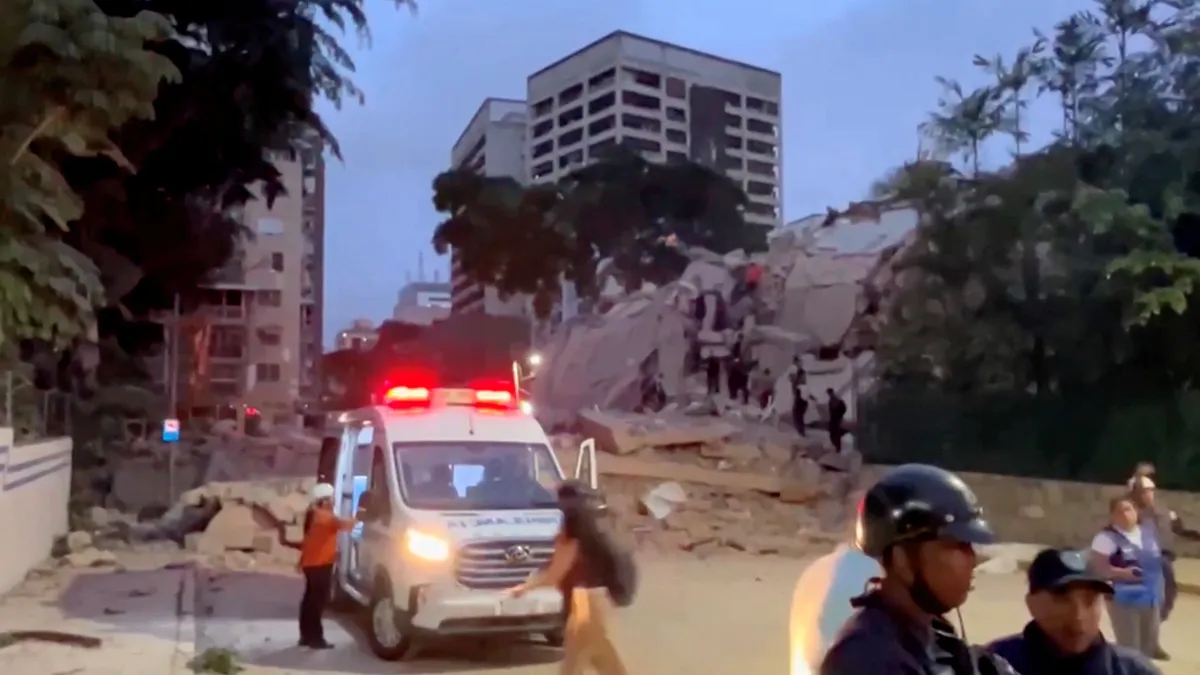
Acting President Delcy Rodríguez issued an early update on June 25, cautioning that the death toll could rise as rescue teams worked through debris. She emphasized that the initial reports did not account for casualties in La Guaira, a coastal region in northern Venezuela that experienced the most intense shaking. Rodríguez, appearing on state television shortly after midnight, stated, “Dozens of buildings have collapsed, and we are currently carrying out very intense rescue efforts to save as many lives as God allows us to save.” Her remarks underscored the urgency of the situation, with ongoing searches expected to reveal more victims in the coming hours.
“Dozens of buildings have collapsed, and we are currently carrying out very intense rescue efforts to save as many lives as God allows us to save,” said Rodríguez in an appearance on state television just before 1 a.m. local time.
The first earthquake, measured at a magnitude of 7.1, occurred around 6:04 p.m. local time, approximately 15 miles east-northeast of San Felipe. Data from the U.S. Geological Survey (USGS) indicated the tremor had a depth of about 12.6 miles and was centered west of Morón, a town along Venezuela’s Caribbean coast. Just 39 seconds later, a second major quake, with a magnitude of 7.5, shook the area 14 miles southeast of Yumare, according to the same agency. This sequence marked the first event in a doublet, with the 7.1 magnitude quake acting as a foreshock before the larger mainshock.
USGS Analysis and Aftershock Risks
The USGS clarified that the initial 7.1 magnitude quake was followed by the more significant 7.5 magnitude event, which likely caused the most severe damage. The agency warned that “high casualties and damage are probable, and that the disaster is likely widespread,” highlighting the potential for prolonged recovery efforts. Aftershocks, including those with “some potentially with strong shaking,” are expected to continue, compounding the challenges for affected communities.
President Donald Trump expressed support for Venezuela on social media, stating that the United States was “stands ready, willing, and able to help” after the quakes. In a post on Truth Social, he noted, “The two major earthquakes that just hit the great people of Venezuela are both massive in scale and have left a devastating number of deaths. I have instructed all agencies of our government to get ready to move quickly. We will be there for our new and great friends. Early reports are not good!!!” His comments reflect the global attention the disaster has garnered, with the U.S. positioning itself as a key player in relief operations.
“The two major earthquakes that just hit the great people of Venezuela are both massive in scale and have left a devastating number of deaths,” said President Donald Trump on Truth Social. “I have instructed all agencies of our government to get ready to move quickly. We will be there for our new and great friends. Early reports are not good!!!”
International Aid and Local Response
The U.S. embassy in Caracas reported that it was actively tracking the aftermath of the quakes and advising citizens to take shelter in secure locations while avoiding damaged areas. It confirmed that all American personnel in the country were accounted for, though the focus remained on assisting Venezuelan civilians. Meanwhile, U.S. Deputy Secretary of State Christopher Landau shared that the nation was in communication with Venezuelan authorities and had begun mobilizing aid resources.
“The US stands with the Venezuelan people in the aftermath of this evening’s devastating earthquakes,” Landau stated on X. The Department of State, under the leadership of Jeremy Lewin, who oversees U.S. foreign assistance, has deployed a dedicated disaster response team to coordinate relief efforts. Lewin noted that search and rescue teams, along with medical and humanitarian supplies, would be dispatched to address the crisis, ensuring a comprehensive support system for affected regions.
“The US stands with the Venezuelan people in the aftermath of this evening’s devastating earthquakes,” said U.S. Deputy Secretary of State Christopher Landau on X.
El Salvador also pledged assistance, with President Nayib Bukele confirming his country’s readiness to send resources. “300 rescuers and paramedics, along with 50 tonnes of equipment, medicines, and essential supplies, are ready to depart for Caracas,” Bukele tweeted. This international solidarity highlights the interconnected nature of global disaster response, with neighboring nations and the U.S. stepping in to aid Venezuela’s recovery efforts.
Regional Damage and Evacuation Warnings
Local officials reported significant structural damage, particularly in the coastal state of Falcon. Governor Victor Clark, speaking on state television, stated that 22 people were injured and 15 were missing. In Caracas, Mayor Gustavo Duque of the Chacao municipality described the chaos, noting that multiple buildings had collapsed. “We’re going to do everything we can to rescue the most people possible,” Duque said, urging residents to gather at public plazas to avoid further risks from aftershocks.
Duque also mentioned that 18 survivors were rescued from a single collapsed structure, though the exact number of deaths and injuries remained under review. The mayor’s emphasis on public safety reflects the broader concerns of officials managing the crisis, as the region braces for additional seismic activity. Meanwhile, the Simón Bolívar International Airport near Caracas was closed until further notice due to the tremors, disrupting transportation and complicating the delivery of aid to affected areas.
State of Emergency and Ongoing Recovery
In a brief address to the nation late on June 24, Rodríguez declared a state of emergency, citing the back-to-back earthquakes and nearly two dozen aftershocks that shook the country. She appeared alongside her brother Jorge, the head of the national assembly, and Cabello, though she did not provide specific figures for the number of deaths or injured individuals. “I extend my condolences to the families of those killed,” she said, highlighting the emotional toll of the disaster while emphasizing the government’s commitment to recovery.
As the situation unfolds, the focus remains on stabilizing the affected regions and supporting the survivors. The combination of intense shaking, collapsing buildings, and the risk of further quakes has created a complex environment for emergency responders. With international aid already in motion and local authorities coordinating efforts, the path to recovery will depend on the speed and efficiency of relief operations in the coming days.
Residents in La Guaira, the hardest-hit area, continue to face uncertainty as the full extent of the damage becomes clearer. The coastal state’s vulnerability to both earthquakes and tsunamis adds an extra layer of concern, with officials monitoring the possibility of secondary disasters. Meanwhile, the U.S. and other nations remain prepared to