America’s past was bloodier, more divided than today, Ken Burns says

America’s past was bloodier, more divided than today, Ken Burns says
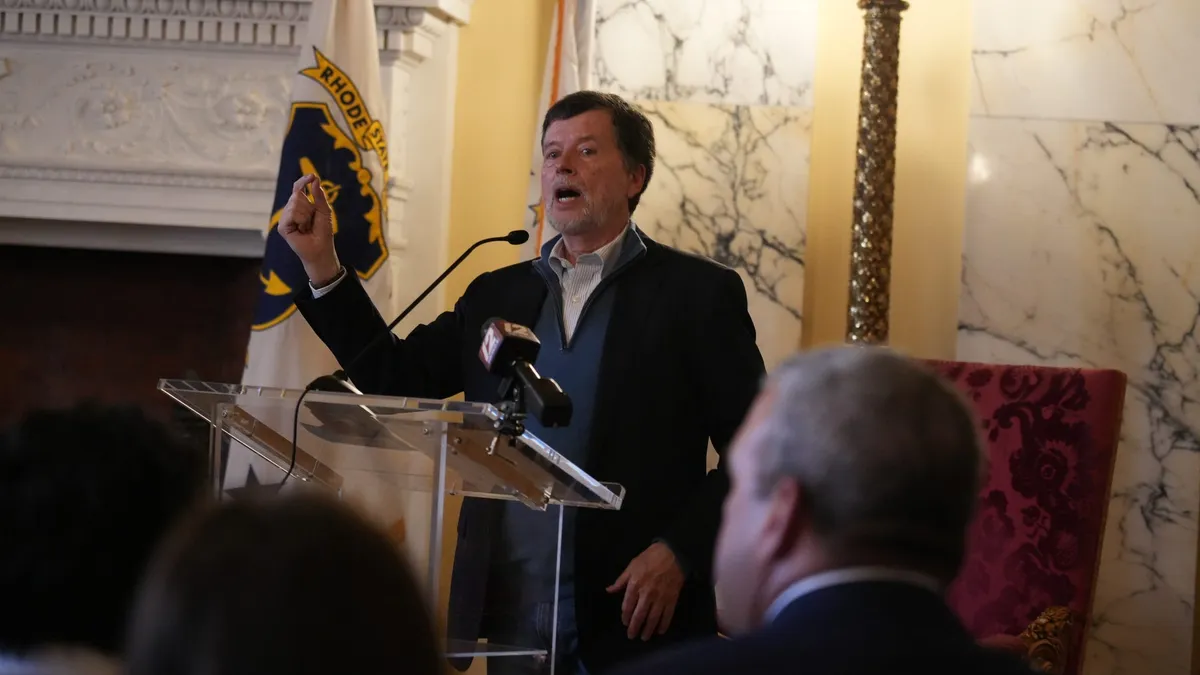
Cybersecarmor.com – Renowned documentary filmmaker Ken Burns recently shared his perspective on the state of American history during an interview on NBC’s “Meet the Press” with host Kristen Welker. He emphasized that the tendency to downplay the violent and contentious aspects of the nation’s past often magnifies the sense of division in contemporary society. However, Burns argued that this historical amnesia is not only misleading but also serves a deeper purpose: it helps people understand that the current moment, while seemingly fractured, is part of a broader narrative shaped by the struggles of earlier generations.
Sanitizing the American Revolution
Burns highlighted the American Revolution as a prime example of how history is often filtered through a lens of idealism. In his documentary, he delves into the brutal realities of the period, which are frequently overlooked in favor of the triumphal narrative of independence. “History books and our shared memory have a tendency to sanitize the American Revolution,” he explained. “We fear that if we reveal its dark and bloody nature, it might overshadow the grand ideals of 1776 and the Constitution of 1787. But those ideas become even more powerful because of the improbable struggle to achieve them.”
“It doesn’t. Those ideas are made even more impressive because of the improbability of the struggle, the odds against success,” Burns said, reflecting on how the founders’ vision of liberty was forged through conflict and sacrifice.
Burns also pointed to current parallels in the nation’s history, drawing connections between the present and the past. He noted that the American experience has always been marked by tension and disagreement, with events like a continent-wide pandemic, debates over vaccinating soldiers, and a failed invasion of Canada during the country’s early years echoing modern challenges. “We are really divided,” he stated, “but we were way more divided then, during the Civil War, and even more so during the Vietnam era.”
The Role of the Citizen
Burns described the citizen as the “highest office in the land,” a deliberate choice made by the founders to ensure that power was distributed and that authoritarians could not dominate without public scrutiny. “The role of the citizen is to act as a counterweight to those who would use violence or coercion to control the narrative,” he said. “This was a conscious effort to create a system where the people, not just rulers, could shape the nation’s direction.”
He further argued that the founding of the United States was not just a political revolution but a cultural one. Prior to the revolution, society was split into rulers and subjects, with little room for individual agency. The creation of a new system, he explained, had “biblical implications” rooted in the belief that all people are equal and have the power to determine their own fate. “The idea of a citizen as we know it today didn’t exist before,” Burns noted. “It was a radical concept, one that promised a fresh start for humanity.”
“So there is a biblical sense of our destiny of creating a place where human beings can reset and say, ‘We hold these truths to be self-evident.’ They’re not self-evident. They’ve never been tried. But this is what we’re going to try,” Burns said, underscoring the revolutionary spirit that continues to define the American experiment.
Authoritarian Tendencies and Democratic Resilience
Burns expressed concern about the current trend toward authoritarianism in the U.S., suggesting that the founders would be “abjectly disappointed” by the nation’s increasing reliance on centralized power. “If the founders came here today, they would not be surprised that someone seeks more control,” he said. “They would be disappointed that the legislative branch, which they envisioned as the bulwark against tyranny, has ceded so much authority to others.”
He also attributed much of the current national unrest to those who “keep us alive to our grievances.” According to Burns, these individuals often exploit the public’s ignorance and distraction, promoting conspiracy theories and a “us versus them” mindset. “It is in the interests of authoritarians to keep people uneducated, to keep them focused on conspiracies and superstitions,” he said. “They want us to forget the broader story of unity and shared purpose.”
A Democratic Blueprint
Despite these challenges, Burns remained optimistic about the nation’s democratic potential. He pointed to the “recipe” for a functioning democracy that the founders left behind, which includes checks and balances, civic engagement, and a commitment to the rule of law. “We have a system here that gives us the tools to pull out the fuel rods of anger and distrust,” he said. “The question is whether we’ll use them or allow ourselves to be convinced that order and uniformity are better than the messy, beautiful complexity of democracy.”
Burns’ comments were part of a larger conversation about how history shapes our understanding of the present. He stressed that the American Revolution was not a smooth process but one filled with bloodshed, betrayal, and moral compromise. “The founders had to fight for their ideals, and they did so in a way that defined the nation’s character,” he said. “Their struggle reminds us that democracy is always a work in progress.”
Connecting Past and Present
One of the most striking aspects of Burns’ argument is the way he links historical events to contemporary issues. He pointed out that the current era of division, while significant, is not unprecedented. “We are seeing divisions today, but they are a mile wide and an inch thick,” he said. “It takes a compelling story to remind people of the things we have in common.” This idea resonates with his documentary, which aims to capture the full spectrum of the American experience, from its violent origins to its enduring ideals.
Burns also referenced the broader cultural context of the American Revolution, noting that it was not just a political event but a transformative moment in the nation’s identity. He drew on Thomas Paine’s seminal work, “Common Sense,” which challenged the notion of monarchy and inspired the movement for independence. “Paine argued that the time for change had come, and that the revolution was a chance to start anew,” Burns said. “That same sense of urgency is still present in our democracy today.”
“Not since the time of Noah do we have a chance to remake the world,” Burns quoted Paine, highlighting the revolutionary potential embedded in the American story.
In addition to the historical comparisons, Burns addressed the role of media and public discourse in shaping perceptions of the past. He suggested that the way we tell history today often simplifies complex events, making it easier to overlook the sacrifices and struggles that made the present possible. “The media has a responsibility to present history accurately,” he said. “Otherwise, we risk losing sight of the lessons that can guide us in the future.”
A Call for Reflection
As the nation approaches its 250th anniversary of independence, Burns urged Americans to reflect on the enduring values that have defined the country. “We have the power to choose between the old ways and new directions,” he said. “The question is whether we will embrace the messy, imperfect process of democracy or succumb to the allure of authoritarian simplicity.”
Burns’ insights were complemented by a recent poll that found most Americans are willing to set aside political differences on July Fourth, a day that symbolizes the nation’s founding and the spirit of unity. This suggests that, despite current tensions, the American public still holds onto the ideals of the past. “The American experiment continues,” Burns concluded. “It is a story of an incredibly diverse group of people who, through struggle and perseverance, have built a nation that remains a beacon of hope and possibility.”