Americans’ backlash to data centers is scrambling midterm elections

Daftar Isi
AI Infrastructure Backlash Reshapes the 2026 Midterm Political Landscape
Cybersecarmor.com – A Gallup poll released earlier in 2026 revealed that approximately 71 percent of American adults oppose the construction of new data centers in their neighborhoods, while barely a quarter expressed support for such projects. That overwhelming majority has sent shockwaves through statehouses and campaign offices nationwide, forcing elected officials on both sides of the aisle to recalibrate their stances on the massive server farms powering the artificial intelligence revolution.
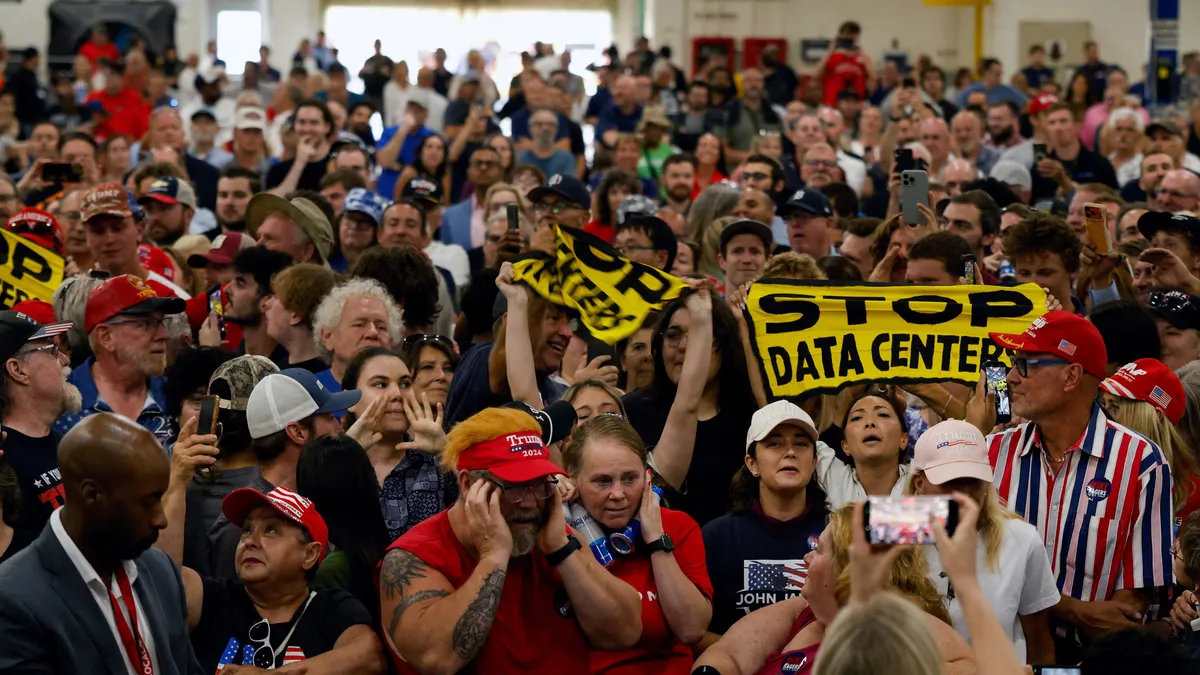
The facilities at the center of the dispute house the servers, networking hardware, and cooling infrastructure required to run AI models, cloud computing services, and other digital platforms. What began as a quiet infrastructure question has erupted into one of the defining populist grievances of the election cycle, cutting across urban and rural divides, party lines, and demographic categories.
Texas: Abbott’s Dramatic U-Turn
No state illustrates the political whiplash more starkly than Texas. Governor Greg Abbott, a Republican who faces reelection later this year at age 68, issued a series of executive directives that effectively freeze roughly 1,800 pending data center projects across the state. The orders terminate certain tax incentive programs, impose stricter limits on water and energy consumption, and establish mandatory guidelines that technology firms must satisfy before drawing electricity from local grids.
“I established guidelines (and) guardrails to protect Texas communities,” Abbott wrote on X in August. “These guidelines are now the universally applied standard in Texas.”
The reversal is striking given that less than twelve months earlier, Abbott had publicly celebrated Google’s $40 billion data center investment in the state, declaring it would transform the Lone Star State into an “epicenter of AI development.” The governor’s earlier enthusiasm for tech-driven economic growth has been replaced by a posture of regulatory caution, a shift that Democratic opponents are quick to exploit.
Gina Hinojosa, a state lawmaker running for governor on the Democratic ticket, pressed Abbott in a virtual news conference in July to issue an emergency executive order imposing a full moratorium on new data center construction.
“I’m calling on Greg Abbott to issue a moratorium on any new data centers with an emergency executive order to do so,” Hinojosa said. “He has the sole power to do it. That moratorium should stand until the Legislature can convene and make sure any data center being built is done so by American union labor that is licensed. We also want local control of the work.”
Why Voters Are Angry: Resources, Noise, and Community Disruption
Gallup’s survey identified strain on water supplies and electricity grids as the leading driver of opposition, with 50 percent of respondents citing environmental concerns. Beyond resource depletion, residents in affected areas have voiced fury over construction noise, air pollution, and the general disruption that multi-gigawatt facilities impose on surrounding neighborhoods.
The opposition is not confined to one party or demographic. Gallup found resistance across every major group, though intensity varied: 56 percent of Democrats expressed strong opposition, compared with 39 percent of Republicans and 48 percent of independent voters. That cross-partisan anger has given candidates of both parties a shared grievance to mine, even as they frame the issue in distinctly different ideological registers.
Pennsylvania: Shapiro’s Mid-Cycle Recalibration
In Pennsylvania, Governor Josh Shapiro — a Democrat widely discussed as a potential 2028 presidential candidate — signed an executive order on August 18 requiring local community approval before any state grant money flows to data center developers. The move marked a sharp departure from his May remarks, in which he had framed telecommunications infrastructure as a flagship economic initiative that would “lead on innovation.”
“I’m putting these developers on notice and letting them know that we will not let them bully Pennsylvanians, disregard our constitutional right to clean air and pure water, and drive up our utility bills,” Shapiro posted on X.
The pivot underscores how quickly the political calculus has shifted. Within months, a governor who championed the sector as an innovation engine now positions himself as a bulwark against corporate overreach, a rhetorical move that resonates with voters watching their utility bills climb.
Wisconsin: A Wedge Fight in the Badger State
The Wisconsin gubernatorial contest between Democrat David Crowley and Republican Tom Tiffany has become a laboratory for data center politics. Tiffany has saturated the race with roughly seven figures’ worth of television and digital advertising branding his opponent as “Data Center David Crowley,” an attempt to carve a wedge between Crowley and voters worried about unchecked construction.
In the Democratic primary, state Representative Francesca Hong, a democratic socialist, was the sole candidate calling for a statewide moratorium on new data center construction. Crowley, by contrast, has leaned on Tiffany’s congressional voting record, which favored easing permitting and environmental review for large-scale projects. Both men now oppose a blanket moratorium but advocate tighter forward-looking regulations.
The White House Stays on the Other Side
For now, the populist tide has not reached the Oval Office. President Donald Trump has continued to champion data center construction, describing the facilities as a “cash cow” for states willing to welcome them.
“All of this Income, and other benefits, will be going to red States, and some blue, where data centers are sought as cash cows, with lower taxes and record setting jobs,” Trump wrote on Truth Social on July 15.
The administration’s pro-construction posture sets up a potential collision course with the growing chorus of state-level regulators and voters demanding pauses, local consent requirements, and labor protections. As states rush to draft new permitting rules, water-use caps, and community-approval mandates, the tension between federal encouragement and grassroots resistance is likely to intensify through the remainder of the election cycle and beyond.
What began as a technical debate about grid capacity and water rights has become, in the space of a single year, a campaign issue with real electoral consequences. Candidates who once courted tech investment now court the voters who fear it, and the data center question has embedded itself in the midterm conversation with a force that few predicted when the first server farms broke ground.
Related Reading
Frequently Asked Questions
What is Americans backlash to data centers is scrambling?
Americans backlash to data centers is scrambling is the main topic of this guide. The article explains the context, practical details, and next steps readers should understand.
Why does Americans backlash to data centers is scrambling matter?
Americans backlash to data centers is scrambling matters because readers are looking for a useful answer, not just a short summary. Good content should match search intent and help them decide what to do next.