
Of robots and men: European AI-driven technology aims to recast e-commerce logistics
Of Robots and Men: European AI-Driven Technology Aims to Recast E-Commerce Logistics
Of robots and men – Across the evolving landscape of modern commerce, AI-powered robotic systems are now operational in a sprawling e-commerce warehouse located near Berlin. These autonomous machines are engineered to manage an impressive throughput of over 600 units per hour, revolutionizing the efficiency of goods handling within the logistics sector. Their integration into the supply chain represents a significant leap toward automation, enabling a new era of productivity and precision in the distribution of products.
The Evolution of Warehouse Automation
At the heart of this transformation is the ability of these robots to independently assess the characteristics of each item and its packaging. Through advanced algorithms, they can determine size, shape, weight, and even the specific type of product being processed. This adaptability allows them to optimize their movements, ensuring that each task is executed with minimal error and maximum speed. Nitin Annam, Head of Operations at CEVA Logistics, highlights the consistent performance of these systems. “The robots work 24/7. So if you’re comparing robots with humans, they don’t need to take breaks. They can keep going, and they’re basically consistent,” he explains.
While the machines offer unparalleled reliability, the focus remains on enhancing operational efficiency rather than complete displacement of human labor. “It’s not necessarily about replacing people with automation. It’s more about how we produce more volume at a cheaper cost and be more efficient,” Annam adds. This perspective underscores the collaborative nature of AI integration, where automation complements human effort instead of supplanting it entirely.
Building the Future with Cloud-Based Innovation
Behind the scenes, a start-up based in Warsaw is playing a pivotal role in developing the software that powers these robotic systems. With a team of 140 professionals, the company has been at the forefront of creating cloud-based AI solutions that enable robots to learn from every pick they make. Ewa Maciaś, Director of Software Engineering & User Experience at Nomagic, details the process: “When the robot is working, we collect all the metrics we can, all the readings from all the sensors, all the images of every single bin that the robot would see. And we use this data to train the machine learning model and adjust it further.”
This continuous feedback loop allows the robots to improve over time, adapting to new items and variations in packaging. The technology’s ability to recognize and handle everything from plastic wraps to shoeboxes demonstrates its versatility. By leveraging machine learning, the systems can now perform tasks with greater accuracy, reducing the need for manual oversight and increasing the speed of operations.
The success of this approach has been evident in the start-up’s growth. Over the past few years, its business volume and client base have more than tripled, reflecting the demand for such innovations in the competitive e-commerce market. In 2025, the company announced a substantial investment of approximately €50 million to further advance its AI-driven robotics capabilities. This funding has been instrumental in scaling the technology and ensuring it meets the complex needs of modern logistics.
Challenges in Perfecting Robotic Picking
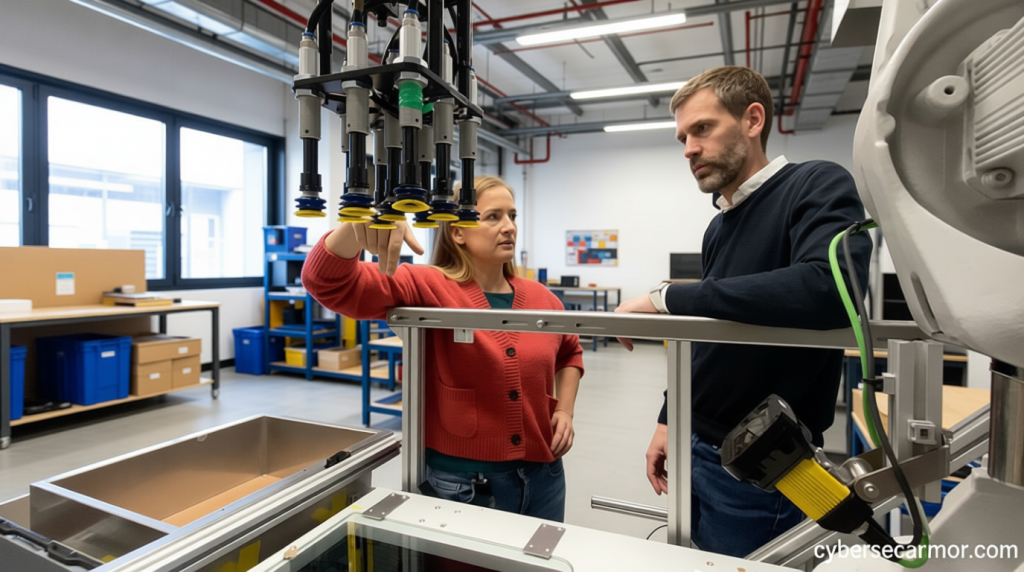
Despite the advancements, the development of these AI systems has not been without hurdles. One of the key challenges lies in creating the ideal robotic hands—specialized mechanisms capable of handling a wide array of items and packages. Mateusz Karolak, a mechatronics design engineer, emphasizes the importance of precision in this process. “You have the lid of the shoe box, the bottom of the shoe box and the item inside,” he notes. “Picking only the lid, for example, doesn’t count as success. You need to pick the whole item and make sure that it will stay together without separating.”
This level of detail is crucial for ensuring that the robots can navigate the complexities of a dynamic warehouse environment. The ability to adapt to new products and varying packaging formats is a testament to the sophistication of the AI models. By training these systems on real-world data, developers can enhance their performance and reduce the margin of error, which is vital for maintaining the high standards of e-commerce operations.
Social Impact and Human Collaboration
As these technologies become more prevalent, both developers and end users are beginning to assess their broader implications. Kacper Nowicki, Nomagic’s CEO, shares insights into the human element: “The robot still requires some maintenance. We’re working together with our clients on educating their staff. And we’ve seen cases where the employees take pride in working in a more advanced, higher tech environment rather than performing a lot of very manual tasks,” he says. This collaboration between technology and human labor highlights the potential for a more skilled and satisfied workforce in the logistics industry.
Even as automation continues to grow, the notion of a completely humanless warehouse remains distant. Klaus Lichtenfeld, Head of Logistics for the European Union at an online fashion retailer, underscores this point: “A humanless warehouse is impossible. That will never work. So there will always be human employees, people working in a warehouse. We’re not necessarily replacing man with machine,” he concludes. This statement reinforces the idea that while robots are transforming the logistics landscape, they are not here to replace humans entirely but to enhance the overall efficiency of operations.
The combination of AI-driven automation and human oversight is seen as a path forward for the industry. By integrating these technologies, companies can achieve a balance that maximizes productivity while preserving the value of human labor. As the e-commerce sector continues to evolve, the role of these robotic systems is expected to grow, further reshaping the way goods are handled and delivered across Europe. This shift not only promises efficiency but also sets the stage for a more sustainable and scalable logistics model, ensuring that the industry can meet the demands of an increasingly digital world.

