
Who is coming to Putin’s Victory Day parade — and who is not?
Who Is Coming to Putin’s Victory Day Parade — and Who Is Not?
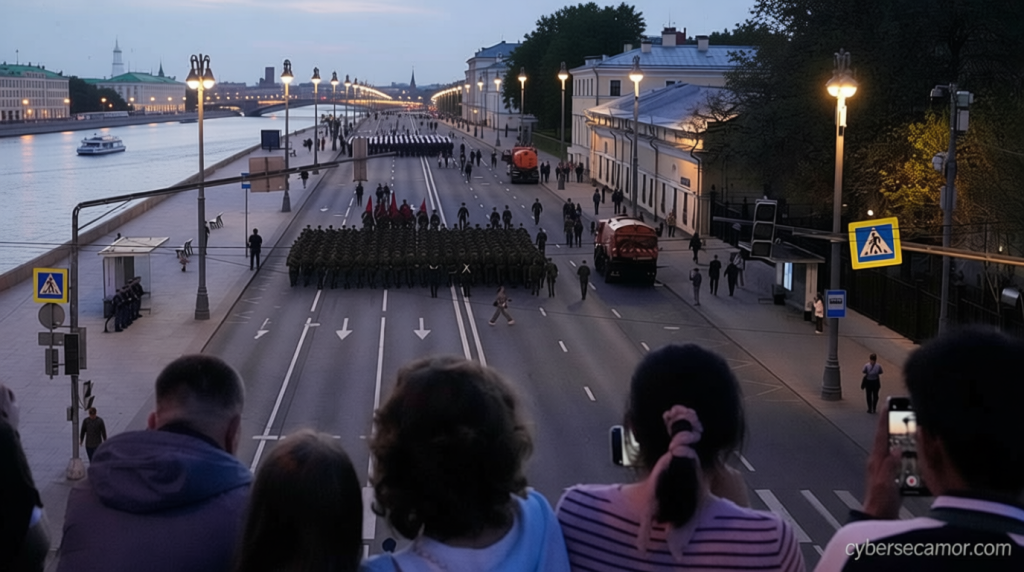
Who is coming to Putin s Victory – Once a grand spectacle of Russian military might, the Victory Day parade in Moscow has evolved into a more subdued affair. This year, the event is expected to draw only a handful of international guests, marking a significant departure from its former scale. The Kremlin attributes this shift to the “current operational situation,” which has led to the exclusion of military vehicles and cadets from the parade. Despite these changes, the number of attendees remains limited, raising questions about the political implications of this scaled-back display.
For decades, the parade served as a global stage for showcasing Russia’s power. During the 1990s, when the country was navigating its post-Soviet identity, Western leaders frequently attended. In 1995, Bill Clinton of the United States, John Major of the United Kingdom, and Jean Chretien of Canada all made appearances. The 2005 event saw George W Bush join France’s president and Germany’s leader, while Angela Merkel participated in the 2010 parade in Red Square. These visits reflected a period of relative openness between Russia and the West, though tensions began to simmer as the 21st century progressed.
The annexation of Crimea in 2014 and the full-scale invasion of Ukraine in 2022 accelerated the decline in international participation. Western leaders, once eager to align with Moscow, began to distance themselves. The guest list grew shorter each year, with the 2026 parade featuring the smallest delegation in modern history. Only two foreign leaders are confirmed to attend: Laos’ President Thongloun Sisoulith and Malaysia’s Supreme Ruler Sultan Ibrahim. This stark contrast highlights the deepening isolation of Russia on the global stage.
Even among those who have previously supported Russia, some are choosing to stay away. Slovak Premier Robert Fico, for instance, has confirmed he will not attend, despite the Kremlin’s insistence. His absence is notable, as he has been a key ally in recent years. Slovakia’s Deputy Foreign Minister Rastislav Chovanec noted that Fico’s decision to skip the parade may allow him to convey messages from Ukraine’s President Volodymyr Zelenskyy to Vladimir Putin. For the Kremlin, this is a symbolic blow, as Fico was once seen as a reliable partner in the West.
Meanwhile, Russia’s occupation authorities are required to attend, regardless of their political affiliations. Leaders from Abkhazia and South Ossetia, two regions under Moscow’s control since the 2008 invasion of Georgia, will be present. Badra Gunba, representing Abkhazia, and Alan Gagloyev, from South Ossetia, confirmed their participation. These figures, though not foreign in the traditional sense, underscore the geopolitical realities of Russia’s expanding influence in the Caucasus and Eastern Europe.
Belarus’ President Aliaksandr Lukashenka remains a steadfast presence, as he has every year. His attendance is a testament to his role as one of Putin’s most loyal allies. Yet, Lukashenka’s status as a “foreign leader” is contested. While the EU and the United States question his legitimacy, he continues to represent Belarus at the parade, reinforcing his close ties to Moscow. His unshakable support, even amid international criticism, highlights the pragmatic alliances that sustain Russia’s geopolitical ambitions.
The Bosnian Serb entity Republika Srpska will send a delegation, including former President Milorad Dodik. Dodik, a nationalist figure, has been a regular visitor to Moscow since the Ukraine invasion, despite being barred from holding office in Bosnia-Herzegovina for six years. His participation now positions him as a “former leader,” a designation that carries weight in the context of Russia’s strained relations with the West. Dodik’s nickname, “Laktašenko,” coined by Balkan commentators, blends his hometown Laktaši with Lukashenka’s reputation as a tractor enthusiast, adding a layer of cultural commentary to his political role.
The Kremlin’s approach to this year’s event is both strategic and defensive. By attributing the reduced guest list to the “current operational situation,” they aim to deflect criticism while emphasizing the necessity of the event. This logic is reinforced by the claim that no invitations were formally extended to foreign leaders, a move that contrasts with the previous year’s more expansive approach. Yuri Ushakov, a Putin aide, stated:
“We deliberately did not invite foreign guests to the celebrations, unlike last year.”
This statement suggests a calculated effort to present the parade as a purely Russian affair, despite its continued international significance.
However, the absence of certain leaders can have a greater impact. Armenian Prime Minister Nikol Pashinyan, for example, has chosen not to attend, signaling a continued break with Moscow. His decision reflects the growing defiance of some Eastern European nations against Russian dominance. While the Kremlin may not take it personally, the symbolic weight of these no-shows cannot be ignored. They highlight a shifting balance of power and the challenges Russia faces in maintaining its alliances.
The small delegation underscores the evolving dynamics of global politics. Once a gathering of Western leaders, the parade now serves as a platform for Russia’s closest allies and occupied territories. This shift reflects not only the military and diplomatic tensions but also the changing priorities of international relations. As the war in Ukraine enters its fifth year, the parade has become a microcosm of Russia’s diplomatic landscape, where even the presence of foreign figures is a political statement.
Yet, the event remains a potent symbol of Russian resilience. Despite the reduced guest list, the parade continues to emphasize the country’s military achievements and territorial gains. The inclusion of leaders from Abkhazia and South Ossetia, though not universally recognized, reinforces Moscow’s narrative of a unified and expanding Russian sphere of influence. Meanwhile, Lukashenka’s attendance serves as a reminder of the strategic partnerships that persist in the face of global scrutiny.
The event’s transformation is not merely a matter of logistics but of ideology. The Kremlin’s insistence on “independent” attendance for foreign guests underscores a desire to project an image of autonomy and strength. Even as the parade lacks the grandeur of its past, it remains a critical moment for Russia to assert its influence and showcase its capabilities. The question is no longer who is coming but what these attendees signify in the broader context of the conflict.
As the world watches the parade, the few international guests present will be scrutinized for their symbolism. Their presence or absence may shape perceptions of Russia’s standing in global affairs. The event, once a celebration of unity and victory, now stands as a testament to the complex and often precarious relationships that define Russia’s current geopolitical position. In this way, the Victory Day parade continues to serve as both a historical tribute and a political statement in a rapidly changing world.

