Maria Shriver, Trump and truth about those narcissism comments

Daftar Isi
Maria Shriver’s criticism revives a familiar debate over narcissism
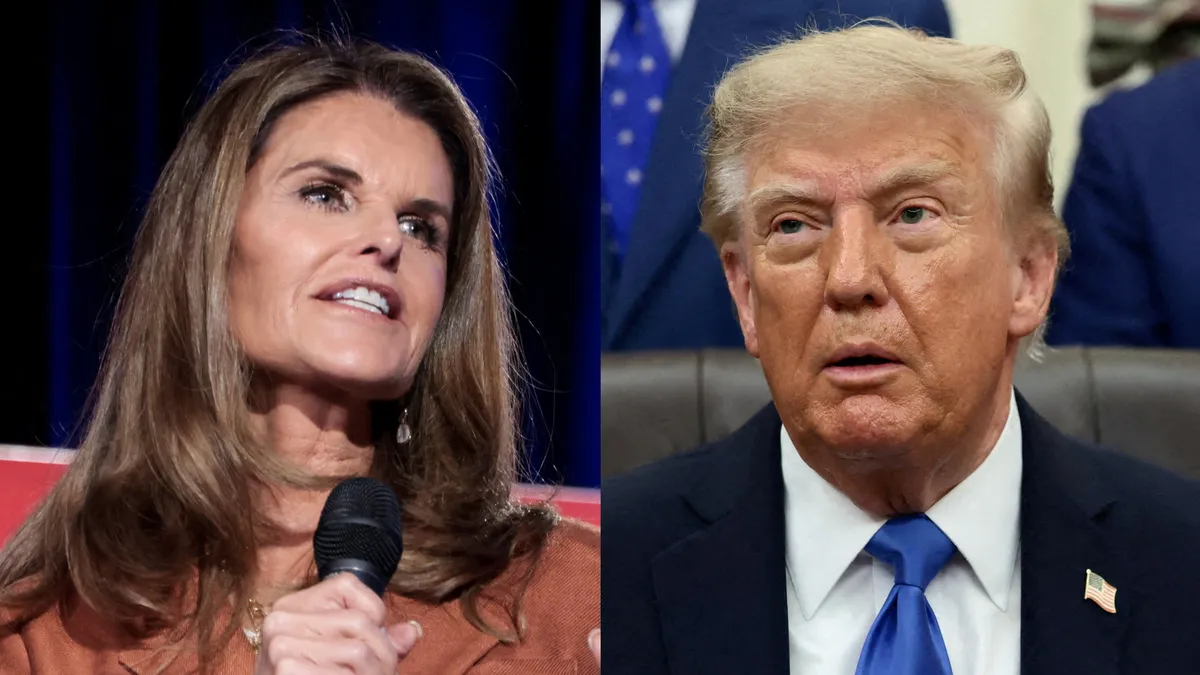
Cybersecarmor.com – Maria Shriver’s response to President Donald Trump has placed the word “narcissistic” back at the center of a public discussion that has stretched far beyond politics. The dispute began amid continuing tensions surrounding the Kennedy Center, after Trump threatened to halt renovations at the performing arts institution unless his name was added to it.
Shriver, a former first lady of California and the niece of President John F. Kennedy, criticized Trump on social media in pointed terms.
“How small minded, how narcissistic.”
She added:
“Actually great men, devoted to public service and the public good do not act like this.”
The White House was contacted for comment. Yet the exchange also raises a broader question: What does narcissism actually mean, and when is it appropriate to use the label?
A popular term with a clinical meaning
In everyday conversation, “narcissist” is often used for someone viewed as selfish, demanding, manipulative or excessively focused on their own needs. It can be applied to difficult partners, controlling relatives, workplace leaders and public figures. That broad use has made the term widely recognizable, but it has also blurred the distinction between a personality trait and a diagnosable mental-health condition.
Narcissistic personality disorder is a clinical diagnosis, not simply a description for arrogant behavior. It is estimated to affect about 5% of the population. The condition involves an exaggerated sense of personal importance, a strong need for attention and admiration, and limited empathy for others, among other features.
People with pronounced narcissistic traits may be controlling, highly intolerant of criticism or unwilling to take responsibility when they cause harm. In some situations, they may attempt to avoid blame through tactics such as gaslighting or devaluing another person.
But narcissism exists on a spectrum. Someone can display vanity, entitlement or a need for praise without meeting the criteria for narcissistic personality disorder. That distinction matters, especially when public debate turns a complex psychological concept into a quick insult.
Trump and the rise of the narcissism conversation
Trump has been described as narcissistic repeatedly since his 2016 presidential campaign. The question of whether such a label fit him became a recurring topic in political commentary, but the discussion did not remain limited to elections or government.
It helped push terms such as “narcissism” and “gaslighting” into conversations about dating, family relationships and emotional health. Search interest in narcissism rose sharply between September 2016 and January 2017, a period that included Trump’s election and inauguration.
Clinical psychologist Ramani Durvasula, author of Should I Stay or Should I Go? Surviving a Relationship with a Narcissist, has linked much of that surge in public attention to the 2016 election and the increased use of the term by journalists.
“I’m going to pin a lot of this to the presidential election in 2016 because more journalists were using the term.”
Durvasula said words including narcissism and gaslighting began appearing more often in national news and everyday conversation. The expansion of public awareness has given many people language for describing harmful experiences, particularly in relationships where manipulation or emotional mistreatment may have been difficult to identify.
Why simplified advice can create confusion
Greater awareness is not automatically the same as greater understanding. Social media favors short, confident statements, while personality patterns and relationships are usually more complicated. A viral post may suggest that every narcissist behaves in exactly the same way, or that ending contact is always simple and immediately possible.
Durvasula has warned that people often take an overly narrow view of the issue.
“People are taking a very simplistic view of it.”
She noted that online claims can make sweeping declarations, including the idea that all narcissists cheat or that anyone in a narcissistic relationship should leave immediately. For many people, those relationships involve family obligations, financial dependence, children, work or other realities that make easy solutions impossible.
“And the vast majority of us can’t leave every narcissistic relationship we’re in. It doesn’t work that way.”
That is why readers should be cautious about diagnosing someone from a handful of traits, a social-media clip or a political disagreement. Mental-health diagnoses require professional evaluation. At the same time, people do not need a formal diagnosis to recognize patterns that leave them feeling controlled, dismissed, frightened or repeatedly blamed for another person’s conduct.
The most useful focus is often behavior and impact: Is someone consistently refusing accountability? Are they isolating another person, rewriting events, demanding admiration or showing little concern for harm they cause? Those questions can be more constructive than treating a clinical label as a catchall explanation.
A word that carries both value and risk
The expanding public vocabulary around narcissism has offered a real benefit by helping people name unhealthy dynamics. Still, the word can lose precision when it is used as shorthand for anyone who is arrogant, selfish or politically objectionable.
Durvasula has said the mainstreaming of the topic can produce advice that is both overly simple and potentially shaming.
“I think there’s a simplification of advice and feedback, which can sometimes shame people and confuse people.”
Shriver’s criticism of Trump reflects the continuing political force of the term. It also illustrates why narcissism remains such a charged label: it speaks to concerns about power, empathy, responsibility and public service, while carrying a clinical meaning that should not be casually flattened. Understanding that difference can make the conversation more accurate—and more useful for people trying to make sense of difficult behavior in public life and private relationships.
Related Reading
Frequently Asked Questions
What is Maria Shriver Trump and truth about?
Maria Shriver Trump and truth about is the main topic of this guide. The article explains the context, practical details, and next steps readers should understand.
Why does Maria Shriver Trump and truth about matter?
Maria Shriver Trump and truth about matters because readers are looking for a useful answer, not just a short summary. Good content should match search intent and help them decide what to do next.