What Nancy Guthrie’s life can teach about avoiding loneliness

Daftar Isi
How Nancy Guthrie’s Story Illuminates the Crisis of Social Isolation Among Seniors
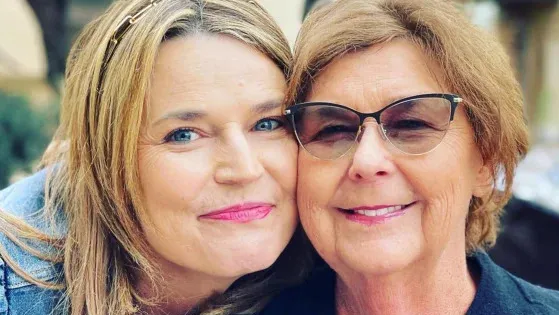
Cybersecarmor.com – Public health experts have been sounding the alarm for years about a growing crisis affecting older Americans: the epidemic of loneliness. Now, the recent case of Nancy Guthrie offers a compelling example of what happens when social connections are both strong and vital. Guthrie, the 84-year-old mother of “Today” show co-host Savannah Guthrie, became the center of national attention when she went missing earlier this year. What emerged from the search was not just a story of a missing person, but a portrait of a woman whose rich social life stood in stark contrast to the isolation plaguing many of her generation.
The initial alert came not from family, but from a friend who had been expecting to spend time with Guthrie. As investigators reconstructed the timeline leading up to her disappearance, they learned that her daughter and son-in-law had spent several hours with her the evening before and personally drove her home. This network of care extended far beyond her immediate family. In the weeks that followed, former colleagues, book club companions, mahjong partners, and a local pastor all stepped forward to share memories of the woman they knew and loved.
She was kind of the model of how to be engaged and connected during retirement.
Frank Infurna, a psychology professor at Arizona State University, offered this assessment of Guthrie’s social standing. Emily Nabors, associate director of innovation and a gerontologist at the National Council on Aging, echoed similar sentiments. “It definitely seems like she was on the end of the spectrum that’s quite social; that she really did have many activities,” Nabors noted. These observations paint a picture of someone who remained deeply embedded in community life well into her eighth decade.
The timing of Guthrie’s case could not be more significant. In 2023, the U.S. Surgeon General released an 82-page report titled “Our epidemic of loneliness and isolation.” The document outlined why social connection matters profoundly and provided recommendations for how the nation could improve these critical relationships. Experts emphasize that social disconnection is not merely an emotional burden—it is linked to depression, cognitive decline, and dementia. As America’s population continues to age rapidly, researchers predict that loneliness will only intensify unless meaningful action is taken.
When we embed social connection into the places we live, work, learn and gather, we strengthen collective resilience, improve our ability to respond during emergencies, and come together during times of crisis.
Jillian Racoosin, executive director of the Foundation for Social Connection and a contributor to the Surgeon General’s report, emphasized that social connection must be viewed as a collective responsibility rather than an individual one. She added that while tragedy will inevitably occur, communities with strong social foundations are better equipped to support one another through life’s most challenging moments.
Friends who have shared details about Guthrie since her abduction describe a remarkably active social existence. Her days were filled with frequent gatherings, thoughtful conversations, and even competitive games. Just two days before she was taken, Guthrie sat at a table with friends playing Mahjong—a strategy game utilizing more than 100 tiles where players strive to build winning hands. Guthrie was known both for her competitive spirit and for her willingness to teach younger women how to play.
Her commitment to community extended to her monthly book club meetings, which reports from the New York Times indicate she never missed. She also had a deep love for Bible study, with friends noting her exceptional ability to connect gospel lessons to everyday experiences. These activities serve as important safeguards, according to Nabors, who pointed to the value of informal monitoring systems. “A buddy system with neighbors,” she explained. “Say you have a system where you open your curtains every morning and you didn’t do that, your neighbor would check up on you. Kind of similar to what had happened with Nancy Guthrie when she didn’t show up for church and that raised the alarm or indicated that something was really wrong.”
Racoosin noted that while the activities Guthrie engaged in fostered connection and improved health, many of the structures that once supported social life have been dissolving. Fewer people attend religious services or participate in clubs and groups. The Surgeon General’s report revealed that the average person spent 24 additional hours alone each month in 2020 compared to 2003. Household family social engagement declined by five hours per month, while time spent on social engagements with friends dropped by 20 hours per month. Participation in faith organizations fell from 70 percent in 1999 to 47 percent in 2020. Yet, as the report concluded, religious and faith-based groups remain powerful sources of regular social contact, community support, meaning, and belonging. Guthrie’s life—and the outpouring of concern when she vanished—demonstrates why preserving these connections matters more than ever.
Related Reading
Frequently Asked Questions
What is What Nancy Guthrie s life can teach?
What Nancy Guthrie s life can teach is the main topic of this guide. The article explains the context, practical details, and next steps readers should understand.
Why does What Nancy Guthrie s life can teach matter?
What Nancy Guthrie s life can teach matters because readers are looking for a useful answer, not just a short summary. Good content should match search intent and help them decide what to do next.