Rob Reiner skewers Trump with Jimmy Kimmel in surprise posthumous role

Rob Reiner’s Posthumous Role in Larry David Sketch Targets Donald Trump
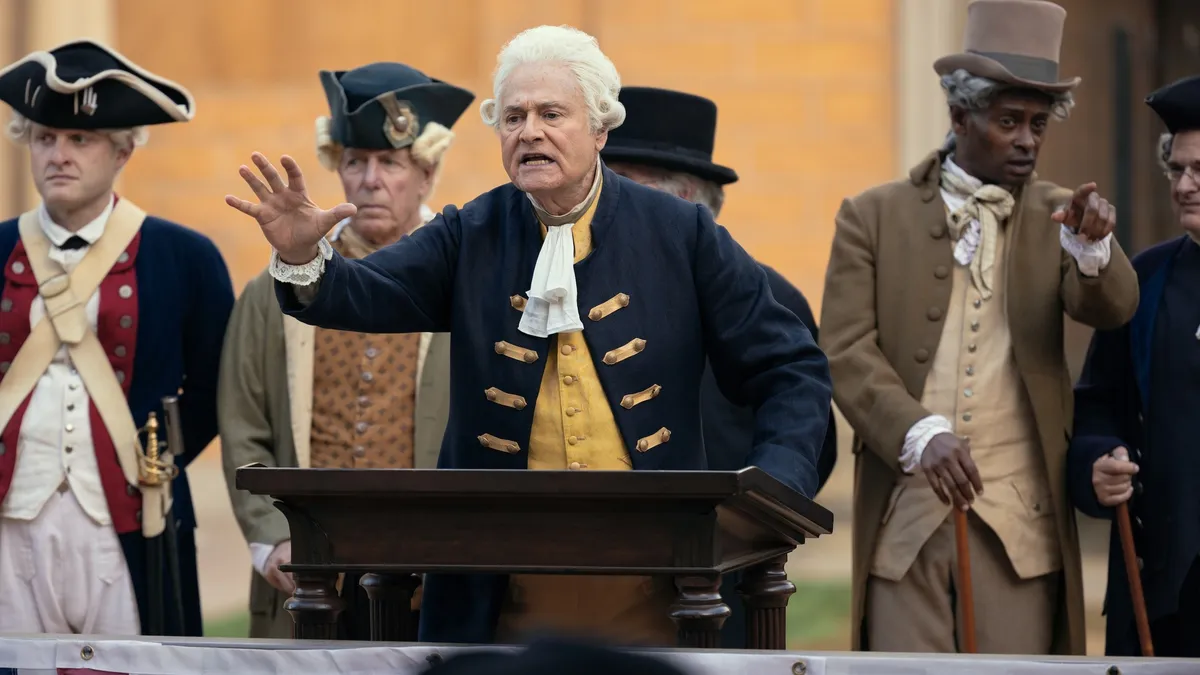
Cybersecarmor.com – In an unexpected twist, the late Hollywood legend Rob Reiner made his final television appearance in a sharp critique of President Donald Trump. The scene, featured in the July 3 episode of Larry David’s history-focused HBO sketch comedy series *Life, Larry and the Pursuit of Unhappiness*, was a surprise to audiences and a poignant tribute to the late director. Reiner, who passed away in December, portrayed George Washington in a satirical segment that subtly lambasted Trump without ever mentioning his name. The episode, produced by former President Barack Obama and his wife Michelle, was a fitting homage to Reiner’s legacy as a storyteller and political commentator.
A Subtle Jab at Trump’s Leadership
The sketch began with Reiner’s Washington delivering a speech about his decision not to seek a third term. He proposed a constitutional amendment to limit presidential terms to two, a move that echoed the 22nd Amendment. However, the narrative quickly shifted when David’s character, a member of the audience, challenged the idea. “What if a narcissistic prick became president and refused to follow the Constitution?” David asked, sparking a debate that mirrored real-world tensions surrounding Trump’s leadership.
“Rest assured, even if this future president violated the Constitution, then the Congress of the United States, and the United States Supreme Court, would not allow it,” Washington insisted, only for David to counter with, “What if the Supreme Court consisted of a bunch of yes men and Congress cared more about party than country?”
The exchange highlighted the precarious balance of power between the executive and legislative branches. David’s character, representing skepticism toward Trump’s governance, questioned the effectiveness of these checks and balances. Washington, in his final role, clung to the idea of a strong, constitutional system, but the sketch underscored the fragility of that framework in the face of political polarization.
Jimmy Kimmel Joins the Critique
As the scene unfolded, Jimmy Kimmel’s character entered the fray, offering a defense of Trump’s potential election. “Come on, that could never happen! Are you suggesting the president would take the time to challenge anyone who dares make fun of him?” Kimmel quipped, echoing Trump’s own responses to criticism. The dialogue was a clever nod to the president’s tendency to deflect blame, even as the sketch painted a vivid picture of a leader who might undermine democratic norms.
The segment escalated into a chaotic scene, with the audience reacting to David’s accusations. A brawl broke out, and Washington watched in dismay as the crowd’s anger grew. The episode ended with this confrontation, followed by an in memoriam tribute to Reiner, a moment that honored his career while delivering a pointed message about contemporary politics.
Reiner’s Legacy and Political Stance
Reiner, a long-standing Democratic activist, was known for his outspoken criticism of Trump. In 2017, he told *Variety* that Trump was “the single-most unqualified human-being to ever assume the presidency of the United States” and “mentally unfit” for the role. His death in December sparked a wave of backlash against Trump, who claimed the director’s demise was a result of “TRUMP DERANGEMENT SYNDROME.” Despite this, Trump doubled down on his disdain, stating at the White House that he was “not a fan” of Reiner and called him “a deranged person as far as Trump is concerned.”
The sketch was filmed on November 13, just weeks before Reiner’s death, according to director Jeff Schaffer. Schaffer noted the timing was intentional, as the episode aired on July 4, a day that typically evokes pride in American institutions. “It’s coming out on Fourth of July weekend, and if it in any way spoils a sad octogenarian’s weekend, then oh well,” Schaffer remarked, adding a layer of irony to the episode’s release.
Family Connections and Public Appearances
Reiner’s son, Jake Reiner, made a rare public appearance at the show’s premiere in June, adding a personal touch to the tribute. The actor, known for his role in the same series, was seen interacting with fans and sharing memories of his father’s work. Meanwhile, his other son, Nick Reiner, has been charged with the murder of his parents, who were found dead in their Los Angeles home in December. The case against Nick has drawn attention to the personal and political tensions surrounding Reiner’s family.
The episode also featured a brief but significant moment involving Reiner’s wife, Michele Singer Reiner, who was portrayed in a subplot. Her character, though not central to the Trump critique, added depth to the show’s exploration of American history and its relevance to modern politics. The combination of Reiner’s iconic presence and the show’s satirical edge created a powerful commentary on the state of the nation.
The Bear and Final Season References
Reiner’s involvement in *Life, Larry and the Pursuit of Unhappiness* came after his role in *The Bear*, the acclaimed food-focused series that recently concluded its fifth season. The show, which aired on June 25, did not feature Reiner’s character in its final episodes, but the actor was referenced in scenes that underscored his influence on the series. Star Jeremy Allen White recalled working with Reiner, describing him as “incredibly generous” and “incredibly kind.” “He was so game and curious, committed,” White said, highlighting Reiner’s dedication to his craft even in the face of personal challenges.
The juxtaposition of Reiner’s work in *The Bear* and his appearance in David’s sketch illustrates the range of his contributions to television. While *The Bear* celebrated the art of hospitality and precision in the kitchen, the *Life, Larry* episode used humor to dissect the mechanisms of power and the dangers of authoritarian tendencies. This contrast added layers to Reiner’s legacy, showing his ability to adapt his storytelling to different themes and contexts.
Symbolism and Satire in the Sketch
The choice of George Washington as the subject of the sketch was deliberate. Washington, a symbol of American democracy and leadership, served as a vehicle to critique the current administration. By having Reiner portray the founding father, the episode drew parallels between past and present, suggesting that the principles of republicanism are under threat. The absence of Trump’s name in the sketch was a deliberate strategy, allowing the audience to focus on the actions and rhetoric rather than the identity of the target.
David’s character, with his sharp wit and questioning tone, embodied the role of a watchdog in society. His challenge to Washington’s confidence in the system resonated with viewers who had grown wary of the political process. The sketch’s climax, where a violent brawl erupted in the audience, symbolized the deepening divide between supporters and critics of Trump’s leadership. It was a visual metaphor for the chaos that can arise when trust in institutions wanes.
Reiner’s final appearance in the series was more than a mere cameo; it was a masterclass in political satire. The scene’s timing, just days before the Fourth of July, was a reminder of the ideals the United States was founded upon. By using Washington’s perspective, the episode asked a critical question: What happens when a leader who once upheld these principles becomes a threat to them? The answer, delivered through the lens of humor and irony, was both poignant and provocative.
Reflections on Reiner’s Impact
Rob Reiner’s career spanned decades, leaving an indelible mark on film and television. From *When Harry Met Sally* to *The Princess Bride*, his work often blended humor with social commentary. The *Life, Larry* sketch was a continuation of this tradition, using his posthumous role to critique the political climate without overtly attacking the president. The episode’s blend of nostalgia and satire honored Reiner’s legacy while engaging with contemporary issues.
As audiences watched the sketch, they were reminded of Reiner’s ability to translate complex ideas into accessible, entertaining content. The use of Washington’s voice to question the resilience of democracy was a powerful statement, one that resonated with both longtime fans and new viewers. The episode’s closure with an in memoriam card ensured that Reiner’s impact would not be forgotten, even as his character delivered a final message about the state of American governance.
Ultimately, the sketch served as a multifaceted tribute to Reiner’s life and work. It highlighted his enduring influence on comedy, his political convictions, and the legacy he left behind. The combination of his portrayal as Washington and the show’s satirical edge created a compelling narrative that left audiences both entertained and contemplative. In a world where the line between humor and criticism often blurs, Reiner’s final performance was a reminder of the power of storytelling to reflect and challenge the times.