House Democrats block GOP effort to lock Supreme Court at 9 justices

Daftar Isi
Constitutional Amendment to Cap Supreme Court at Nine Justices Dies in House Vote
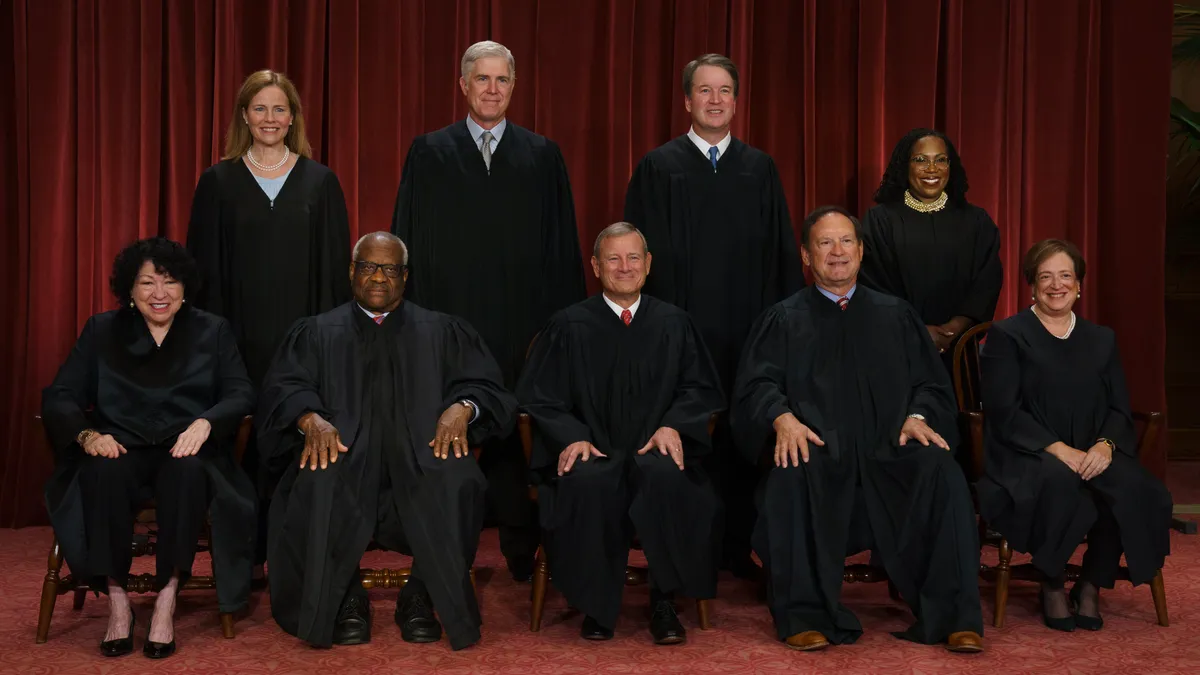
Cybersecarmor.com – A Republican-backed proposal to enshrine the current nine-justice composition of the Supreme Court into the Constitution collapsed in the House of Representatives on September 2, falling short of the supermajority required to advance such a measure. The vote, which ended 212 to 206, fell well below the two-thirds threshold needed to send an amendment to the states for ratification. Just a single Democrat, Rep. Don Davis of North Carolina, crossed the aisle to support the bill, underscoring how firmly the measure was locked into partisan lines.
The defeat lands at a particularly charged moment in the political calendar. With midterm elections drawing near, the Republican initiative had already been deployed as a campaign-trail weapon, giving GOP candidates a ready-made talking point aimed at Democrats who have grown vocal in recent months about expanding the bench. Those calls for additional seats—colloquially labeled “court packing”—have intensified as the high court’s recent rulings have landed overwhelmingly in favor of President Donald Trump’s agenda.
The Constitutional Authority Behind the Debate
The Constitution grants Congress explicit authority to set the number of justices serving on the Supreme Court. That power is not theoretical: lawmakers have exercised it seven times throughout American history, adjusting the bench size to suit the administrative needs of a growing republic. Yet the practice has been dormant for more than a century and a half. The last time Congress actually altered the number of seats was in 1869, when the count was reduced from ten back to nine—a figure that has persisted ever since.
Because the measure in question was framed as a constitutional amendment rather than a simple statute, its path to enactment was extraordinarily long. Even had it cleared the House with the requisite two-thirds majority, it would have needed identical supermajority approval in the Senate before being transmitted to the states, where three-fourths of state legislatures (or conventions) would have to ratify it. The last constitutional amendment to complete that gauntlet was the Twenty-Seventh Amendment, ratified in 1992 after decades of dormancy. No amendment has since made it through the full process.
Arguments From Both Flanks of the Floor
Rep. Andy Biggs of Arizona, who chairs the House Freedom Caucus, framed the amendment as a safeguard for judicial independence rather than a partisan maneuver. Speaking on the House floor, he positioned the proposal as a bulwark against future attempts to reshape the court through political pressure.
“We should not change the Supreme Court simply because we don’t like the people sitting on it,” Biggs told colleagues.
Democratic members of the chamber saw the effort differently. Rep. Jamie Raskin of Maryland—a constitutional law professor and the ranking Democrat on the House Judiciary Committee—characterized the amendment as yet another attempt by the Republican majority to strip Congress of a power the Founders deliberately delegated to the legislature.
“Another partisan power grab by MAGA,” Raskin declared, before expanding his critique. “The right-wing capture of the court, fueled by corporate dark money and the Citizens United decision, has plunged this court into a legitimacy crisis, an ethics crisis and a jurisprudential crisis like has never been seen before in American history.”
Court Decisions, Presidential Power, and Public Perception
The political friction over the bench’s size is rooted in concrete judicial outcomes. Throughout President Trump’s second term, the court’s conservative majority has repeatedly broadened the scope of executive authority, conferring new operational powers on the White House and effectively clearing the way for large-scale federal workforce reductions. At the same time, the justices have delivered notable setbacks to the president on two issues he has championed publicly: the constitutionality of certain tariff actions and the question of birthright citizenship. Despite those losses, polling consistently indicates that a majority of Americans still perceive the court as siding with the president more often than not.
That perception gap—between what the court actually decides and how the public reads its direction—has fed directly into the Democratic argument that the institution’s credibility is eroding. From the Republican perspective, the answer is to lock the current configuration in place so that no future administration, regardless of party, can alter the court’s size through ordinary legislation. From the Democratic perspective, freezing the number at nine while the court is perceived as captured by one ideological bloc merely entrenches the status quo and removes a constitutional check that Congress was designed to retain.
What Happens Next
With the amendment dead in the House for the foreseeable future, the question of Supreme Court size reverts to the realm of political rhetoric rather than legislative procedure. Should Democrats gain a House majority in the upcoming midterms, the issue could resurface in reverse—potentially as a push to add seats. Until then, the nine-justice configuration established in 1869 remains the operative structure, sustained not by constitutional mandate but by simple inertia and the absence of a two-thirds congressional will to change it.
Related Reading
Frequently Asked Questions
What is House Democrats block GOP effort to lock?
House Democrats block GOP effort to lock is the main topic of this guide. The article explains the context, practical details, and next steps readers should understand.
Why does House Democrats block GOP effort to lock matter?
House Democrats block GOP effort to lock matters because readers are looking for a useful answer, not just a short summary. Good content should match search intent and help them decide what to do next.