Bezos-owned rocket explodes in Florida, deals blow to Blue Origin

Blue Origin’s New Glenn Rocket Explodes During Test, Marking Another Setback
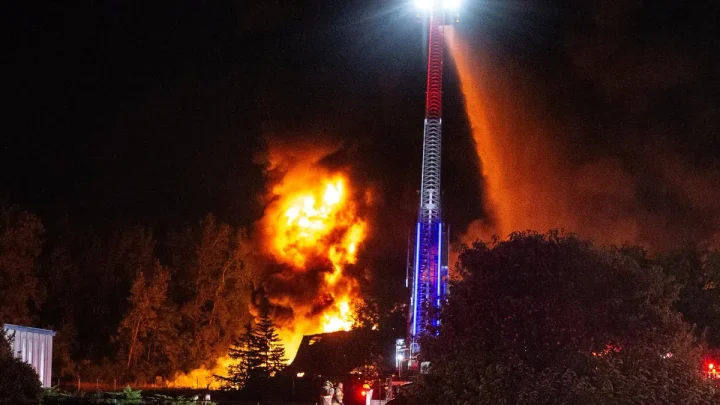
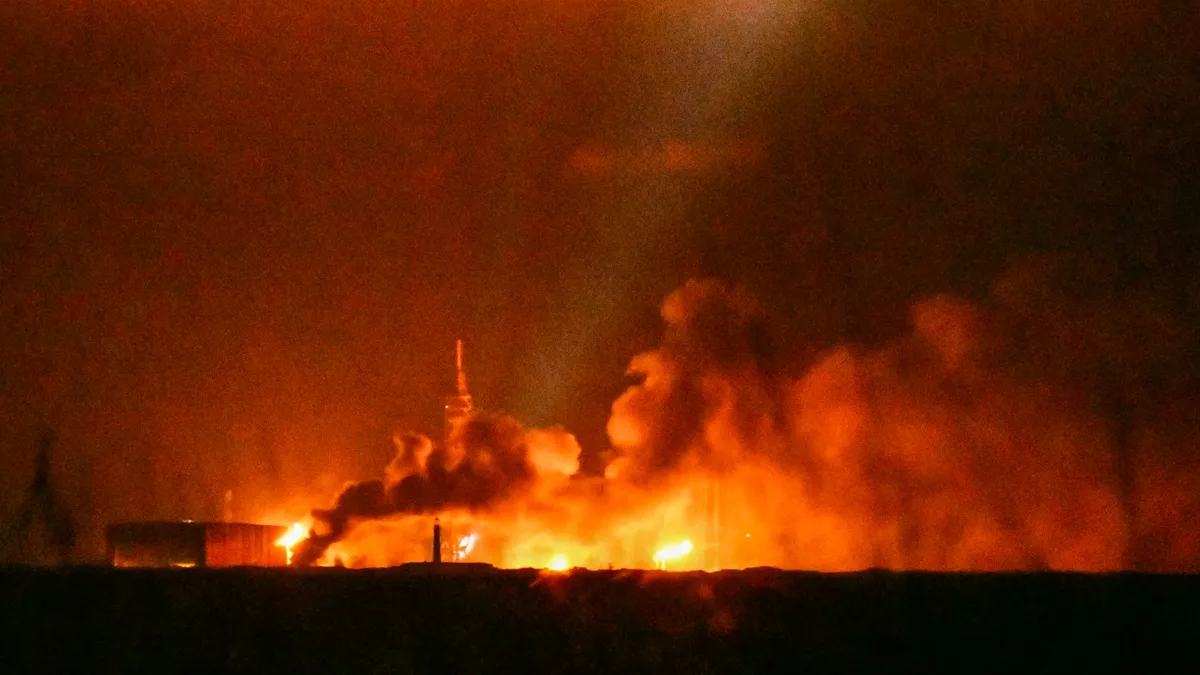
Cybersecarmor.com – The skies over Florida lit up in a fiery display on the night of May 28, 2026, as a dramatic explosion engulfed the Atlantic Coast. The event, captured in video footage that rapidly spread across social media, signaled a significant challenge for Jeff Bezos’ Blue Origin, a private space company that had recently concluded an investigation into a prior failure during its New Glenn rocket’s April 19 flight.
Anomaly During Pre-Launch Testing
The explosion occurred during a hot fire test at Launch Complex 36, a facility Blue Origin invested $1 billion to reconstruct at the Cape Canaveral Space Force Station. This site, located near NASA’s Kennedy Space Center, is crucial for the company’s ambitions to advance its lunar initiatives. While the exact cause of the blast remains under scrutiny, the incident highlights the challenges faced by Blue Origin as it seeks to establish itself as a major player in the commercial spaceflight arena.
Blue Origin described the event as an “anomaly,” emphasizing that the explosion happened while the rocket was grounded and undergoing final preparations for its next mission. No injuries were reported, though the extent of the damage to the New Glenn rocket is still being assessed. The company’s spokesperson stated that they would analyze the incident, evaluate the impact, and “rebuild whatever needs rebuilding and get back to flying.”
The New Glenn: A Giant in the Sky
Named after NASA astronaut John Glenn, the New Glenn is a two-stage heavy-lift launch vehicle designed to carry significant payloads into orbit. Standing at 322 feet tall, it is a formidable addition to Blue Origin’s fleet, nearly matching the size of NASA’s Space Launch System (SLS), which is built for the Artemis moon program. However, SpaceX’s Starship, measuring approximately 400 feet in height, still holds the title of the largest rocket in operation.
The New Glenn has been a focal point of Blue Origin’s expansion efforts, particularly as the company aims to compete with SpaceX in commercial satellite deployment. In its fourth flight since launching from Cape Canaveral in January 2025, the rocket was set to transport 48 Amazon Leo satellites to low-Earth orbit. These satellites are part of a broader constellation plan, which includes deploying around 3,200 satellites to challenge SpaceX’s Starlink network—a system already comprising over 10,000 satellites.
Despite its recent milestone of reusing a New Glenn first-stage booster for the first time, the rocket’s second stage faced setbacks. During its April 19 mission, the upper stage failed to place its payload into a high enough orbit, forcing the satellites to de-orbit prematurely. This incident, which Blue Origin investigated, now appears to be overshadowed by the latest explosion, further complicating its path to operational success.
Blue Origin’s Lunar Ambitions
While the New Glenn’s explosion may delay its next scheduled launch, the broader implications extend beyond commercial satellite deployment. Blue Origin’s lunar program, which includes plans to support NASA’s Artemis missions, has taken a hit. The incident not only challenges the company’s ability to compete with SpaceX but also impacts NASA’s timeline for establishing a sustainable presence on the moon. Both entities rely on reliable launch systems to progress their goals, and this setback could slow momentum in the race to space.
Jeff Bezos, the founder of Amazon and Blue Origin, took to social media to address the explosion. In a post, he underscored the company’s resilience, stating,
“We’ll investigate the cause, assess the damage, and rebuild whatever needs rebuilding. Then, we’ll get back to flying.”
This statement reflects Blue Origin’s commitment to overcoming technical hurdles, though the incident underscores the high stakes involved in developing next-generation launch vehicles.
Commercial Satellite Deployment and Competitive Landscape
Amazon’s Leo satellites, part of a constellation intended to rival Starlink, have already been launched using a mix of providers. While SpaceX has been the primary contractor for these missions, Blue Origin has yet to fulfill its own role in the project. The next delivery of Amazon Leo satellites, scheduled for May 29, will use the United Launch Alliance’s Atlas V rocket, a decision that may be influenced by the recent explosion.
The upcoming launch, set to take place at the Cape Canaveral Space Force Station, is critical for Amazon’s expansion. However, the explosion of the New Glenn could create uncertainty. The FAA, which oversees commercial rocket launches, has mandated an investigation into the failure, ensuring transparency and safety standards are met. This regulatory oversight is essential in maintaining public confidence in Blue Origin’s capabilities.
Historical Context and Industry Challenges
Blue Origin, founded in 2000 by Jeff Bezos, has carved out a niche in the aerospace industry with its suborbital New Shepard spacecraft. These missions, which have included high-profile participants like musician Katy Perry and actor William Shatner, have paused for at least two years as the company redirected focus to its lunar ambitions. The New Glenn, however, represents a leap forward in heavy-lift technology, aiming to support deep-space exploration and commercial ventures alike.
Despite its technological advancements, the New Glenn has faced multiple challenges. The latest explosion adds to a list of setbacks, including the failed April 19 mission. Each incident provides valuable data for engineers but also highlights the complexities of spaceflight. For Blue Origin, the path to success requires not only technical precision but also the ability to adapt to unforeseen problems.
As the aerospace industry accelerates, the competition between Blue Origin and SpaceX intensifies. The New Glenn’s role in this rivalry is pivotal, as it seeks to deliver payloads to orbit with greater efficiency and reliability. However, the recent explosion serves as a reminder that even the most advanced systems are not immune to failure. The company’s ability to recover from such incidents will determine its position in the rapidly evolving commercial spaceflight market.
Future Prospects and Strategic Adjustments
While the explosion poses a challenge, Blue Origin remains undeterred. The company has already demonstrated its capacity to innovate, such as the successful reuse of the New Glenn’s first-stage booster. This achievement, combined with the potential for rapid recovery, suggests that the incident may not derail its long-term objectives. However, the delay caused by the explosion could affect its schedule for delivering Amazon Leo satellites, a task that is vital for expanding the company’s influence in the global satellite market.
Industry experts note that such setbacks are common in the development of new launch systems. The New Glenn’s explosion, while a significant event, is part of the broader process of refining technology to meet the demands of space exploration. As Blue Origin works to identify the cause of the anomaly, the focus will shift to restoring confidence in its operations and ensuring the rocket is ready for future missions. The success of the New Glenn will not only impact Blue Origin’s growth but also shape the future of commercial spaceflight and lunar exploration.
With the FAA’s investigation underway and the company’s plans to resume flights, the next steps for Blue Origin will be closely watched. The incident serves as a test of the company’s adaptability and resilience, qualities that are essential in the high-stakes world of space technology. Whether the New Glenn will return to the skies in time to meet its schedule remains to be seen, but the determination of its team ensures that the rocket’s journey continues, no matter the obstacles along the way.