Army secretary resigns after months of tension with Pete Hegseth

Daftar Isi
Army Secretary Steps Down, Leaving the Service Without a Confirmed Civilian Leader
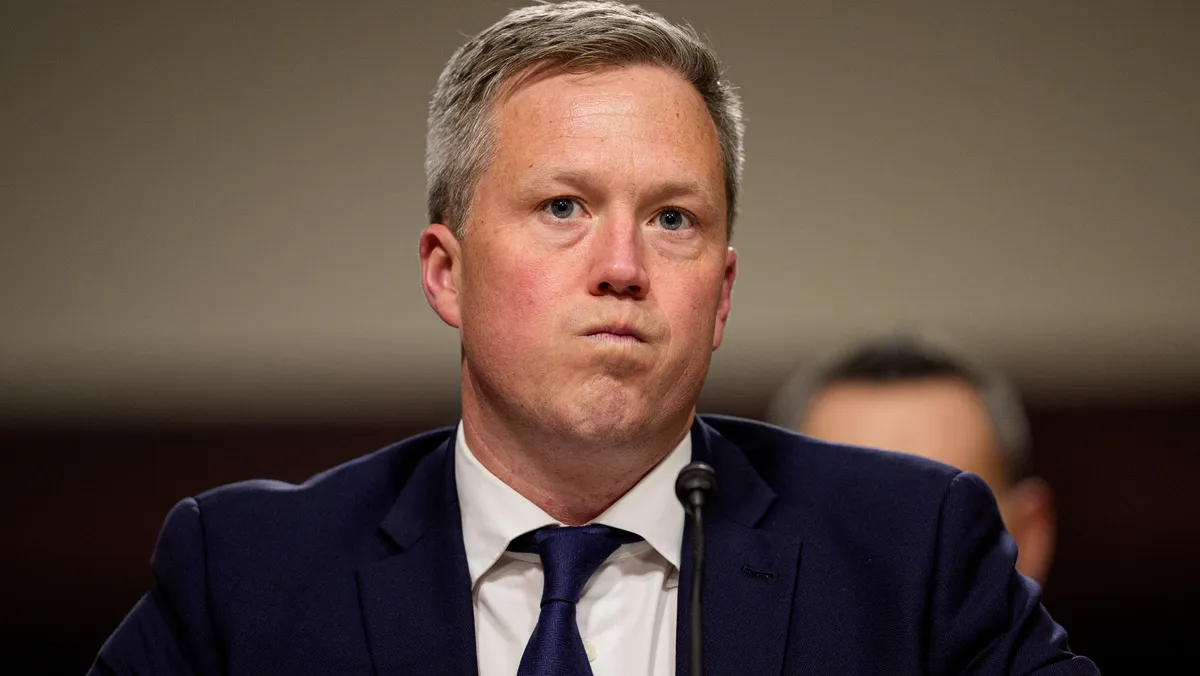
Cybersecarmor.com – The Department of the Army now operates without a Senate-confirmed civilian head after Secretary Dan Driscoll handed his resignation to President Donald Trump on August 31. The White House confirmed the departure, which ends an 18-month tenure marked by escalating friction between Driscoll and Secretary of War Pete Hegseth. Until Congress confirms a successor, the Army’s civilian leadership vacuum will be filled by acting arrangements, a situation that raises questions about institutional continuity at the highest levels of the service.
A Fracture at the Top
Multiple outlets had documented Driscoll’s repeated objections to decisions made inside the Pentagon, particularly regarding force readiness and the abrupt removal of senior Army officers. His most pointed disagreement centered on the April decision by Hegseth to compel Gen. Randy George to vacate his role as Army Chief of Staff and retire immediately. Driscoll, who had worked closely with George on modernization initiatives, voiced his dissent publicly and privately throughout the spring.
The split between the two men was not merely procedural. George had championed a sweeping push to integrate new technologies into Army doctrine, driven in large part by lessons drawn from the ongoing war in Ukraine, where unmanned aerial systems and autonomous platforms have reshaped battlefield dynamics. Driscoll aligned himself with that vision, advocating for accelerated adoption of drone capabilities and robotic systems within the force structure. When Hegseth moved to remove George, Driscoll found himself on the wrong side of the decision and made no effort to conceal his opposition.
A Pattern of Departures
Driscoll’s exit is the latest in a sequence of high-profile military leadership changes that have unsettled the defense establishment over the past several months. In June, Gen. Christopher Donahue, who commanded U.S. forces across Europe and Africa, departed his post after Hegseth restructured and downgraded the scope of his command. Earlier in April, Hegseth dismissed Navy Secretary John Phelan from his civilian role. Each departure has been accompanied by speculation about whether the departures reflect policy disagreements, personality conflicts, or a broader recalibration of how the administration wishes to manage the military bureaucracy.
With Driscoll gone, the Army’s acting chief of staff, Gen. Christopher LaNeve, now carries additional weight in the interim. LaNeve assumed the acting role following George’s April retirement. His tenure has already produced one notable reversal: reporting from the Wall Street Journal and CBS News indicated that LaNeve terminated the assault battalion George had stood up in Europe specifically to study drone and robotic warfare tactics. That cancellation underscored how quickly institutional priorities can shift when leadership changes at the top.
Praise From the Departing Secretary
Shortly after George’s ouster, Driscoll took the floor before the House Appropriations Defense Subcommittee to offer what amounted to a public eulogy for his former colleague’s leadership.
“There is no person that has more respect for Gen. George,” Driscoll told lawmakers during the April hearing. “He was an amazing transformational leader.”
The remarks were widely read as a pointed rebuke of the decision to remove George, delivered in a forum where members of Congress could hear them directly. They also crystallized the personal bond between the two men, who had collaborated for years on efforts to modernize the Army’s force structure and procurement pipeline.
The White House Frames the Departure Positively
White House spokeswoman Anna Kelly issued a statement characterizing Driscoll’s tenure in strongly favorable terms, emphasizing his contributions to what she called the president’s agenda.
“Secretary Driscoll has been highly effective in advancing President Trump’s agenda to Make America Strong Again at the Department of the Army by providing outstanding leadership during historic military operations, restoring an emphasis on readiness and lethality, assisting with negotiations between Russia and Ukraine, and more.”
Kelly went on to credit Driscoll with strengthening the force overall.
“The United States Army is more powerful than ever thanks to his work alongside the Commander-in-Chief and Secretary of War.”
The statement made no mention of the tensions that had been documented over preceding months, instead presenting the resignation as a natural conclusion to a productive period of service.
Further Shakeup Expected
The Wall Street Journal, which first broke the news of Driscoll’s resignation, also reported that Dave Fitzgerald, the deputy undersecretary of the Army, is expected to submit his own resignation later in the same week. The Pentagon directed questions about both departures to the Army, which did not immediately provide additional detail. If Fitzgerald follows Driscoll out the door, the Army’s civilian leadership team will be substantially depleted in a single week, intensifying pressure on the acting chain of command.
Background: The Vance Connection
Driscoll’s path into the administration ran through a personal relationship with Vice President JD Vance, for whom he served as an adviser. The two men met as classmates at Yale Law School and maintained a close professional and personal bond that carried into the current administration. That connection likely shaped both his appointment to the Army secretaryship and the degree of access he enjoyed in policy discussions, even as those discussions grew contentious with Hegseth.
What Comes Next
The resignation sets in motion the standard process: the president will nominate a replacement, who must then clear Senate confirmation. In the interim, the Army will continue to operate under acting arrangements, with LaNeve and remaining senior officers carrying day-to-day operational and administrative responsibilities. For a service that fields roughly 480,000 active-duty soldiers and manages a budget exceeding $180 billion annually, the absence of a confirmed civilian secretary—even for a matter of weeks—represents a structural gap that Congress, the Pentagon, and the Army itself will be watching closely.
Related Reading
Frequently Asked Questions
What is Army secretary resigns after months of tension?
Army secretary resigns after months of tension is the main topic of this guide. The article explains the context, practical details, and next steps readers should understand.
Why does Army secretary resigns after months of tension matter?
Army secretary resigns after months of tension matters because readers are looking for a useful answer, not just a short summary. Good content should match search intent and help them decide what to do next.