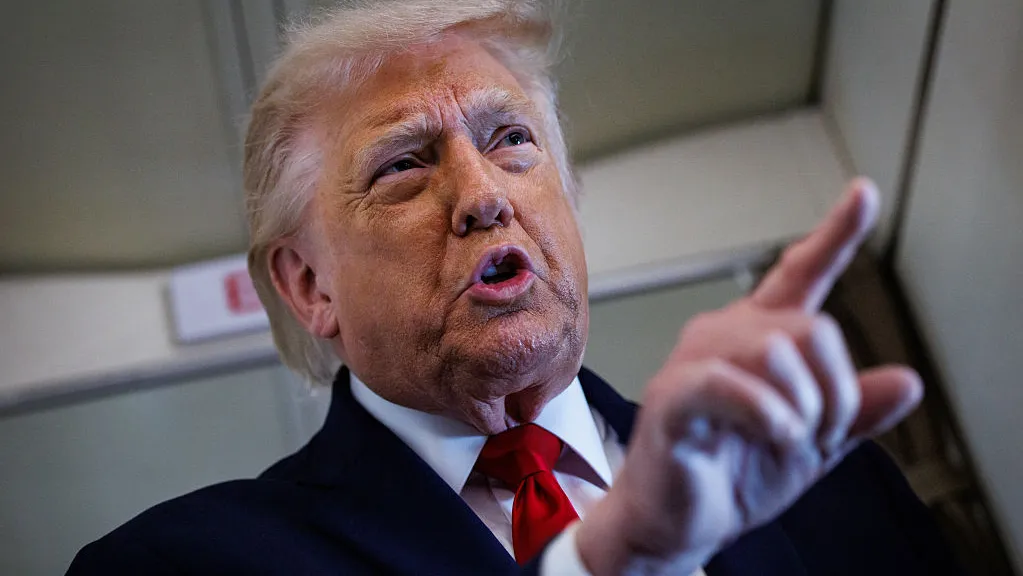
Trump says Kristen Welker of ‘Meet the Press’ will be reported to FCC

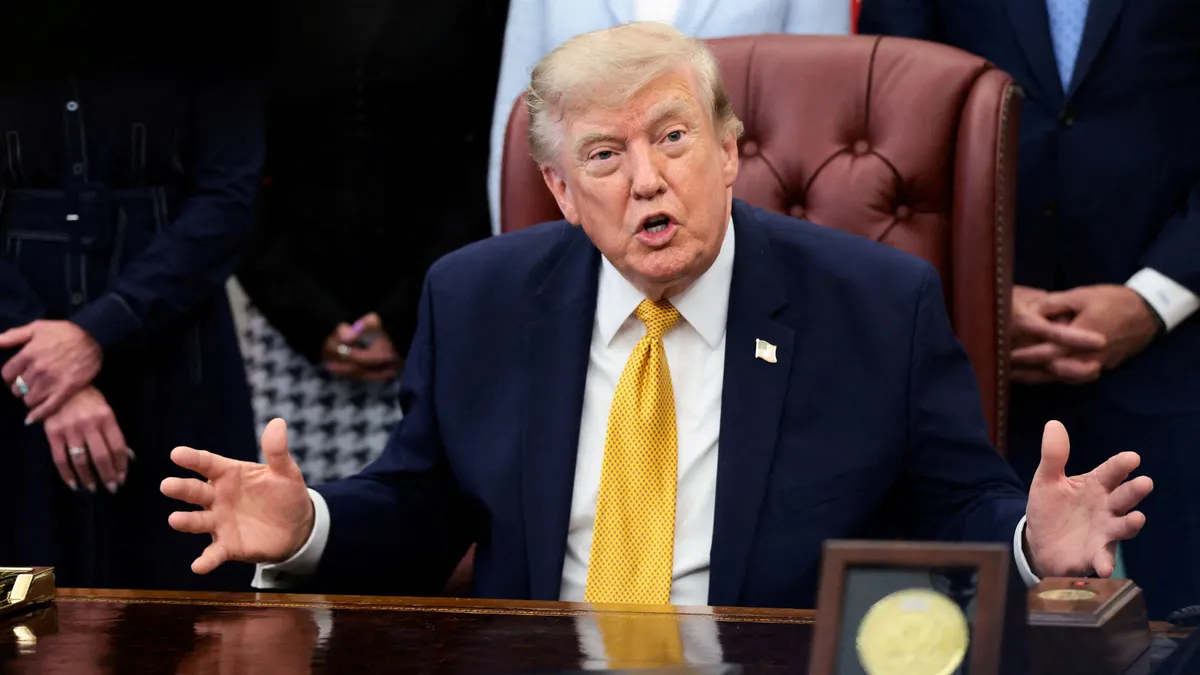
Daftar Isi
Trump Threatens FCC Action Against NBC’s Kristen Welker Over Endorsement Coverage
Cybersecarmor.com – The already strained relationship between the White House and the national press corps took a sharp turn on Aug. 30 when President Donald Trump declared he would formally report “Meet the Press” moderator Kristen Welker to the Federal Communications Commission. His stated reason: her characterization of his 2026 midterm endorsement record as producing “mixed results.”
The president’s Truth Social message, posted that afternoon, cast Welker as a figurehead of what he called the “once great Meet the Press, now considered Meet the Fake Press.” He accused her of deliberate distortion, pointing to what he framed as near-perfect success rates among candidates he backed.
“Kristen Welker, the Unpopular ‘Hostess’ of the once great Meet the Press, now considered Meet the Fake Press, just stated that Donald Trump has ‘mixed results’ on his Endorsements of Candidates, when the recent WINS of Darline Graham and Mike Mazzei, stand at 100% for the U.S. Senate, and 98% for the U.S. House.”
He followed with a direct threat of regulatory action:
“Because of this purposeful inaccuracy, she will be reported to the FCC for rebuke or punishment. Unfortunately, she is not the only one.”
NBC Defends Its Anchor
NBC News responded swiftly, issuing a statement on Aug. 30 that affirmed its confidence in Welker’s reporting. The network told USA TODAY: “Kristen is one of the best in the business and we stand by her.” The brief but pointed reply underscored how quickly the exchange had moved from editorial disagreement to institutional confrontation.
The Endorsement Record Behind the Dispute
Trump’s 2026 endorsement track record is, by his own accounting, overwhelmingly positive. Senate candidates he backed have won every primary, and House candidates have cleared the bar at a 98 percent rate. Yet the picture is not uniformly rosy. Several high-profile losses have complicated the narrative.
In Wyoming, Megan Degenfelder, who heads the state department of public instruction, fell short in the Republican gubernatorial primary. Florida Representative Cory Mills lost his bid for reelection, as did Tennessee Representative Andy Ogles, a member of Congress whose tenure has drawn sustained controversy. Minnesota’s Mike Lindell, the MyPillow founder and longtime Trump ally, also lost a GOP primary race for governor. These setbacks, while numerically small against the broader tally, gave Welker a factual basis for describing the results as mixed rather than uniformly triumphant.
What the FCC Can and Cannot Do
Legal scholars and broadcast-industry observers noted almost immediately that the FCC’s jurisdiction over an individual journalist is, at best, tenuous. The agency licenses local broadcast stations — not national networks such as NBC or ABC, and certainly not individual anchors. Its own website states that both the First Amendment and the Communications Act of 1934 bar the commission from censoring program content, and that its “role in overseeing program content is very limited.”
In practical terms, reporting a television host to the FCC would not trigger a fine, a license revocation, or any enforceable sanction. The move functions less as a legal strategy and more as a rhetorical escalation — a signal that the administration views media criticism as a matter warranting regulatory attention, even where no clear statutory hook exists.
Commissioner Gomez Pushes Back
FCC Commissioner Anna Gomez, appointed by President Joe Biden in 2023, did not wait long to respond. In an Aug. 30 post on X, she stated plainly that the agency “has no authority to punish journalists this administration doesn’t like.”
“These threats to press freedom are dangerous,” her post continued. “They undermine the foundation of our democracy, and they have no place in it.”
Gomez’s remarks landed amid two separate FCC investigations targeting ABC, the network owned by Disney. She urged Disney to “fight” what she characterized as an FCC intent on “targeting an administration critic by mob rule.” Disney and ABC had already filed suit on Aug. 18, describing the investigations as an unconstitutional “retaliatory campaign” aimed at the network.
Questions About FCC Independence
The broader institutional question has grown harder to ignore. Under the leadership of Brendan Carr, whom Trump referenced in the same Truth Social post while declaring “The Press is a Disgrace to our Nation,” the commission’s posture toward its own independence has shifted. In a December Senate hearing, Carr described the FCC as “not an independent agency formally speaking,” citing the president’s authority to remove commissioners at will. By Aug. 30, the agency’s website had dropped the word “independent” from its self-description, now identifying itself simply as a “U.S. government agency overseen by Congress.”
Carr had not issued a public statement on the Welker matter as of the afternoon of Aug. 30.
Why It Matters
The episode sits within a wider pattern of presidential pressure on broadcast journalism. In early June, Trump walked out of a “Meet the Press” interview mid-conversation after a tense exchange in which Welker pressed him on his remarks about California election security. That walkout drew widespread coverage and raised questions about whether a sitting president could use his platform to punish a host who asks pointed questions. The FCC threat, even if legally toothless, extends that dynamic into the regulatory sphere — suggesting that the administration views broadcast oversight as a lever available for political purposes.
For journalists and First Amendment advocates, the central concern is precedent. If a president can name a reporter to a federal agency and frame the act as accountability, the boundary between editorial disagreement and state-sanctioned retaliation grows thinner. The FCC’s own statutory limits, as Gomez emphasized, exist precisely to prevent that boundary from collapsing. Whether those limits will hold under the current leadership remains the open question the Aug. 30 exchange was designed to test.
Related Reading
Frequently Asked Questions
What is Trump says Kristen Welker of Meet?
Trump says Kristen Welker of Meet is the main topic of this guide. The article explains the context, practical details, and next steps readers should understand.
Why does Trump says Kristen Welker of Meet matter?
Trump says Kristen Welker of Meet matters because readers are looking for a useful answer, not just a short summary. Good content should match search intent and help them decide what to do next.